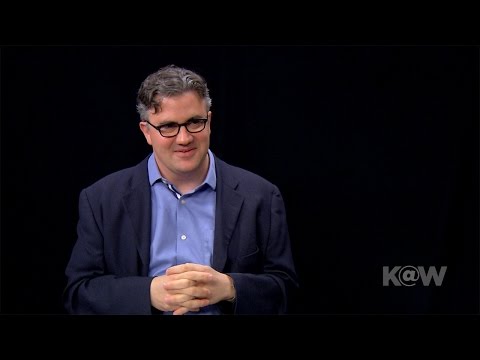
Penn Wharton Budget Model Analyzes Presidential Campaign Proposals & National Debt
Ask about Knowledge at Wharton
Episode Description
What impact will presidential candidates Kamala Harris and Donald Trump's campaign policy proposals have on the national debt levels should they be appointed to office? Kent Smetters, Faculty Director of the Penn Wharton Budget Model, discusses the plan analyses the Budget Model published this week, including the implications of tax cuts on the future of the U.S. economy, inflation, and national debt heading into the 2024 presidential election.
Wharton Business Daily airs Monday-Friday from 10 AM - 12 PM ET on SiriusXM Channel 132, featuring emerging trends, top business leaders & Wharton’s renowned professors.
Learn more: http://whr.tn/businessdaily
----- The Wharton School of the University of Pennsylvania is committed to sharing its intellectual capital through Knowledge at Wharton, the school’s online business analysis journal.
Launched in 1999, Knowledge at Wharton offers free access to:
- Articles, podcasts, and videos highlighting Wharton faculty research and analysis of current business trends - Interviews with book authors from Wharton School Press - In-depth series of curated content like Wharton Executive Education’s Nano Tools for Leaders - A searchable database of more than 10,000 articles covering all aspects of business - A weekly newsletter that delivers Knowledge at Wharton insights directly to your inbox
Visit the Knowledge at Wharton homepage: https://whr.tn/3qUpSBE Subscribe to the Knowledge at Wharton YouTube channel: https://whr.tn/3DEAgAU
Read the full transcriptHide the full transcript
- Dan Loney: Well, as we get closer to election day, understanding the policy plans of both candidates is going to be very important.
- The Penn Wharton budget model has taken a deeper dive on both Vice President Kamala Harris's plans, as well as those of
- former President Donald Trump. And pleasure to be joined by Kent Smetters, who's faculty director of the Penn Wharton
- budget model, joining us, as well as Professor of Business Economics and Public Policy at the Wharton School. Kent, great
- to talk to you again. How are you today? Kent Smetters: Great, thanks for having me back on. - All right, so
- I guess let's start out with the collection of this information, because I think it's also important to understand that,
- because we're at a point right now where it feels like we're just learning a lot about what each candidate is potentially
- going to bring forward. - That's right. In particular, they're very different in some sense, that Trump, we kind of know what
- he wants. It's very clear. It's also very expensive, because he doesn't have any way of right now paying for it. So add a lot of
- debt to the picture on a path that already is exploding with federal debt. Whereas the case of Harris, the problem there is
- that they've released an official campaign document, but then they're having these kind of side conversations, and giving
- some hints about how they'll pay for some of this stuff, but it's not very organized at all. And so, you know, we and the Joint
- Committee on Taxation, CBO in particular, are pretty consistent that you have to give us details, and we're not going
- to give you freebies in terms of revenue and things like that. So her package is much smaller, but it does also increase the debt.
- - So I think when you talk about former President Trump, there are certain things that you said that we can kind of assume would
- probably come into play, one being the extension of the 2017 tax cuts, and what kind of impact those would have. - That's
- right. In particular, just extending those tax cuts, and they mainly focus on the individual side. The business
- side, most of those were already permanent, although some of those would have otherwise expired as well, but mostly on
- the individual side. And extending the Tax Cuts and Jobs Act, we're talking about over $4 trillion of additional debt over
- the -- over the next decade, and so it's pretty expensive. But then what he's added on to it is reducing, or in fact, even
- eliminating taxes on Social Security benefits, and as well as lowering the corporate tax rate even more from 21 percent to 15 percent.
- The Tax Cuts and Jobs Act are already lowered from 35 percent to 21 percent. Now he wants to take it one step further. And so altogether,
- that's about $5.8 trillion of additional debt over 10 years, if you allow for economic feedback effects. And he does
- get some positive feedback effects during the first part of the decade, and then he loses that toward the end of the
- decade, but the cost would be about $4.1 trillion, whereas Harris is working much the opposite way. - As for Vice
- President Harris, she has seemed to show some support for some of the ideas that President Biden has been wanting to put into
- play, like raising taxes on the higher end of the population, and even the potential of raising the corporate tax rate.
- - Yeah, what she stated officially, and this was in their campaign proposal, is that she would raise the corporate
- tax rate from 21 percent to 28 percent. That definitely raises some money. It's about $1.1 trillion over 10 years, but also has a negative
- effect on the economy. And then she has some other things that she wants to do, including what the Child Tax Credit, the Earned
- Income Tax Credit, and continuing what's called premium support for the Affordable Care Act, which is already
- subsidized. She would subsidize it even more. And then down payment for first time homebuyers. And so overall, we
- estimate her entire package would be about $1.2 trillion on a conventional basis, but when you allow for economic feedback
- effects, it would cost -- it would raise deficits by about $2 trillion. Now, what the Harris campaign has done in light of
- some of these numbers is that they are having these side conversations. They're telling -- you know, one reporter asked
- them, "Well, do you not stand by the -- you know, the Biden Harris fiscal year 2025 budget?" And the Harris campaign has said,
- "Yes, we agree with that budget." And so some reporters are saying, "Oh, therefore you should include all the tax increases in
- that budget as to what we call pay for its revenue raisers." But then what about all the spending in that budget that she hasn't
- talked about yet? Will she suddenly walk away from those? And so we can't just take one part based on one comment and
- not the other part. Presumably, she agrees with the entire budget, but she needs to confirm that. And then she -- the campaign's
- also said some things like they are -- they're open to extending the Tax Cuts and Jobs Act, but only for people making less than
- 400,000. If that were the case, that would be a big additional spend right there. And so ultimately, you know, we have to
- be disciplined, and we can't just be rumor chasing. We have to say, this is what the campaign said, this is what
- they've actually released, and that's what we're going to look at. We're not going to give, you know, fake money. We're not
- going to give, you know, just free money so that does -- the score can look better. - There's also discussion, and I don't
- know if this is putting into the dynamics of what you looked at with the Harris campaign, about the potential of taxing
- unrealized capital gains. - Yeah, yeah. And that is part of the President Biden '25 year -- fiscal year '25 budget. And so we're
- -- we, and as the Penm Wharton budget model, and the Joint Committee on Taxation are the only ones that do a kind of full
- analysis of the President's budget every year. We release ours in May. Usually the JCT will come out in late fall with
- their analysis. And in particular, both JCT and us agree on one thing, and that is this particular tax that the
- President has talked about, which you also include in the fiscal year 2024 budget, that's about the only thing we refuse
- to score. And the reason is, is that there's no details about it. What has been released really doesn't -- is not coherent
- at all. They call that billionaire tax. It's not even actually focused on billionaires. And I think the reason why they
- want to kind of shy away from it is they don't want to have the conversation about, like, you know, if your parent owns owns a
- business, and that -- how is that privately held business going to be evaluated every year? Because you're going to need some government
- agency to agree on the valuation of that business. And then how are they going to pay taxes on the unrealized gains on that
- business, where they don't have -- they're not liquid? So are they going to give shares of that business to the government? Then
- how does that regulation come about? Because unless it's SEC registered, that would be very challenging. So the Trump
- administration played games with the budget. The Biden administration plays games with the budget. This is definitely
- one way they're doing it, in the sense that they want to take a revenue from it. They said they got from Treasury doing the
- estimate. We have no idea how they could have possibly come up with that number. There's no details. Then, but at the same
- time, they'd never want to talk about it in any type of detail as well, because it would lead to all these sorts of issues. - How
- much can you correlate the potential cutting of taxes in certain areas, like, let's use the Social Security component as
- as the example here, of seeing the cut in taxes there, and what that would mean potentially for growth? You know, obviously
- individuals having a little bit more money in their pocket. - Yeah, yeah. So there's definitely ways that you can use
- a dollar of deficit to stimulate growth, and then there's ways that it just doesn't stimulate growth. And in fact, it does the
- opposite, by adding more debt that reduces private investment. So something -- let's take an easier example, say the
- corporate income tax. You know, those on the far right are going to say, you know, whenever you reduce the corporate rate, it
- always pays for itself. Well, that mathematically can't be true. But in fact, it's not even close to be true. You definitely
- lose revenue, which we estimate in the case of the Trump reduction. On the other hand, those on the left who say, you know, oh,
- the corporate rate has no impact on the economy. And of course, that's absolutely not true either. It's something in the
- middle is definitely more true in the terms of the corporate rate. In the case of Social Security benefits, not taxing
- that, that's going to have very little effect on the economy. Yes, it's going to leave a little bit more money in
- people's pocket for consumption, but that's not the main growth part, or the growth engine of the economy. That's not the main
- growth factor. The main growth factor is actually stimulating investment. That's the thing that gives you these compounded
- returns over time. And that is reducing the taxes on benefits. It's definitely not going to do that. And so I think it is one
- of those things that it's mostly debt causing, mostly crowding out private investment, very little stimulus in terms of new
- investment. And whereas the corporate rate tax, you know, at least has more stimulus in terms of investment. - Can you also
- start to think about, when you're doing assessments like this, with some of the components that each candidate would want to
- bring about, the component of Congress and passsing some of these bills, and whether or not they're not even realistically factors
- in the mix moving forward because of the congressional makeup. Obviously, we won't know more about that until the
- November election, but obviously with some of these policy plans, it does become a factor.
- - That's right. And in particular, the scoring process or the -- even the economic distributional analysis or the economic growth
- analysis always has to be done under an as if condition. In particular, we can never just say, you know what, we don't
- think this is realistic, so therefore we're only going to give it, you know, 30 percent weight. Why would it be unrealistic? Maybe
- it's because under the as if condition, as though it were done, Congress says, we don't want to do that because of the
- as if. And so, like any accounting exercise, we have to just say, suppose those were done, what would that -- what
- would the impact be? Now, otherwise, you get in these circular arguments very, very quickly, and will also put us in
- the role of playing politics. But it is true that how a bill gets passed can sometimes materially impact things. For
- example, one thing is regulation. Does the -- is the federal government just using regulation to get something done? That could
- be scored a little bit differently than if they didn't use regulation. Or if they are, you know, passing something as
- what's called budget resolution subject to the Byrd Rule, versus not using that, but having a true tax bill which could be
- subject to a filibuster. - So I'll wrap it up here. I mean, looking at the data that you've collected for both candidates
- right now, what do you think are the most important takeaways from the numbers we see so far? - Yeah, everybody wants to focus
- on the relative. Who's better? I think that's missing the big picture. The big picture is one of this explosive debt path
- right now, and that is going to eventually accumulate. It's in the form of some type of major problem, either sharp increases
- in taxes in the future, sharp decreases in spending, or if those don't get done, sharp increases in inflation. We've
- had this experience with higher than normal inflation. We can get back to two percent inflation for a few years. But if Congress
- doesn't do anything, the only thing that can be done is to monetize the debt, and that -- and so you could be talking about
- four or five percent inflation going on for a couple of decades, is one of the realistic outcomes. So that's the current law. Both candidates
- are doing the same thing. They're adding to that debt. They're both going to contract the economy. And then on top of
- that, here's what they're both missing, is that we are in a position right now where we could actually bring down debt
- while actually growing the economy. On the on the Penn Wharton budget model website, we have three different major
- options. We don't call them liberal, conservative, and moderate, but essentially that's what they are, bundles one, two,
- and three. And there are definitely ideas that are consistent with each kind of worldview out there that can bring down debt
- while actually growing the economy, and neither -- but it requires making tough choices, and neither candidate is willing --
- really willing to do that. - Ken, always great to get your thoughts and your insight. All the best, sir.
- - Thank you, sir. - You got it. Kent Smetters, who's Professor of Business Economics
- and Public Policy here at the Wharton School, and also faculty director of the Penn Wharton budget model.
Brief Summary
Kent Smetters analyzes the financial implications of Kamala Harris and Donald Trump's election proposals, highlighting their impact on national debt.
Key points
- Election Day Approaches. Understanding the candidates' policy plans is crucial as election day nears.
- Trump's Economic Plans. Trump's plans could add $5.8 trillion in debt over 10 years.
- Harris's Campaign Strategy. Harris's campaign is vague on funding details, raising concerns about transparency.
- Debt and Inflation Risks. Both candidates are contributing to an explosive debt path, risking future economic stability.
Episode highlights
- Trump's Economic PlansTrump's plans could add $5.8 trillion in debt over 10 years.“It's very clear. It's also very expensive.”0:56Aug 29, 2024
- Harris's Campaign StrategyHarris's campaign is vague on funding details, raising concerns about transparency.“They’re having these kind of side conversations... but it’s not very organized at all.”1:11Aug 29, 2024
- Debt and Inflation RisksBoth candidates are contributing to an explosive debt path, risking future economic stability.“The big picture is one of this explosive debt path right now.”11:56Aug 29, 2024