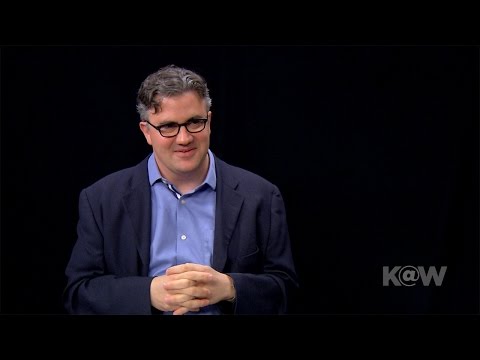
The Psychology of Paying Taxes
Ask about Knowledge at Wharton
Episode Description
EPISODE OVERVIEW Wharton professor Alex Reese-Jones discusses the psychological factors influencing tax behavior, including loss aversion. He explains how individuals are more motivated to minimize tax losses than to maximize gains, impacting tax compliance, deductions, and avoidance. Reese-Jones also highlights the broader implications of behavioral economics in tax policy, emphasizing the role of psychology in shaping financial decision-making and government revenue collection.
PODCAST OVERVIEW Every day, business scholars answer pressing questions in their research - but what do their insights mean for you? In this podcast, Wharton faculty dive into what inspired their studies and how their findings resonate with the world today. Learn how research insights translate into knowledge you can use, with host Dan Loney.
Learn more at http://whr.tn/rippleeffect.
#taxes #taxpolicy #policy #publicpolicy ----- The Wharton School of the University of Pennsylvania is committed to sharing its intellectual capital through Knowledge at Wharton, the school’s online business analysis journal.
Launched in 1999, Knowledge at Wharton offers free access to:
- Articles, podcasts, and videos highlighting Wharton faculty research and analysis of current business trends - Interviews with book authors from Wharton School Press - In-depth series of curated content like Wharton Executive Education’s Nano Tools for Leaders - A searchable database of more than 10,000 articles covering all aspects of business - A weekly newsletter that delivers Knowledge at Wharton insights directly to your inbox
Visit the Knowledge at Wharton homepage: https://whr.tn/3qUpSBE Subscribe to the Knowledge at Wharton YouTube channel: https://whr.tn/3DEAgAU
Read the full transcriptHide the full transcript
- Alex Reese-Jones: My understanding of what's going on is absolutely that people are
- changing kind of the degree of attention and effort they put in to, say, pursuing deductions or maybe pursuing evasion, although
- I don't see that directly. - Right. - Things like that. Yeah. And so I think that is moving around. I mean, in some cases
- that's desirable. In some cases it's not, right? So taxes, we basically have two reasons for taxing things.
- - Welcome to <i>The Ripple Effect</i>, the podcast that takes you on a journey through the minds of Wharton faculty. I'm your host,
- Dan Loney, and in each episode, we'll be diving deep into the inspiration behind the groundbreaking research that
- Wharton professors have conducted and exploring how their findings resonate with the world today.
- Dan Loney: Well, did you know that there's an element of psychology in— that comes into play
- when you think about how we think about paying our taxes? Especially when you look at things like losses and gains.
- Warden Professor Alex Rees- Jones has taken a deeper dive into this component of taxes, and he joins me here in studio
- to talk about it. Great to see you again. How are you doing? - Great to see you. I'm
- doing great. How are you? - Thank you. What was it that first got you thinking about
- this component of psychology in taxes? Well, I mean, this is a little dated now. But when I was in graduate
- school in like, the late 2000 aughts, I was very interested in behavioral economics, which is an area of economics that's all
- about trying to build more models from psychology into the way we do kind of regular economics. And at that stage,
- that was a very well-developed field, but it wasn't yet, like, as successful as it could be, because a lot of it was focused
- on, say, small lab experiments, and there weren't an enormous number of demonstrations of this stuff being really useful to
- think about big economic behaviors. And so a thought I had is that, no, I think people could be influenced quite a lot
- by psychology when thinking about taxes. And if that's true, that would count as a big economic behavior, and
- understanding how to model it better through psychology would be really useful just for doing regular economics. It turned out
- to be right, I think. And there's been many other examples like that in the years since. But that's what initially was my,
- like, point of entry into the field. And so I mentioned at the top that component of losses versus
- gains. I know you wrote about it in part about the losses component, about how we think about working the losses that we
- have, you know, kind of in our tax preparation every year. Yeah. So, you know, let me—
- let me summarize the idea on how losses and gains are mapped into it. I mean, the thing I was trying to get at in this
- study was how the idea of loss aversion would play out in tax settings. Now, the term loss aversion sounds pretty general.
- You know, you could imagine it applying to a bunch of things, but when behavioral economists use it, they mean a very
- particular thing, and they're referring to this reproducible finding that people seem to value, slightly increasing a
- gain, less than slightly decreasing a loss. So, like, to illustrate, let's say I'm asking you how much you how much
- you value a dollar that I'm holding. And you think about it, and you would hope you'd say, oh, $1 is $1. I'll think of my value for
- that. And then to put it in different frames, I could say, well, what if I already owe you $10 so this dollar is getting
- mixed in and turning 10 to 11. Or I could say, what if you already owe me $10 and so this is turning you paying me nine or
- 10, into you pay me nine. And in either case, I'm just giving you an extra dollar. $1 is $1. But the thing you see, very
- reproducibly, is that people care a fair bit more about making the loss a little bit smaller compared to making the
- gains bigger. And you know, that's not so surprising to many people, right? Like, people— people don't like losing. People
- don't like losses. So what— what would that matter for taxes? Or what's a way that might matter? So the reason I got to thinking
- about this is there's a very strong and natural gain-loss framing inherent in most people's tax experience. So come
- every April 15th, when you have to fill— fill out and submit your tax forms, a lot of this is going to be centered around
- doing a kind of gain-loss calculation, where the main thing you're doing is going through documenting all the
- types of income you had over the year and figuring out your tax liability. - Right.
- And that's really what the point of this really is. But the last stages of it are going through and
- saying, how much tax did I already pay, say, through with— withholding from your employer, or estimated taxes, or something
- like that. And then what's the difference, the balance due? And then based on that, I decide how much money is changing hands
- between me and the IRS. And so if I go through this, and I'm one of the 75% of people who over-withheld over the course of
- the year, whose employer kept more taxes than they needed to, I then determine, "Oh, actually, the IRS owes me money." I face a
- gain. Or I could be one of the quarter of people who are under- withheld, in which case I determine, "Oh, actually, I need
- to send a check to the IRS." Now I owe the IRS money. Now, the thing I want to think about is how much you care about doing
- something that changes your total tax liability, let's say by $1. You could again say $1 is $1, but you can imagine that
- being in this gain or loss frame could matter. That a person who is looking at a refund of 500 bucks says, "I don't really want
- to spend an extra half hour looking for tax credits or something like that." Whereas a person who has to send a check
- to the IRS, they might be more motivated to find extra things they could deduct or cheat a little more, or any of those
- types of things. Is there a component of this, then, that you think impacts the collection process of the taxes by the IRS?
- Absolutely. Yeah. So, to just briefly mention the finding which will play into the collection. I mean, the thing
- that I find by looking at distributions of balances due that are reported is pretty clear evidence that something's
- changing as gains turn to losses. And the way I rationalize it is by saying it looks like $34 more money, like,
- gets taken off your tax bill if you face a loss versus a gain. So what that means, from the perspective of tax collectors,
- is, first of all, when I'm forecasting revenue, I need to forecast, you know, the amount of tax avoidance activities
- that'll happen, and that will be a function of gain-loss status. If I'm thinking— thinking where to aim my, you know— my
- enforcement activities— who I'm trying to audit, things like that, this suggests you might want to aim at people
- facing losses a little more. And by the way, I kind of suspect they're already doing that, although I don't know for sure.
- - Right. - And, yeah, I mean, that's, like, the largest bit for kind of tax enforcement. At the higher level, when you're thinking
- about how you want to design the system, you could design the system to have more or less people facing a gain or a loss
- on Tax Day, and that's something that's within our control based on how we set up,
- like, withholding rules and things like that. But you would think that it also potentially has an impact in
- terms of the person who's filing the taxes, on how they think about things like deductions, and, you know, ways that they
- look to try and make sure that they have more deductions, so they're facing a smaller loss. And I think you even touch on in
- the paper that in many cases, we focus more on how we look at the losses than maybe we focus on how we look at the gains
- on the other side. I think that's right. Yeah, so it definitely— or my understanding of what's going on is absolutely that people are
- changing kind of the degree of attention and effort they put in to, say, pursuing deductions or maybe pursuing evasion, although
- I don't see that directly. - Right. - Things like that. Yeah, and so I think that is moving around. I mean, in some cases
- that's desirable, in some cases it's not, right? So taxes, we basically have two reasons for taxing things. One is because we
- need money, and we view it as a shame that we're messing up your decisions by taxing you to get that money, in which case we
- really don't want you to respond to the tax. In that case, it's really convenient if you're viewing it from, say, a gain
- frame, and you're not going to be as responsive. In other cases, we really want you to react to taxes, like when we put
- out a soda tax. We're trying to dissuade people from drinking soda by making it more expensive. The whole point of
- doing it is to get behavioral response. And in those kind of cases, if you could make things loss framed rather than gain
- framed, that would crank up the behavioral response and be useful. So that's kind of a way to riff off of this kind of
- observation. Part of this research, also, you took a look at how this type of mindset can impact business owners, and specifically small
- business owners as well. - Yeah. I mean, so the the relevant pieces for thinking about business owners
- here are, you know, first, they have lots of opportunities for either legal evasion or illegal— sorry, legal avoidance or
- illegal evasion. You know, relative to say, you know, a lot of individual filers who say, just have salary income.
- Business owners can get away with a lot more. Now, why do I say that? Well, the biggest determinant of tax evasion is
- just whether your income is matched or unmatched. What do I mean by that? When the University of Pennsylvania pays
- me my salary, they also tell the IRS what they paid me. It's matched, in that sense. Two parties said exactly what it is,
- and if I submit a number that's different than what Penn said, they look at my return immediately. So I have no
- opportunity to successfully evade my salary. - Right. If I'm running, you know, a sandwich stand, there's no third party
- saying how many sandwiches I sold— I sold. So as a result, if the IRS wants to dispute, you know, what I'm doing or what I'm
- claiming my income was, they have to show up and audit me. And even if an auditor comes, it's kind of hard to say
- exactly, you know, what happened. It's a lot of work to successfully audit people. As a result, businesses have more
- opportunity, potentially, to evade or do gray area stuff or legally avoid. And so if you look at the just total tax gap, which
- is the difference between the total amount of money the IRS thinks they're supposed to get and what they actually get,
- nationwide, this is like 15%. We're kind of missing 15% Of the money we think we should get, which is pretty good as far
- as countries go on tax enforcement. But for individual income, it's like— or individual non-business income, it's like
- 5% which is really good because there's so little you can get away with. For business income, it's like 40%, right? So there's
- just a lot more money missing, because it's harder to get it, you know? And so in those cases, there's a lot more of this
- discretionary thing where you can go in kind of small units at a time and say, "Do I want to report this income, or do I want
- to legally deduct this business expense?" Or do all these kind of discretionary things. And it's much less of a case where
- someone just sends you a thing and says your— "Your wage was $100,000, so report that." It's just incredibly easy, and it's
- more of a case where you're constructing this laboriously over hours and hours and deciding at what point you say,
- "Oh, this is good enough," and send things into the IRS. I guess, to a degree, then,
- the— the process of this overthinking that we have around taxes does benefit the IRS in terms of the collection,
- and to a degree, holding on to the money for the period of time that they do, and the benefit that they can— that they can
- find, at least in a short period. There's a few ways in which that's true or not true.
- It's mostly true. But the— you know, for— the fact that people are thinking about what opportunities to pursue, and
- then eventually saying, "Oh, this is more effort than it's worth." - Yeah. - That is in some ways helpful, because it results in
- people not claiming benefits they are due. You know, if we can get that from like, you know, "the right people", then,
- you know. So for example, if you can use this to get a little bit of extra income from comparatively wealthy filers,
- that's generally viewed as kind of desirable. - Right. - On the other hand, there's a lot of credits and deductions, where
- the whole reason we set them up is we really want to transfer money to someone. Like the Earned Income Tax Credit, which is our
- main kind of anti-poverty program. About 17% of people who are eligible for it don't claim it. And we think that's largely
- because it's so complicated to deal with that we've successfully dissuaded people in that process. So you know, in
- cases where we can save some money from whatever "the right people" means, the right people, it's a kind of good. In cases where
- this keeps credits out of people's hands, where we really want them to take the credit, that's very bad. Regarding the
- timing of it, there's another element that's kind of favorable to the IRS that's not specifically about prospect
- theory, but that interacts with it. And that's, you know, in our current regime, most people are over-withheld. So about 75% of
- people get paid money back by the IRS at the end of the tax year. - Yeah. And, you know, for the people who are doing that,
- that's kind of a bad deal in the sense of, what does it mean? It means you were giving the IRS money throughout the year, and
- then eventually they give it back to you, the exact same amount. Normally, when you give people money and they give it
- back to you later, they give you interest also. But not so here, right? So this is an interest- free loan that the government is
- getting from a lot of people, some of whom are low income, low income and high income. Across the board, we have lots of
- people loaning money to the government. And, you know, if— general advice I have for people is if you can avoid doing that,
- you should probably avoid doing that. Although very precisely targeting your withholdings is kind of a pain, so you got to
- decide how much of a— how to balance these things. So, you know, this interacts with our discussion of loss aversion in
- the sense that beyond generating some interest-free loan money for the government, this phenomenon of over withholding
- is also making people less motivated than they would be otherwise to avoid and evade taxes. So it has like a double
- whammy of being kind of favorable to the government to have a lot of people in the gain frame, and the only reason the
- government would really want to intentionally put people in the loss frame is if they wanted people to respond to these tax
- incentives. So for example, if they wanted to motivate people to take up tax credits to do things like that, right? - Right.
- What do you think is, then, your takeaway from doing this research, which— it was a couple years ago, but as you told me,
- the mindset and the focus on the psychology of this has really picked up and grown in the last few years as well. - Yeah, yeah.
- So you know, there is, like, a narrow takeaway and a much broader takeaway. So the narrow takeaway is kind of
- straightforward, in that it looks like this gain-loss framing actually matters to people. It influences what they
- do. It influences how much money the government's going to get. So we should pay attention to this stuff, you know. So that's
- that's straightforward from everything we've said so far. The thing that's a little bit broader— thinking far beyond
- this paper, but this paper is an example of it, is kind of about the value of taking psychology seriously when thinking about
- tax policy. And so there's, like, a field within public finance called behavioral public finance that has really taken
- off in, say, the last decade, that's focused on doing this. And what's— you know, what's the value proposition of all this?
- It's saying, look. The way economists and economics-related policy makers think about setting like the right tax is
- generally going to be trading off two considerations. On the one hand, we want to have tax money because the government
- needs to build roads and have an army and do redistribution to low-income people and do a bunch of other things, and all those
- things to varying degrees we think are valuable. We can debate how valuable, but there's some value in it, and that's the
- weight in this hand, right? On the other hand, getting that tax money is costly for society. So it's costly for two reasons. One
- is, if I take a tax dollar away from someone, that hurts that person. But kind of in some ways worse than that, when I
- impose taxes on society, it changes what everyone's going to do. So if I put $100 tax on apples, no one eats apples
- anymore. Everyone starts eating bananas. And I've made people worse off, because people who want apples can't have apples
- anymore, you know, because they're priced in a silly way now. If I make labor income really highly taxed, then people
- might work a little less and do something else with their time rather than work if it's no longer as profitable, and so on.
- And so what we're fundamentally doing in kind of optimal tax policy is we're balancing our need for money to fund the
- things that we want to fund and our desire, like, not to mess up decisions too badly. - Right.
- You know, economists write really elaborate models of this to try to make it look like a very
- fancy exercise. And it is. But at its core, it's just that, and, like, getting all the details right. And so when we're
- thinking about this component where it's like trying not to kind of roughly change what people do too much, that's
- fundamentally about forecasting what people will choose to do. We've historically done that by forecasting them to be really
- smart and they do whatever the maximally smart person would do, which is an okay approximation to what people do. But it's not
- a perfect approximation, as many of us will— as should resonate for many people. And so the real value proposition here is
- saying, "Look, we're getting a better grip on what psychological forces are at play when people respond to taxes,
- and by doing that, we're getting something that allows us to model what's going to happen when we impose taxes a bit more
- precisely," which fundamentally affects how you do this trade off, which fundamentally affects how you decide what taxes to
- use. And so, you know, this paper is like a very small rock in like a mountain that's being built trying to do that kind of
- stuff. Just saying, well, these models of prospect theory which have loss aversion in them, they can be one of those
- useful models to plug in. But that, combined with lots of other studies that are getting done, is actually showing, hey,
- you can really use psychology productively in this entire exercise. Alex, great to have you here. Thank you so much. - Thank you.
- Alex Rees-Jones of the Wharton School. - Thank you for listening to <i>The Ripple Effect</i>. We hope you found this episode
- informative and engaging. Don't forget to subscribe and leave us a review so that we can continue to bring you the best insight
- from the Wharton School.
Brief Summary
Wharton Professor Alex Rees-Jones discusses how loss aversion influences tax behavior and compliance in this episode.
Key points
- The Ripple Effect Podcast. Exploring the intersection of psychology and tax policy with Alex Rees-Jones.
- Loss Aversion in Taxes. Understanding how loss aversion influences tax behavior and compliance.
- Behavioral Public Finance. The growing field that combines psychology with tax policy for better outcomes.
Episode highlights
- The Ripple Effect PodcastExploring the intersection of psychology and tax policy with Alex Rees-Jones.“Did you know there's an element of psychology in paying taxes?”0:40Mar 11, 2025
- Loss Aversion in TaxesUnderstanding how loss aversion influences tax behavior and compliance.“People care more about making the loss smaller than increasing the gain.”3:30Mar 11, 2025
- Behavioral Public FinanceThe growing field that combines psychology with tax policy for better outcomes.“We should pay attention to this stuff.”14:13Mar 11, 2025