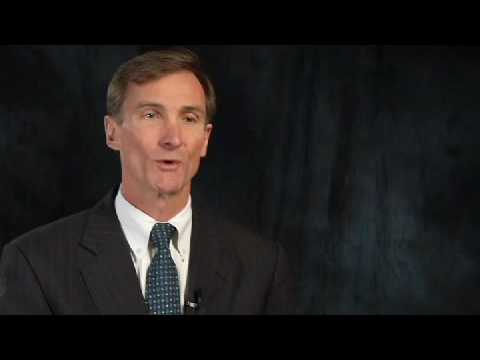
Security Expert Amos Guiora: "Cyber Terrorism Poses an Enormous Threat"
Ask about Knowledge at Wharton
Episode Description
U.S. defense secretary Leon Panetta recently spoke about the potential threat of a "cyber Pearl Harbor" that could cripple America's digital and physical infrastructure. Computer worms and viruses are being unleashed against banks, energy companies and other businesses in various parts of the world. How can firms and nations protect themselves against these attacks? Israel Knowledge@Wharton discussed these questions and more with Amos Guiora, a former officer of the Israeli Defense Forces, who serves now on the faculty of the S.J. Quinney College of Law at the University of Utah. His advice: Don't treat cyber terrorism lightly because though it doesn't leave a crater as a physical attack might, its consequences can be more devastating.
Read the full transcriptHide the full transcript
- [Music] [Music] uh Professor Amos Gora thank you so much for joining us today thank you so much
- for having me on October 12th Leon panetto is the former head of the CIA and now the US
- Secretary of Defense spoke at a meeting uh in New York organized by business Executives for National
- Security and he warned in that meeting that the US faces a pre- 911 moment as far as cyber security is concerned he
- spoke about the possibility of a cyber Pearl Harbor in which cyber actors could launch attacks on the country's
- infrastructure in conjunction with physical attacks uh do you think do you agree
- with this assessment uh and how vulnerable is the US today to such a threat and what could be its
- consequences I think first of all that secretary paneto was spoton in terms of highlighting the danger posed by cyber
- security as we were talking before we um started the interview I think cyber security has gone under the radar and if
- secretary Panetta intended to you know make it the Bold headline Pearl Harbor I think he was um effective and successful
- in that in terms of the threats posed by cyber security I don't think there's any
- doubt that the dangers and risks are enormous and if he intended this headline grabbing moment I think he was
- right to do that and I think it I think the discussion subsequent to that has shown how important it is to have this
- discussion now if such a Cyber attack were to happen where might it come from and who might the attackers be well I
- think first of all those who are engaged in cyber terrorism are seriously smart sophisticated people so it's a different
- kind of terrorist than say 9911 it requires a different skill set it can be from within it can be from without it
- just simply requires having a pretty sophisticated understanding of Technology of how the systems work and
- ultimately how to impact them and God forbid how to shut them down and whether again as I say comes from in within or
- without I don't think there's any doubt that if one thinks about down the road threats that cyber security cyber
- terrorism poses an enormous threat but would the threat come from say nation states or would they come
- from lose groups of U hackers like Anonymous I don't know about Anonymous but I think it would probably come from
- I would think more from non-state actors than from State actors um and hackers yes but obviously really sophisticated
- hackers because if you think I mean they don't if you think about the kinds of dangers that they pose whether it's
- shutting a system down whether shutting cities down impacting banking systems impacting the water flow of a system of
- a city I mean it just goes on and on because we are all obviously totally computer dependent uh think about
- airplanes in the air right um it just goes on and on and I think in that sense the dangers are so extraordinary one of
- the things that worries me and I think that's why it's important to have this discussion is I'm not sure to what
- extent we as a society fully and truly understand the threat posed by cyber security but depending on whether it was
- another nation state that was launching an attack or uh non-state actors as you mentioned uh what might the defense
- strategy be and and how would it differ in each of those cases I think if it's a
- nation state that's engaged in a Cyber attack not cyber terrorism because nation states don't engage in terrorism
- right it would be a Cyber attack I think that'd be equivalent to an act of war and I think an act of war is an act of
- war and according to article 51 of the UN Charter that would certainly enable the attacked nation state to respond to
- the attacking nation state if it's a non-state actor then it would be in the context of counter terrorism and the
- response at least from a legal perspective as I as I advocate would justify the nation state responding
- aggressively to non-state actors who are engaged in cyber terrorism which is yet
- another form of terrorism now to your mind which is uh which are some of the most uh dramatic
- examples of cyber Terror attacks in recent times uh and what might be some of the lessons that one could draw from
- the way the situation played out I'll give you an example I number of years ago met with a
- senior vice president of one of America's largest banks the bank had been infiltrated
- slash hacked um by one guy who was able to wire an extraordinary amount of money
- after having set up approximately 400 fictitious accounts and the kinds of money that
- this one guy I through these 400 accounts was wiring was lots of money all going to terrorism so there's a
- direct link between cyber security cyber terrorism and the financing of terrorism
- that is deeply troubling and it was very clear after the conversation with his vice president that his bank huge Bank
- in the United States was wholly unprepared and unequipped to respond to this that for me was a sobering moment
- in fact it's it's very interesting you mentioned that example because even in his spe
- Mr Panetta mentioned that there were some us financial institutions major institutions that were very recently
- targeted for uh cyber attacks can you give us a little I mean the the the kind of attack they faced was the distributed
- denial of service variety of attacks uh could you speak a little bit about what damage such such attacks can inflict
- upon the institution well first of all the fact that somebody is wiring or first of all setting up fictitious
- accounts and then wiring hundreds of of millions of dollars to terrorist organizations obviously impacts all of
- us but I think maybe more than that it shows how vulnerable the systems are and I think if I go back to secretary
- Panetta's comments about Pearl Harbor if you go back to think about Pearl Harbor
- itself how extraordinary vulner how vulnerable the United States was in retrospect and I think if and his using
- the phrase Pearl Harbor is like a claran call to understand our vulnerability and
- to begin baby steps to more effectively protect ourselves than to answer your question and I think that probably is
- the most important service he could have provided no unlike um Ground Zero in the
- case of a physical attack a Cyber attack doesn't leave a crater no uh and even when the private sector firms like the
- banks you mentioned have their intellectual property stolen very often they are not even aware of the fact uh
- how can firms get around this problem if it all I think the first thing that that
- the private sector needs to do and frankly also government is to recognize that cyber terrorism even though it
- doesn't leave a crater maybe leaves a larger crater and to more effectively begin the process of protecting
- themselves and their assets against some really sophisticated hacking it probably doesn't have the
- extraordinary appeal right of an attack at the 9911 the building is blowing up it's dramatic a cyber security attack is
- not dramatic there's no there's no real Visual and visuals are important but I would think that from the perspective of
- the private sector and the example I give you about this bank if I were CEO of an American major American financial
- institution I would say to my relevant vice presidents that in many ways our vulnerability is less or no less our
- building than our intellectual property our accounts the money and that we need to um take a pretty serious look at how
- well we are protecting in ourselves with the understanding that perhaps the answer is we're not protecting ourselves
- and then to undertake the process to begin the process of protecting ourselves from the Cyber attack the same
- way we're protecting ourselves against a physical attack Now American firms are hardly alone in in facing these attacks
- for example there have been reports about a virus called shamun that infected computer systems at aramco
- right the Saudi oil company and similar attacks have also been observed against Ras gas in in uh a major energ producer
- in Qatar right U so Al although cyber warfare can take place take place anywhere in the world sure which
- countries and companies do you think are the most vulnerable uh to such threats today well if One Believes the various
- media reports with respect to cyber attacks against Iranian assets last year and the previous year the studnik then
- it shows that indeed as you correctly mentioned that both States and Enterprises are vulnerable and Iran
- raises obviously important questions because of the nuclear program and how to convince the Iranians not to go
- forward with it and as tnik showed they are vulnerable um I think they probably present a pretty compelling example of a
- nation state engaged in an act creating a nuclear industry that according to some countries poses a threat to World
- security world peace and then the question becomes how do you convince them not to go forward and if a the
- penetration of a virus through cyber uh is effective in dissuading them from going forward then I would say a shows
- their vulnerability and B maybe that shows the effectiveness of some kind of a Cyber attack well I'm glad you brought
- up stack stack net because I I was just about to ask about that uh as you may know uh have seen recently there was a
- huge article in the New York Times about the fact that uh uh that that mentioned
- that perhaps the US and Israel had had collaborated to create that uh uh the computer worm right with the goal of
- crippling the Iranian uh nuclear facility in natans uh now under international law uh as it
- exists today are such attacks by the US and Israel legal on the assumption that indeed the US and Andor Israel were
- involved in right that's going to be the Assumption then I think you can make a pretty viable argument in the context of
- self-defense that the introduction of this worm or virus would meet various standards of of international law for
- the following reason Iran has been very clear about two things one is creating a
- nuclear industry and two a pretty clear articulation of their desire to use that
- the nent bomb if it were to be developed against Israel I mean right and then the
- question becomes how does Israel protect itself and what are the limits of protection protecting itself in the
- context of self-defense so if there's this industry being created nuclear program and these threats then I would
- think that an introduction of a virus would meet this test a of self-defense and B of limited self-defense and so I
- think from the perspective of international law I think that meets those tests okay now St net was detected
- when it quotee unquote escaped uh from Iran and found its way to the West uh according again to according to the New
- York Times uh us officials blamed Israel for this but regardless of who was responsible and who's at fault what are
- the chances that digital bombs like stuck Nest can fall into the wrong hands and then end up being used against the
- creators uh is there anything that can be done to protect uh people against that's why one hopes that those who
- create the world or the viruses are sophisticated enough to also introduce firewalls to make sure that it doesn't
- bounce back right you don't have a boomerang effect and therefore you don't have what you know what's good for the
- goose is good for the gander that obviously is going to depend on on the the technical skills and competence of
- those who are creating the viruses but there's always a risk whenever you create some kind of an aggressive
- mechanism U if it falls into the wrong hands you know it can you never know where it's going to potentially end up
- now countries like China and Russia are said to be actively developing their cyber
- capabilities uh now as cyberspace becomes a war zone is it realistic to believe that International regulations
- could be developed to bring about greater transparency uh and given the global nature of cyberspace and competing
- national interests who would oversee compliance that's a great question and it goes to a larger issue let's call it
- the the changing nature of international law to what extent is international law
- relevant to changing forms of technology and Warfare no doubt the issues you're raising here at China Russia cyber cyber
- cyber cyber space is probably going to require various International organizations um to be more involved in
- this in terms of international conventions International treaties regulating the use of
- cyber here we are 2012 and the verge of 2013 I think we're a long way off from really fully standing a the the
- dangerous post and B the benefits perhaps and it's going to take um Scholars academics the International
- Community Technical people computer experts to work together to a understand the limits and then to create it need as
- you say some kind of regulatory mechanisms to ensure that these new means are not used
- nefariously right now in the US uh some efforts are being made to deal with the legal issues also through initiatives
- such as the cyber Security Act of 2012 which was co-sponsored by Senators liberman Collins Rockefeller and
- Feinstein uh now the legislation has bipartisan support as far as I understand but it has fallen victim to
- legislative and political gridlock uh could you explain what some of the major hurdles are and what the
- implications will be if the ACT becomes law well first of all let's begin with the gridlock there is um here we are in
- election day right there there is something called politics in the United States um and issues like this even
- though there's bipartisan support there's always a political end to it a political aspect to it a lot of it
- obviously needless to say is related to the politics of Washington at the moment
- two going back to how we began our conversation I think there's still question to what extent we all
- understand the dangers posed I think also there are questions in terms of who's going to be your
- question about regulat mechanisms and I think probably this stage 2012 2013 with
- a new Congress coming in on January 20th I think we're unfortunately a long way away from as I said earlier
- understanding the benefits and understanding the dangers and even there has been even if there has been
- legislation introduced I think unfortunately we're more at a beginning stage than even at a middle stage in
- terms of understanding this and I think to that extent the the work ahead of all
- of us is is extraordinarily complex but simultaneously extraordinarily critic critical like to end with a hypothetical
- question you could be a law professor what are the chances of an allout cyber war between the East and
- West developing into a conventional War and what would it take to precipitate it
- so I don't know about war between East and West I think you know that Paradigm um hopefully came to a crashing end in
- December of ' 89 when the wall when the Berlin Wall came down but I do think that that cyber terrorism State
- non-state cyber War state state um is perhaps a more realistic option than we would like to think it is a realistic
- option and certainly more than it has been had been five years ago and I think something that as I say ear said
- earlier and I want to emphasize we need to be much more sensitive to and much more proactive with respect to in terms
- of establishing very sophisticated firewalls to protect ourselves there's no doubt that going back to I like your
- the term of the crater the crater left the crater right left by a Cyber attack um in many ways is far more dangerous
- than a physical crater one because you don't see it there's something um very disconcerting
- about that and shutting down cities shutting down systems shutting down Banks the long-term ramifications of
- that are extraordinary and um again as I said earlier to what extent we have begun the process of adequately
- preparing oursel I think that's an open question uh Prof Amos G thank you so much for joining us today thank you so
- much for having [Music] me
Brief Summary
Professor Amos Gora discusses cyber security threats and vulnerabilities, emphasizing the need for proactive defense strategies against potential cyber attacks.
Key points
- Cyber Pearl Harbor Warning. Former CIA head warns of potential cyber attacks likened to Pearl Harbor.
- The Vulnerability of the US. Discussion on how vulnerable the US is to cyber threats and potential attackers.
- The Risks of Cyber Attacks. Exploring the dangers of cyber attacks on critical infrastructure.
Episode highlights
- Cyber Pearl Harbor WarningFormer CIA head warns of potential cyber attacks likened to Pearl Harbor.“The US faces a pre-911 moment as far as cyber security is concerned.”0:38Dec 6, 2012
- The Vulnerability of the USDiscussion on how vulnerable the US is to cyber threats and potential attackers.“Cyber terrorism poses an enormous threat.”2:25Dec 6, 2012
- The Risks of Cyber AttacksExploring the dangers of cyber attacks on critical infrastructure.“The crater left by a cyber attack is far more dangerous than a physical crater.”16:05Dec 6, 2012