Defense Companies Face a "Transformer" Challenge Under Leaner Budgets
Ask about Knowledge at Wharton
Episode Description
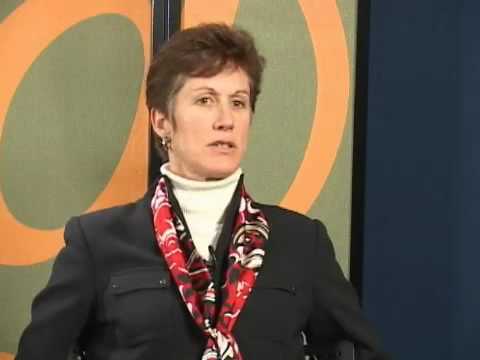
Like "Transformer" toy weapons, U.S. defense companies facing the new world of lean defense budgets must morph into new shapes to be able to offer customers value that supports ongoing growth. David F. Melcher, CEO of ITT Exelis, a defense, aerospace and information company spun off from ITT in 2011, considers the challenges in this Knowledge@Wharton interview. Melcher discusses the need for adapting to a 10-year down cycle in defense spending, forging new, "affordable capabilities" for defense needs, and building on existing technologies to create products and services increasingly apart from strictly defense revenues.
Read the full transcriptHide the full transcript
- [Music] [Music] We're speaking today with Dave Meltchure, CEO of ITT Excelis, which
- spun off from ITT exactly a year ago. About 70% of Excel's revenues come from defense related businesses. And so uh in
- this world today with sequestration and other issues coming to the four um everyone's wondering what defense
- companies are going to do uh in the in the new world. Could you tell us a little bit about your company and and
- the industry in general? We are a defense and aerospace company uh but we also do networking. Uh and one
- of the things we've tried to do over the past uh several years is to diversify a
- bit away from sole dependence upon the Department of Defense. Uh and so as you mentioned we're 70% DoD today and we're
- 30% other and that other constitutes uh organizations like the Federal Aviation Administration, NASA International is
- now about 10% of our revenues and commercial is about 3 or 4%. Uh and so we're trying to grow in those latter two
- arenas certainly and we're trying to find some other business uh be it governmental or you know otherwise that
- allows us to use our technologies in a different way than just solely supporting the department but DoD is
- still very important to us uh you know don't don't mistake that. Uh and so we've tried to you know adapt to thrust
- on for the Pacific uh different priorities and focus areas that'll be needed for the future.
- The military's gone so high-tech in recent years and um a lot of the discussion around the defense budget has
- been doing away with some of the bigger platforms which are seen as not as important whereas some of the more
- electronic capabilities are increasingly important. Could you discuss um how that
- shift is happening and um how your company's positioned for that? Well, I think we're very well positioned for
- being platform agnostic, you know, is is probably the way to term it. um we build
- the capabilities that either go on platforms whether they're new ones like the F-35 or uh if the decision is made
- to upgrade F-18s, F-16s, you know, we build a lot of capability that goes on those platforms as well. So, you know,
- we we don't rise or fall on any one ship or plane or ground combat vehicle. Uh in
- terms of priorities, electronic warfare uh has been a stated priority for the future. uh networking is a stated
- priority and of course we have deep capabilities in both of those areas. Uh and then sensors to decisions you know
- everyone says we have so many sensors today unmanned aerial vehicles you know airborne sensors shipboard sensors how
- do you make sense of all the data that's coming in through all these multiple venues we have a lot of capability there
- in integrating big data and you know making it more accessible to the users uh you know of of every service. People
- talk about big industries like defense. If you try to make changes, it's like turning the Queen Mary or perhaps a big
- battleship is a better metaphor. The whole industry has to shift as the Pentagon's priorities are shifting. Um,
- how difficult is that going to be for the industry? How much is it going to change? How different will it look 5
- years from now? Well, I think it is going to be a wrenching process uh for defense and aerospace companies,
- particularly those that are more pure play uh aerospace and defense companies. uh because the fact is we've been on a
- you know a growth pattern for the last 10 years and these things tend to go in 10ear cycles 10 years up 10 years down
- uh so I think everybody in industry is trying to brace uh for the proposition that this could be an 8 to 10 year down
- cycle so I think getting cost structures uh you know aortioned correctly to the amount of revenues flowing through the
- businesses re-examining footprint you know looking for ways to you know be more uh economical in delivering those
- capabilities and services will be extremely important. Affordable capabilities is something that all of
- our customers are going to need on the DoD side. Were these big tectonic changes in the defense industry um a big
- part of the decision for the spin-off of uh your company from ITT? Well, I think
- the the underlying thesis for ITT Corporation was that the sum of the parts, a big defense company, a big
- water products company, and a big industrial products company were not being valued, um, you know,
- proportionate to their their underlying worth. Uh, and so the theory was that if
- the company split up, uh, then defense and water and industrial products could be valued more in line with the
- multiples, uh, that were acrewing to each of those industries. I think the company felt it was a little overweight
- in defense on the eve of a defense downturn. Uh so you know since we uh have broken up I think that theory has
- basically held true. Each one of the companies has performed fairly well realizing that the economy is still not
- you know entirely there for the commercial side of the business and we know we're facing a defense downturn.
- But you know for our uh stock for example we came on the market at 1033 and as of yesterday we were at 1099. So
- there's been return to shareholders in that year and we've paid about a 4% dividend on top of that. So you know we
- feel like we've performed in line with expectations and the other two have as well. Uh but that was the theory of the
- case when you um were preparing for the spin-off. Uh what were the biggest challenges that you saw and how did that
- comport with reality and also what were some of the biggest surprises over the first year uh from the spin-off that
- that you found? Well, you know, the preparation for a spin-off is uh meticulous. Takes about 9 to 12 months
- depending on on how hard you're going to charge. You got to get all the SEC approvals. You certainly have to get the
- IRS approvals. You have to determine how to split up all the assets, if you will,
- of the company and the liabilities of the company. Uh you have to have uh transaction service agreements for IT
- and for contracting and for shared services. And so we had a very disciplined process to work our way
- through that over the nine or 10 months uh prior to the spin-off. Then once we had spun off, of course we had to build
- a corporate team and we worked on that prior to the spin-off. We went from a about a 60 person uh group headquarters
- inside of a larger corporation to about a 125 person corporate team adding tax and audit and uh treasury capabilities
- that were you know formerly part of our parent. Uh and so we we tried to bring in a good diverse group of people with
- different backgrounds and experiences including commercial experience to try and help us build a team that could be
- ready for the you know for the challenges that await it. For me personally as a CEO um the time
- allocations are very different. Um dealing with a board probably takes 25 to 30% of your time. Uh whereas you were
- not doing that previously. uh dealing with the external community, the analysts community, your investor
- community. Those are all new parts of the picture for a CEO of a spin-off company. And then not the least of which
- is managing the business uh now with no reliance on other parts of the company, you know. So if it's a tough defense
- year, perhaps the commercial business is doing well. If it's a good a tough commercial year, perhaps the defense is
- doing well. Now we're pretty much, you know, left as a defense and aerospace company uh that has to, you know, fend
- for itself in this marketplace. But I think, you know, we're trying to do that very well and manage the challenges uh
- that are out there. Um let's talk a little bit more about that funding for yourself. What's your what's your
- overarching strategy over the next two to four years, let's say? Well, we intend to be, you know, a very agile
- defense, aerospace, and networking company that can bring not only high technology solutions, but affordable
- solutions to our customers. And I'm talking customers in the Department of Defense, in the other federal agencies,
- internationally, and commercial customers. And so we have a very wide portfolio as you as you've observed in
- looking at uh what we do lot of core electronics air traffic management we have air structure composits business
- and we have a lot of sensors to decisions capability including cyber related capabilities. So what we're
- trying to do is focus our investments wisely on those things that represent the greatest opportunity for us uh and
- managing this portfolio in a in a smart way to take advantage of the growth platforms that we have even in a defense
- downturn. defense related companies um and the Pentagon are probably the biggest targets of attack of cyber
- warfare and um you therefore would have to have a lot of experience in protecting your systems and anti-cyber
- warfare and all the rest of it. Uh are you now or or will you be using that capability to advise other firms on how
- to secure their own networks? Uh we do in fact have a a very extensive uh you know cyber protection capability. We
- defend our own networks. Uh and like every other defense company and many commercial companies out there, you
- know, there have been a lot of attempts to try and extract information from those networks. We think we're very good
- at doing that. And the reason we have to be good is because we manage the FAA's air transportation network. We manage
- NASA's deep space network and the Curiosity Mars rover um you know effort is part of the network that that we
- manage. We have to have those networks secure as well. So it's not just about securing our own network. It's about
- securing the networks of our customers. And so we do think that there's wide applicability for those capabilities
- that we have. Uh we are advising a lot of federal customers with respect to that. Not so much other commercial
- companies. Uh we're not necessarily you know in the business of doing you know what what many companies do for
- commercial businesses. Tell us about the Mars Curiosity project. uh what your company does and uh any special
- challenges given that's probably the the furthest piece of equipment away from you that you've ever had to work with.
- Well, we manage NASA's deep space network which is a a series of three gigantic uh antennas uh in the Mojave
- Desert in Spain and Australia to try and communicate with all those things. uh you know the Voyager which is way out
- there now you know at the outer limits of the galaxy the Mars rover um you know you have to have a means of
- communicating with that capability so that it can do the experiments and send back the information uh we're very proud
- to have been uh managing that contract for NASA for the last several years and so we were out in Pasadena at the Joint
- Propulsion Lab uh the evening when the Mars rover landed and our communications folks were side by side with the NASA
- people trying to ensure that everything went according to plan and the series of
- miracles that had to happen for that thing to land uh cap you know on Mars and we were a part of that and we're
- very proud uh to have made a contribution to this great effort. Um could you talk a little bit about the
- specific opportunities you see for taking your technology which is as we say mostly defense related and applying
- it to non-defense businesses or niches. Mhm. Well, as I said, our commercial business is now today about 3 or 4% of
- revenues, but I think we have the potential to expand that going forward. And here are a couple examples. Uh,
- aerosure composits. We make these parts for the F-35 and for the Sakorski helicopters that are part of the marine
- inventory, but we've also done commercial parts for Boeing, and we're looking to expand that with Airbus
- Boeing and other commercial carriers uh because we have a great facility out in Salt Lake and can expand it. The
- machines don't care whether it's a commercial or a defense part. And so there's one opportunity. Space payloads.
- Uh we've built these for the government and very high-end capabilities, but we've sold a weather payload to Japan
- and we're trying to sell imagery payloads uh in places like the United Arab Emirates. Uh and then we also have
- some some defense technologies that have a commercial application. For example, one is uh a brain cancer treatment
- called Novacure. Um it was an Israeli technology. It's been through FDA trials, but it centers around the
- pasoelectric discs that are part of a harness that helps to prevent brain glyopblastoma and then lung also. Uh,
- and so it's because they they emanate a perfect uh electric current that was developed for DoD purposes on largecale
- sonar arrays but now applied to a medical technology. We also have a commercial uh imagery business uh you
- know and tools to take commercial imagery geollocate it and make it accessible to businesses that use that
- kind of information. So I think we really have a number of opportunities in the commercial um you know market that
- are close to our core capabilities in defense uh and that can be explo exploited as we go forward for the lay
- person. Would you explain in a little more detail what imaging means in in the way that you're using it? Uh when I'm
- talking about imaging, I'm talking about, you know, capturing images that uh perhaps are captured by space
- payloads or unmanned aerial vehicles uh and tagging that imagery to, you know, geoloccation on the ground for use. For
- example, Hurricane Sandy just came through. There are any number of organizations that need to look at
- patterns of what's happening with flooding as it relates to levies as it relates to, you know, other critical
- infrastructure that's on the ground. We have abilities to take layers and layers
- of data and make it accessible for use not only by uh military organizations. For example, in the case of solving
- improvised explosive device issues, but also available to commercial uh and federal uh agencies to use that
- information for what they need to do on the ground to execute their mission. So,
- it's taking all these layers of data and imagery and and using them in meaningful
- ways. So, this is cameras on satellites basically. Is that is that correct? Yes.
- Well, it it starts there, but it can also be cameras or infrared devices on unmanned aerial vehicles as well. Okay.
- Other areas um that that you've developed special expertise in that can apply to uh commercial areas that that
- would be interesting to know about. Well, you know, I think I mentioned a couple of them. Um you know, we're
- trying to look for opportunities. We've looked at uh you know, some energy harvesting solutions. We've looked at
- some power generating solutions because we have a power solutions business that have commercial applications for first
- responders and things like that. Um, you know, basically we try and and orient our businesses to bring forth good ideas
- like this for potential investment that have wider applicability and potential market applications in commercial as
- well as military markets. And so we're we're constantly trying to explore the frontier of what's possible. So those
- power applications would be what sort of portable portable generators? Yeah. Uh portable uh in power inverters that
- could be on vehicles and yield maybe three or four or five times the power that previously could be done by a
- commercial alternator. Where this is important is in theater for example where on vehicles now you have the
- radios plus you have geo positioning equipment plus you have jammers and you have other command and control
- applications all of which consume great amounts of power for a military application. The same is true now with
- first responders who have ever more capability that are going on their vehicles that has to be powered somehow
- and so we have a capability to do that that we've developed. anything more you'd like to tell us about your
- strategy going forward before we we uh end our discussion? Well, I I just think uh you know, Excelis is a new company.
- We're one year into our our new history. Uh but of course, we come from a 50-year
- legacy of defense capabilities within ITT Corporation. So, it's it's a new company by name, but an old company by
- capability. And I think the frontiers that we're trying to explore now, you know, for our Department of Defense as
- well as our other customers and emphasizing those technologies that are really going to be important for the
- future like networking, like imagery, like electronic warfare. Those are the kind of things that I'm excited about
- and I know our employees are as well. And so, uh, we think we have a bright future ahead of us and we're going to
- keep, uh, working to bring our customers the right things that they need to be successful. Thanks for joining us. Thank
- you. [Music]
Brief Summary
Dave Meltchure discusses ITT Excelis's defense focus, industry challenges, and future growth strategies post-spin-off.
Key points
- Navigating Defense Industry Changes. Dave Meltchure discusses the challenges and shifts in the defense sector.
- Spin-off from ITT Corporation. Meltchure explains the rationale behind the company's separation from ITT.
- Cybersecurity in Defense. The company emphasizes its capabilities in cybersecurity for defense and commercial sectors.
- Opportunities Beyond Defense. Meltchure outlines potential growth areas in commercial markets.
- Future Strategies for Excelis. The CEO shares insights on the company's strategic direction and focus areas.
Episode highlights
- Navigating Defense Industry ChangesDave Meltchure discusses the challenges and shifts in the defense sector.“The military's gone so high-tech in recent years.”1:43Dec 7, 2012
- Spin-off from ITT CorporationMeltchure explains the rationale behind the company's separation from ITT.“The theory was that if the company split up, then defense could be valued more.”4:16Dec 7, 2012
- Cybersecurity in DefenseThe company emphasizes its capabilities in cybersecurity for defense and commercial sectors.“We have a very extensive cyber protection capability.”8:43Dec 7, 2012
- Opportunities Beyond DefenseMeltchure outlines potential growth areas in commercial markets.“We have the potential to expand that going forward.”10:54Dec 7, 2012
- Future Strategies for ExcelisThe CEO shares insights on the company's strategic direction and focus areas.“We're trying to explore the frontiers of what's possible.”14:22Dec 7, 2012
Tension
45/ 100Some tension