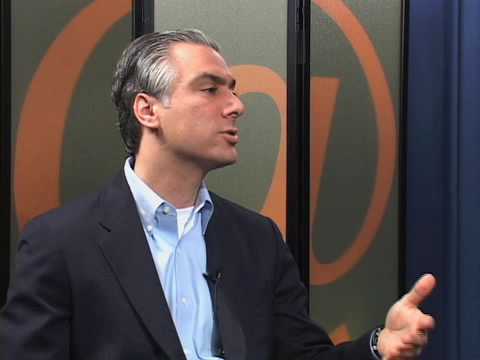
Monetizing 'Must Tweet' TV
Ask about Knowledge at Wharton
Episode Description
Television networks and advertisers alike are using social media to build buzz about programs and products -- but are their efforts really resulting in increased sales or higher ratings? Wharton professor Shawndra Hill is taking to Twitter and the airwaves in an effort to figure out how marketers should best employ user-generated content in trying to get consumers to pay attention to their products, or to make solid recommendations to existing fans. 📂 Marketing
Read the full transcriptHide the full transcript
- [Music] [Music] Shandra thanks so much for being with us today um we're here to talk a little bit
- about your research into social TV so I guess my first question for you is could
- you talk to us a little bit about what is social TV and what kind of got you interested in researching it sure so um
- I guess broadly speaking social TV is the integration of social media and TV programming um and this happens in a
- variety of ways so people um contribute somewhat organically uh on social networking sites like Twitter and
- Facebook and more recently there are a number of social TV applications that have been developed by um a number of
- businesses that have been quite successful that allow people to basically show how big of a fan they are
- of different TV shows so they do things like check into shows and communicate with one another and even social TV
- applications have been developed by networks themselves so networks um in the US at least have ways for their
- viewers to interact with one another on their websites and in fact are trying to
- drive them to their own websites to do just that now in for TV in particular I mean either TV networks or TV avatars
- what do you think it is that's kind of driving them to be interested in people on social media talking about their
- shows right so that's a great question so I think you know people like to talk about television and both networks and
- advertisers um only recently I would say in the past three and a half years noticed this right so people are doing
- this at large scale and so whenever advertising notice that people are doing um things at Large Scale they get very
- interested right and so then it begs the question sort of how can we use the fact
- that people are doing that to one you know better engage with viewers and customers or potential customers anyway
- um and then also hopefully make the viewer experience a little bit more meaningful so the networks are more
- interested in making the viewer um experience more meaningful so that will in turn sort of Drive more viewers right
- um but advertisers are really interested in understanding sort of what this interaction means for them with respect
- to selling their products and now youve done a number of different studies looking at various aspects of this so
- could you tell us a little bit about some of the studies and what you've been what you've looked at and kind of how
- you've analyzed it some of the different approaches you've taken sure so um we've
- run a number of studies um now some in the preliminary phase but two I think that are most notable are one where
- we've studied the popular reality singing TV show The Voice um and so the other is the Super Bowl so on the one
- hand we're interested in following a TV show that um has used social media as part of their programming and we want to
- better understand what that means with respect to viewer engagement on the other hand we followed TV advertisers
- during major national events including the Super Bowl so let's take the the voice so the voice as part of their
- programming does a number of things to engage um viewers on social media so one thing that they do is they simply put um
- a hashtag on on the show right so pound the voice is used as um an identifier for the topic The Voice
- additionally they put specific tweets on the screen that are both generated by users so they're contributed um by users
- and also contributed by people that are on the show and so additionally they um have what's called a social media room
- so this was I don't know of any other shows uh that were doing this at least when they did it the first time and
- during the social media room um they have an MC that basically um interacts with both the contestants on the show
- and the viewers in the audience and so using all of these different strategies they've been able to generate quite a
- bit of word of mouth on social media and so we have um tried to understand what has triggered the most word of mouth
- what seems to be working for the show and what seems to be less effective and so we found a number of things one I
- think most importantly that actually providing these triggers via either um tweet hashtags or specific tweets leads
- to more engagement um and also we find that the content in terms of the diversity of the content changes when
- these triggers are are posted on the show versus when they're not and maybe obviously we find that there's a
- different response to the social media triggers when um the show is aired for the second time so for example when it's
- aired on the west coast after it has already been aired on East Coast Live versus live exactly and I know you've
- also done you mention also mentioned a study about the Super Bowl could you talk to us a little bit about that sure
- so with the Super Bowl we um we knew in advance luckily who was going to be advertising on the Super Bowl and so we
- followed those advertisers on Twitter and on Facebook and were able to see um both what they were contributing during
- the Super Bowl and also how viewers were talking about the brands during the Super Bowl and so the remarkable thing
- is that we can see in real time how the users are responding to specific triggers again and so in this case it's
- both content that's happening um um during the show so where people are firms are advertising but also some of
- the um advertisers were doing things like playing social media games right and so when they did we found that the
- advertisers that actually included some kind of social media content but specifically the um the games in the
- social media content their buzz if you will so the amount of um or the number of tweets that people were contributed
- online were not only greater in number but also more sustained over the the superb which suggests that actually
- incorporating some kind of social media and content actually leads to more engagement and also more sustained
- engagement and if you believe that that's important which I think most advertisers do then they can think about
- sort of how to incorporate more social media content into their advertisements now when you say social media game can
- you give an example of that um so so they varied um so one example um was happening happened actually before the
- the Super Bowl so Chevy had a competition where they asked uh viewers to contribute commercials um and so one
- of the commercials that was shown during the Super Bowl was a commercial contributed by a user so they had people
- submitting these these commercials and as a result people were interested in who won right so that's one example um
- so another example is something that uh Coca-Cola did they had polar bears responding to the advertisement um
- responding to the Super Bowl in real time so um based on what was happening during the Super Bowl the commercials
- were adapting to that and and users were contributing content as a result now you
- had mentioned earlier to me that like you and your and your research team had got in pretty exacting detail gone
- through these shows I mean not just watching them once but I mean talk a little bit about some of the methods
- that you Ed in order to sort of track this and how exacting you had to get in terms of watching it and also tracking
- what was going on on Twitter or Facebook right great so in order to do the research that we're doing we we're
- basically pulling data from a number of sources so we are looking at Twitter and
- Facebook response obviously um because we talked a lot about that but in addition we're actually recording the
- shows and in order to later look at response to specific triggers we actually need to timestamp those
- triggers so we go back through the shows and note exactly when certain events happen so that we can see how that
- directly ties to the social media response and what's nice about the voice in addition to having the Twitter and
- Facebook data the content of the show that's tagged um we also have sales data so um part of the voice well how people
- voted um in part was by buying songs on iTunes iTunes and so we were able to look at the sales rank of the iTunes
- songs associated with the voice over time as the season was going on and so because we were able to calcul to
- collect that data we've been able to link the buzz to sales and so there huge questions out there not
- just um in relationship to TV but for social media in general around whether Buzz actually leads to sales or in the
- context of TV does it really lead to more viewers and so um it's been really nice to have all of these data because
- we've been able to link Buzz directly to sales at least in this case of the voice
- and where do you see the research going from here I me what are kind of your goals for the future in terms of taking
- this to the next step so we have a lot of we have a lot of goals so in addition to the specific case studies that we're
- working on we're actually working on a number of projects that look at Social TV in general so for example we're
- building a social TV recommendation engine that takes advant AG of the fact that people are contributing this
- content about shows and we use it to calculate the similarity between shows to make better recommendations about TV
- shows in addition um we're studying the relationship between how popular a show is um using neelon ratings right so in
- terms of how many viewers there actually are for a show and how social a TV show
- is so um other data that we've been able to get are check-ins on some of these social TV apps that viewers are making
- in public on Twitter for example and we can measure how social a show is and we're relating so those are things that
- we're already doing in the future I guess what is most exciting I think is one doing what you're talking about so
- coming up with some better analytics for social TV and social media in general to
- begin to link that to some business value um and then I think for me what's really nice to see um are people are now
- doing social TV for good so one example of that is um there was this Telethon that was um I guess it's been a couple
- of weeks ago now maybe a month where um it was called standup for cancer and so um they had celebrities it was it was
- kind of a new age teleon if you will where celebrities were talking about cancer and um during the broadcast they
- were of course trying to get people to donate for cancer research but they were interacting with viewers on the show in
- addition as people were donating they were talking about that on social media and also saying that they stood up for a
- specific person so it you know it was one example where a television show was actually trying to not even incentivize
- but motivating people to talk about this particular event and donating to a special cause um on social media and so
- there are other examples like that so PBS just really just recently um had a broadcast uh the show was called half
- the sky and it talked about um oppression of of women right it was really the subject of of the broadcast
- and they partnered with one of the social TV apps that I've been talking about get glue and with get glue they
- had the get glue um app users uh they gave them special bad for watching both episodes so it was a two-part program
- and they they partnered with the social TV app to get people to view and talk about the show and I think you know
- seeing these nice examples where not only you know is there the advertising story of course where people are you
- know trying to come up with analytics to better understand what this means for products and Brands but also you know it
- really just shows how important it is to think about the fact that regardless of
- if you um develop content to to to promote word of mouth on social media or not in TV shows that people are going to
- do it and so why not especially in the case of you know these good causes try to think about the best ways to promote
- that word of mouth so that you build more awareness even when people are not watching the television show so I think
- that that's particularly exciting for me and I guess down the road we've been talking with
- um uh a couple of of TV networks about running and not in this country by the way but but running um some experiments
- so as we begin to better understand what seems to be driving um you know sustained word of mouth and and more
- engagement using these TV triggers we want to begin to experiment with different messages to see whether we can
- actually um figure out exactly what is causing the response and I try to kind of go on on with that I mean in terms of
- this research I mean do you think if I'm a business I'm a network or an adver Advertiser how does it help me I mean to
- be able to use this sort of thing when I'm trying to create a social media strategy or figure out maybe how social
- media fits into my overall strategy right so I think um so I think from the network perspective they have to be
- thinking about a number of things right so networks um networks make money in part from advertisers and so for them
- they want to have a lot of viewers of their shows right and so it's kind of maybe an obvious thing to think about
- how um incorporating social media content will not only lead to buzz but also to more viewers so you know
- hopefully the results of our work will better inform networks that are trying to incorporate social TV content um I
- guess additionally advertising because it's a huge part of how networks make money is changing right so consumer
- behavior is changing and you know if people are glued to their computer or their phone or even their tablet when
- they are watching television it kind of changes how they're interacting potentially with advertisement and so I
- think networks and they know this um are going to have to pay attention to that fact and as a result come up with new um
- advertising models that take advantage of this and that's not a bad thing because potentially what will happen is
- because people are contributing content and thus revealing more information about themselves and their preferences
- you might be able to do better targeted advertising to Consumers and and therefore more effective advertising to
- Consumers that are watching TV right so potentially turning the fact that people's attention is divided and they
- might be able to fast forward pass the ads from kind of a negative into maybe a positive like figure out how to leverage
- what people are doing right into actually letting them know about a product right and then even better I
- mean the holy Grill of course is to drive people to buy things right I mean so it you can't buy at least today you
- can't buy anything by watching television alone but if you're online or on your phone you can sort of click
- something and and purchase and be driven directly to a website or something like
- that and so finally could you tell me a little bit about I mean what this research means what are the implications
- for consumers so first of all I think you know networks care about viewer engagement right and so you know on the
- one hand you're seeing Network respond to the fact that people are contributing in public for free um by creating new
- ways to enhance the viewer experience so I think you know viewers will benefit because there'll be new applications and
- new ways to engage with TV shows and even TV show celebrities um I think from from some of our work what's nice too is
- that um we can begin to use the content that viewers are contributing to help them learn about new content right so
- you know in some way we hope to give back to viewers um you know some insights into you know how TV shows are
- related and what they may like and we can only do that because they're contributing this content so I think
- users um and viewers stand to benefit tremendously from the insights that business analytics will give us um you
- know perhaps they're not as happy about the advertising angle but you know that's positive too perhaps because
- they'll get more targeted advertising right and so the advertising at least if you're going to have to watch it anyway
- will be more relevant thank you so much for talking with us today sure [Music]
Brief Summary
Shandra discusses social TV's impact on viewer engagement and advertising strategies, highlighting studies on The Voice and the Super Bowl.
Key points
- Understanding Social TV. Shandra explains how social media integrates with TV programming to enhance viewer engagement.
- The Voice and Viewer Engagement. Research on 'The Voice' reveals how social media triggers increase viewer interaction.
- Super Bowl Advertising Insights. Shandra shares findings on how advertisers can leverage social media during major events.
- Future of Social TV Research. Shandra discusses upcoming projects aimed at enhancing social TV analytics and viewer engagement.
Episode highlights
- Understanding Social TVShandra explains how social media integrates with TV programming to enhance viewer engagement.“Social TV is the integration of social media and TV programming.”0:37Dec 5, 2012
- The Voice and Viewer EngagementResearch on 'The Voice' reveals how social media triggers increase viewer interaction.“Providing triggers leads to more engagement.”4:45Dec 5, 2012
- Super Bowl Advertising InsightsShandra shares findings on how advertisers can leverage social media during major events.“Buzz leads to sales.”9:37Dec 5, 2012
- Future of Social TV ResearchShandra discusses upcoming projects aimed at enhancing social TV analytics and viewer engagement.“Viewers will benefit from new applications and ways to engage.”16:41Dec 5, 2012
Tension
40/ 100Low tension