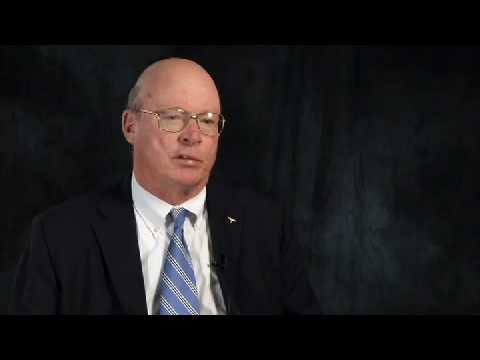
A View From Above: Roger Krone Boeing Network and Space Sys
Ask about Knowledge at Wharton
Episode Description
An interview from the recent Wharton Aerospace Conference.
Read the full transcriptHide the full transcript
- [Music] so let me frame it within Boeing a little bit because I think everyone has
- a view of what boing is so you know first of all Boeing is is um almost a$7 a billion company that's pretty much
- divided into two operating units Boeing commercial aircraft I think which everybody understands makes 747 Tri 7
- and then our government and defense and civil business is the other side of that
- that's Boeing defense space and security and so I'm on I'm on that side and in that business we have three sub
- operating units an organization that makes military aircraft called Boeing military aircraft one that does service
- and support called Global support and services and then the business that I get to run which is Boeing Network and
- Space Systems and we're about 11 billion in sales 20 some odd thousand people were in 41 States um and about 12 to 15
- uh different different countries and uh we're located at uh we have five major operating units um go through that if
- you like uh the information security systems is in Washington DC does border security site cyber works with the Intel
- Community uh a lot of the things that I think are becoming more and more important to the defense of the nation
- uh I've got an organization called uh missile defense systems based in Huntsville Alabama that does the
- groundbased midcourse defense Airborne laser lab a lot of real high-tech programs associated with intercepting
- inbound intercontinental ballistic missiles and tactical missiles it's great organization um I've got another
- organization called space exploration uh based in Houston Texas primary customers
- are NASA Johnson Space Center KSC uh space station program space shuttle program Aries 1 Aries 5 Al a lot
- of the manspace and uh the we call space science type uh type programs uh new organization out in Huntington Beach uh
- called Network and Tactical Systems uh the Army's large program Brigade combat team
- modernization uh a network Centric Army Brigade does a lot of other work uh related to digital networks comms radios
- handheld ground stations satcoms things like that and then my last operating unit is in elag gundo California uh
- satellite intelligence systems and that's really our satellite uh design development manufacturing operations
- organization and we make a whole host of satellites there um us govern government
- civil uh weather we also do XM radio Direct TV GPS so you know we talked with uh
- Michael Eggman about the topic you know last year was a lot about strategy this year we want to take strategy into
- execution um and I really looked at the audience and the the individuals who uh come to this terrific conference and a
- lot of uh top tier mbas a lot of Wharton students and Wharton alumni and I really
- want to relate one u u performance and execution around the development phase of a program so I'm not going to talk
- about science and technology I'm not going to talk about the production phase or the support or demill phase I'm going
- to focus on development which is primarily what I do in the network and space business I'm going to make a
- premise that says development programs are difficult it's why development we're usually inventing something or creating
- something is new we're trying to meet an emerging requirement we're frankly doing
- something that no one's uh ever done before we're kind of if you will go going into unknown space so it is it is
- predictable right that cost schedule are um are going to be a challenge to manage
- and I want to get that premise out because I think there's an expectation today that you can do development on a
- schedule um and their implication ations onto the contract type a lot of emphasis
- within DOD to move development to fixed price I'm going to kind of suggest maybe
- that's not the right way to do development and how we share risk between the customer the government um
- and the contractor and then hopefully to make it interesting U I've got sort of a
- you know top 10 sign posts so if you have a development program and you're trying to assess how your program is
- doing I'm going to go through sort of 10 lead indicators that you've got some performance and execution problems on
- the program and then the last couple slides is really to talk about okay so you you've got a development program
- you've got some challenges and cost schedule or technical uh what can you do about it and they're really you know you
- know three major areas it's kind of a people uh oriented area there's an area around managing uh the
- Baseline um and U working if you will uh with the customer and then the third area that I'll emphasize is frankly
- constant reviews and a lot of managing of detail and paying attention to both the the big and large aspects of the
- program but all of the smaller things in a program that go together to create success and so I've been doing this a
- long time this is probably my fourth decade that I've been in the defense industry uh I always like to say well
- boy this is a n this is an inflection this year is the inflection point and I think what I've come to understand is
- that every year is an inflection point and from you know when I was young I was in high school it was sort of a cold war
- environment uh and that created a certain threat which drove large platforms we all used to call the fold a
- gap scenario I think what has evolved now over time is frankly a change in the threat so we we went from kind of a
- bipolar U uh a globe to where it's just this uh multi- uh faceted threat very asymmetric that has occurred at the same
- time within the United States we've run into some very significant budget problems so we had a a trillion and a
- half budget deficit last year we've got other priorities like uh education and health care which are going to drive the
- budget and so what we're seeing in this shift the shift this time is away from some of these large Market key aat 1D
- programs into a lot smaller programs and a shift away from very large higher risk
- expensive platforms to smaller developments um things like you know cyber uh uh Network some smaller
- satellites and what it's done for us is it created new markets and new adjacencies white space that we can
- address within the the products and capabilities I have with the network space that we we wouldn't have been able
- to address had it been just business as usual so we actually find it a pretty exciting time and where uh in the past
- we might have spent uh a considerable amount of our talent on program execution and production we've now uh in
- the process of Shifting that Talent into uh Market identification and Market development and writing proposals and
- helping to shape business opport unities so that we can continue to win business
- and grow so we we we've created sort of a new word in this uh in this decade called cyber right and and you know
- cyber is really speaks to the infrastructure of computers and networks and applications that allow us to move
- information um and with a proliferation and frankly our our society now is more and more dependent upon
- the networks and the access right that that gives us all the information right anytime uh you have a growth in a
- technology like that you also open up vulnerabilities vulnerabilities to threat people who don't share your
- ideals people who would like to attack the United States who would like to attack you know the countries that we
- associate with and because of the dependence on this cyber infrastructure we are seeing a a proliferation of
- attacks both from Nation States from non-government organizations and frankly from casual hackers uh so as we have
- developed these networks we've also developed a suite of defenses and uh you know at Boeing we have a very large
- proprietary Network that we use just to operate the business of Bowen you know we have over 500,000 IP addresses uh we
- have multiple terabytes of data uh we are as much a target for Boeing right uh as the Department of Defense so we all
- have had to create defenses and there's a whole Suite of things that we've done between firewalls and fast switching uh
- packet inspection and a lot of techniques that we use internally to protect our Network and then we have
- productized these and then uh moved them out into our customer base where we do uh Network management for various
- customers your specific question and you picked out a couple threats I think those are are well known you know there
- was a Cyber attack um around the Russian invasion of Georgia I think that one is
- has been uh well known there have been some on Wall Street relative to to banking I think those have also been
- well known and your answer was your question was sort of absolute can we ever 100% uh protect the network and and
- I would tell you that the Cyber threat feels more like the IED threat which is uh given any defined threat we we can
- build a counter to that threat so if if we know that they're going to you know hack in through a firewall using a
- certain techniques it's easy to build a a firewall blocker that stops that threat right and we do that and and
- frankly our cyber defenses is a very active very responsive uh type of Defense but what we're seeing is this
- very adaptive responsive reactive threat and I would describe what's going on now
- is it's a Continuum where we've we strive to create a balance where we went on the
- balance side so we have to forever be staying one step ahead of the threat creating new defenses new firewalls uh
- new visibility tools into the network because fixing today's threat's not going to be good enough and the reaction
- time that we're seeing uh in that Global threat is hours and days and weeks and that's exciting for us because we get to
- hire really smart college graduates in computer science and and uh uh uh Computer Engineering and we bring them
- into Boeing we work with customers they get to do real exciting work on on an hourly daily weekly basis their you know
- their uh excitement about coming to work for us is real high and then we get to protect
- the networks of the Nations so uh never an absolute uh we have the technology and the capability though to to defend
- the cyberspace that we need as a country to operate um but uh we will always need
- to be staying ahead of the threat
Brief Summary
Boeing's focus on development challenges and cyber security in defense operations is discussed by a senior executive.
Key points
- Boeing's Defense and Space Systems. Boeing operates in commercial and defense sectors, with significant sales and global presence.
- Challenges in Development Programs. Development programs face unique challenges, especially in cost and schedule management.
- Cybersecurity Threats and Defenses. Cyber threats are adaptive, requiring constant innovation in defenses.
Episode highlights
- Boeing's Defense and Space SystemsBoeing operates in commercial and defense sectors, with significant sales and global presence.“Boeing is almost a $7 billion company.”0:25Apr 6, 2010
- Challenges in Development ProgramsDevelopment programs face unique challenges, especially in cost and schedule management.“Development programs are difficult; we're inventing something new.”3:54Apr 6, 2010
- Cybersecurity Threats and DefensesCyber threats are adaptive, requiring constant innovation in defenses.“The cyber threat feels more like the IED threat.”10:23Apr 6, 2010
Episode quotes
Tension
50/ 100Some tension