Tariffs, Litigation, and the Art of Negotiation
Ask about Knowledge at Wharton
Episode Description
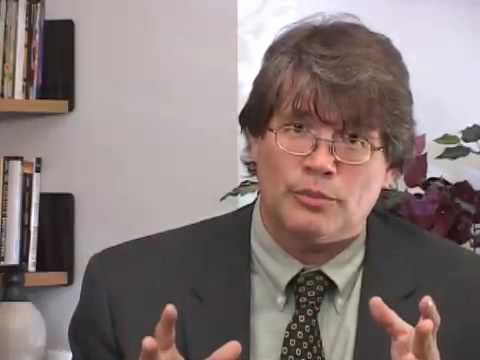
ABOUT THE EPISODE Wharton Professor of Legal Studies & Business Ethics and Management G. Richard Shell discusses negotiation strategies in the context of U.S. tariffs. Shell explains how President Trump's negotiation tactics rely heavily on leverage, cost imposition, and perception management rather than traditional relationship-based methods. The conversation highlights the contrast between transactional and collaborative negotiation styles in business and politics.
#Tariffs #Negotiation #TradePolicy #TradeWar ----- The Wharton School of the University of Pennsylvania is committed to sharing its intellectual capital through Knowledge at Wharton, the school’s online business analysis journal.
Launched in 1999, Knowledge at Wharton offers free access to:
- Articles, podcasts, and videos highlighting Wharton faculty research and analysis of current business trends - Interviews with book authors from Wharton School Press - In-depth series of curated content like Wharton Executive Education’s Nano Tools for Leaders - A searchable database of more than 10,000 articles covering all aspects of business - A weekly newsletter that delivers Knowledge at Wharton insights directly to your inbox
Visit the Knowledge at Wharton homepage: https://whr.tn/3qUpSBE Subscribe to the Knowledge at Wharton YouTube channel: https://whr.tn/3DEAgAU
Read the full transcriptHide the full transcript
- Well, negotiation is obviously an important part of any good business and an important skill for a business owner.
- In many cases, strong negotiation skills can be the difference between success and failure. But with all the
- conversation around tariffs being instituted by the White House right now, it brings forward the question of what
- tactics are being used in this process of trying to deliver tariffs. Richard Shell is a professor of business ethics
- and legal studies and management here at the Wharton School and he joins me right
- now. Richard, great to talk to you again. How are you, sir? I'm fine, Dan. Thanks for having me. Thank you. You
- know, one of the things I I saw and you had tal written about this in a paper a while back, but you mentioned the fact
- that negotiation is tied to leverage and maybe even more so within what President
- Trump is trying to bring forward. Explain that a little bit to us. Sure. Leverage is a concept in negotiation
- that's sort of the number one situational variable and that is as between the parties at the table who
- thinks they have the most or least to lose from a deal not happening. And so the u the measurement of that is always
- relative. It's uh often based on perceptions. But Trump is a master at manipulating perceptions and uh
- situational factors to try to give himself situational advantage, which is what leverage really is. Uh all right.
- So then uh as we see what is playing out right now, what is the strategy that he's trying to implement here in in this
- process? If only we knew, Dan. Uh uh I mean strategy is probably not the word you'd apply to Trump. tactics are. Okay.
- Uh and I think tariffs uh for him are a very familiar tactic and that is impose costs on your counterpart, make them um
- uh think about the no deal alternative in a much worse way than they did before and then negotiate from that position.
- And in in his business career, he was famous for using litigation to impose costs on suppliers and partners whenever
- there was any kind of dispute. And I think what he's discovered in this administration, he he toyed with it in
- this first administration, is that tariffs are a wonderful way to shift the balance of perceptions and that, you
- know, come to the table. We've got all this consumer power. We're going to impose tariffs on all your goods.
- basically deny our market to your goods and then we'll talk to you. Uh it of course tariffs are different than
- litigation because tariffs affect the domestic consumer and hurt them as well as uh foreign producers. Uh but I think
- we'll see. You know, it's only been 100 days. I think his gamble is that these terrorists won't bite the consumer uh as
- quickly as they will the foreign producers and that'll bring them to the table. How then potentially could the
- concept I guess the larger concept of litigation play into the mix moving forward here? Well, it Trump was famous
- for suing uh before talking uh all the way through his business career, but he was also very very
- um commonly uh settling at the end. So his goal in litigation was not to go to trial. his goal was always to use it as
- a lever and then uh extract advantage from the costs involved. And I think we'll probably we're already seeing some
- of that with the tariffs. He he he throws a big uh you know curveball into the global economy and the next day or
- the next week he withdraws half of it or all of it uh and is destabilizing things. And uh so I think what you know
- I don't think he's the kind of guy he doesn't like to go to war. I don't think and I don't think he likes uh to have um
- significant damage as the outcome. But how does then when you're talking about you know somebody who
- wants to negotiate in that style, how does the other side either react or maybe to a degree understanding that
- this is the concept prepare for this type of it's a great question. It all depends. So if you're China and you have
- a great deal of leverage of your own, then I think they're standing fast. Uh in other words, uh uh don't don't
- concede uh to this when you have your own power and and then have a conversation between equals. If you're
- Canada, then I think you have a patriotic issue. We're having an election today in Canada about that. uh
- but I think you're going to see uh a lot more interest in uh you know issue by issue product byproduct kind of
- negotiations over these as the posturing piece ends and the transactional piece starts and one of the other things I I
- saw that you wrote and it's important component here is the fact that in many cases with these negotiations that
- President Trump may be involved with or is around he's not necessarily the point
- person in the No that's his his style is is is very defined in that way. He throws uh he throws the the whole system
- into uh dis you know disequilibrium and then he's got a set of negotiators he's always worked with
- throughout his business career and now that go out in in this case he had Musk you know as a and and Musk's people
- going into the federal bureaucracy to u to to implement things he's got u his treasury secretary he's got his
- secretary of state others that are out there negotiating sort of dayto-day today and then coming back. That leaves
- him with the role of being the great um settler, the great the great uh dealmaker. Uh and it's often the case
- that he wants his negotiators to be more aggressive uh as as aggressive as possible so that
- he can be the one who goes, "Well, let's settle this." And that makes him look like the guy who won. So, how different
- is President Trump as a negotiator through this process than say 1980s Donald Trump as a real estate person? I
- I don't think there's a great deal of difference. Uh I mean his his uh his style has been marked from the very
- beginning of his business career as having these features an u an astute use of leverage uh a very proactive way of
- managing perceptions of the cost of no deal and imposing them on the other side and uh and walking out lots of of
- termination of negotiations, lots of bluster uh and then a lot of aggressive negotiators working for him. uh that he
- then mops up after. Is it a good process then to follow in terms of the idea of negotiation? Well, it's a transactional
- style of negotiation that cares zero for relationships. It's nothing that we teach at the Wharton School. It's
- nothing that's taught in most law schools or uh international diplomacy schools, but it is a style and it's very
- defined. He's branded it essentially with his book, The Art of the Deal, and with his behavior. And so it, you know,
- it it is it is effective to the extent that it requires others to adjust to him, but it is ineffective to the extent
- that long-term relationships and information exchange and creative deal making uh creating value are uh part of
- the story because people don't people will not trust him and they shouldn't. Richard, great to talk to you again.
- Thanks very much. All right, Dan, take care. Richard Shell, who is a professor of business ethics and legal studies and
- management at the Wharton School.
Brief Summary
Richard Shell discusses negotiation tactics and Trump's approach to tariffs and leverage.
Key points
- The Art of Negotiation. Negotiation is a crucial skill for success in business, often hinging on leverage.
- Trump's Tactics. Trump employs tariffs as a tactic to impose costs on counterparts, shifting negotiation dynamics.
- Transactional Negotiation Style. Trump's negotiation style prioritizes transactions over relationships, affecting long-term trust.
Episode highlights
- The Art of NegotiationNegotiation is a crucial skill for success in business, often hinging on leverage.“Negotiation is tied to leverage.”0:42May 9, 2025
- Trump's TacticsTrump employs tariffs as a tactic to impose costs on counterparts, shifting negotiation dynamics.“Tariffs are a wonderful way to shift the balance of perceptions.”2:21May 9, 2025
- Transactional Negotiation StyleTrump's negotiation style prioritizes transactions over relationships, affecting long-term trust.“It’s a transactional style of negotiation that cares zero for relationships.”6:56May 9, 2025