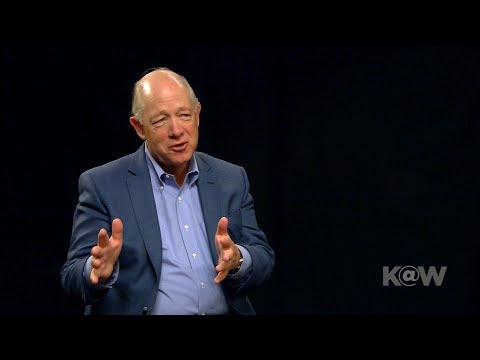
Tata Group's Farrokh Kavarana: 'We Are Just Trying to Reclaim Our Legacy'
Ask about Knowledge at Wharton
Episode Description
When insurance giant AIG ran into problems during the subprime mortgage crisis, how did that affect the company's two ventures with India's Tata Group? The impact was surprisingly small, according to Farrokh Kavarana, a director of Tata Sons, who oversees Tata AIG Life Insurance and Tata AIG General Insurance. Tata AIG's ventures are well capitalized and they more than meet regulators' solvency norms, he told India Knowledge@Wharton in an interview during the recent Wharton India Economic Forum in Philadelphia. Kavarana received the 2009 Wharton Indian Alumni Award during the Forum.
Read the full transcriptHide the full transcript
- [Music] The 2009 Wharton India Economic Forum titled India: The Road Ahead took place
- in Philadelphia and brought together CEOs of leading Indian companies, investors, heads of nonprofit
- organizations, sports celebrities, and Bollywood stars to discuss where India is headed. In an age of economic
- uncertainty, Indian Knowledge at Wharton brings you one-on-one conversations with
- these leaders. Cara, thank you so much for joining us today. Thank you. So much has been written
- about the world financial crisis and the uh recession, the greatest crisis since
- the great depression. Uh how do you think it has affected uh the Indian economy and the people of India?
- Um I don't think it's really affected uh the Indian economy and and the and the billion 1.2 billion people of India. Um
- it's what's really happened is that uh suddenly um demand has fallen in India partly because of domestic reasons and
- partly because exports are down because there's no foreign demand or reduction in foreign demand and that has its sort
- of multiplier effect in the whole Indian economy. So just like the rest of the world that seems to have fallen off a
- cliff in the last 6 to 8 months. Uh it was certainly falling but in the 6 to 8 months I think the drop has been
- incredibly um steep. I've never seen anything like this in my uh pretty long career now. Um and so it is worrying
- because we don't know where we are all going and that means not only the western developed world or it also means
- India and other developing countries because we've never had a situation of this this magnitude before but India
- being self-sufficient in so many things it's really a self-contained economy we depend on world trade for just about I
- think uh I may not have my figures quite accurately but about 20 to 23% um of the
- Indian GDP is accounted for by foreign trade. So 75% of the country or of our business
- business oriented GDP, agriculture and so on is insulated and is not really affected and our banks are pretty
- solvent. Uh uh they've not had the uh uh NPA or non-perform performing assets which western banks have had. We've had
- our own problems with non-performing assets, but they've been minor. A bit in property, a bit in car loans, personal
- finance, things of that nature, but nothing of the magnitude where you you have banks that need to be nationalized
- or or saved or or rescued. Um, so I think India has been pretty well insulated and we hope that it can
- continue to be. So, and I think the government of India has followed a sensible policy and not panicking.
- They've also loosened the taps on money supply to a considerable extent. So industry has
- enough finance available. A lot of us complain about it because it's uh uh it's nice to complain and to egg the
- government on uh to loos to open up the taps further which is going to be necessary. And I think just like the
- United States um uh you you've got to take a long-term view on this. Yes, you're uh letting money supply expand
- dramatically uh through a whole series of measures, but u and that it may create inflation in the long run. Yes,
- that's probably a given, but we see no signs of that yet. So, let's worry about perhaps a lesser problem then than worry
- about it right now. And I think the problem now is to get the world economy going, to get our own domestic economies
- going, but in a sensible balanced way. None of the excesses that we've seen in in the past decade or so both uh
- overseas and even in India and for example I think the excesses in the property market
- for example and even in the stock market you know valuations had reached ridiculous levels um and uh uh and and
- and a reaction was bound to happen. What about the insurance market has that been affected at all? The insurance
- market has only been affected I think uh in terms of people going a bit slow on using their savings u to put into other
- types of savings. Insurance is also a type of saving. If you if you're just taking plain u simple life cover that's
- not a saving. That's just pure insurance. But there are schemes which are attached to perhaps investment
- schemes, debt schemes, equity schemes, mix schemes. Um and people are slowing down on on that for sure. Right. I I
- know that the Tata group has been involved with AIG and I and I wonder if uh AIG's problems with uh the subprime
- crisis in the US has had any effect. In fact, it be very helpful to understand the a Tata AIG venture and and to see
- whether it has been an effect. Okay. Uh I won't obviously uh speak about AIG per se and the problems that
- it faces in the United States. It would be wrong for me to comment on that. uh but certainly in terms of our joint
- venture in India um it's a joint venture two joint ventures one on the life side
- and one on the general side general being non-life you know fire property casualty um and both uh companies have
- an equity holding uh from AIG of 24% and Tata Suns of uh uh 20 of 74% sorry did I say 26% yeah 26% and uh
- Tatas of 74% so We have a majority holding and we and the the capital is uh the companies are properly capitalized.
- They are properly regulated by the insurance um regulator. We meet uh um solveny norms um far beyond what the
- regulator requires. The normal regulation says that you must have 150% uh solveny ratio. We are in the life
- company probably nearer 300% and the or sorry perhaps 250% uh and in the general company 200%. So we are well
- capitalized. There's nothing to worry. In fact uh uh we've been very very uh uh happy at the response that we've had
- from our existing policy holders uh because as far as they are concerned they see the Tata name. The EIG name may
- be known significantly in in the western world or in other countries. Uh it's not it's relatively
- unknown. EIG's made a good uh start at building their brand in India. Uh unfortunately these events have happened
- over the last 69 months uh which may um leave them bit bruised and damaged. Uh but it but has been a great
- international name. So we've had no problems with our AIG partnership as such. They brought a lot of domain
- knowledge to the business. We brought in local knowledge. We brought in uh local
- local uh u marketing u in-depth marketing skills uh which I believe make for a successful
- combination. In fact, maybe a lot of people don't know but before uh um the insurance industry was nationalized uh
- Tatas had an insurance company in in its fold called the new India insurance company. It was founded by um sir I
- think it was sir doruptata um and in the 1930 it was founded in the 1930s and at
- the time of nationalization in the 60s and on the bout of nationalization in the 70s we were the largest private
- sector insurance company so we have some background uh some legacy uh the saying we just tried to
- reclaim our legacy right and I know in the course of your career with the Tatas you've also been
- involved with Tata motors which which has been in the news quite a bit. Uh I believe the Nano is uh you
- know about to be launched relatively soon. Uh given the auto uh auto crisis in the US, I wonder how you see the
- source of the crisis here and whether you know the Tata's expertise in the auto industry might offer any lessons.
- that would be a bit presumptuous to offer something to the United States. But uh but anyway firstly in terms of
- the the nano yes it is going to be launched uh in 2 days uh on the 23rd of March uh uh in moment and by launching
- it means it's really going to be available uh for the general public to start bookings and uh hopefully
- deliveries. The original plan was of course that we would uh be starting off from a single mother plant um in Singur
- and uh we would have been uh we would have had nanos um in the streets of India or roads of India on the roads of
- India um 6 months ago. Uh but these delays have happened now we using other plants uh in in in in Tata Motors to
- produce the nano and the production scales won't be very large to start off with. uh but as soon as the uh plant in
- Gujarat and SAN becomes available uh and is fully geared up with equipment and commercial runs have happened then I
- think uh we'll see some volume sales. Do you think you might ever sell the Nano in the US?
- I would say not for the foreseeable future. It's difficult to say never uh or shouldn't one should never say never.
- Um but I think it's it's unlikely that the United States would be on our priority list. Certainly Europe would be
- on a on our priority list. Um and again when I say priority list I'm talking of say 3 years ahead 3 years from now. By
- the way I'm no longer associated with uh Tata Motors directly. Uh but at the group level whatever is public knowledge
- or semi-public knowledge I can perhaps share with you. But Mr. Tata himself at the Geneva Motor Show made a public
- statement, I believe, um that the Nano he hoped would be available in Europe at a reasonable time in the future. When he
- was pressed, he said maybe 3 years. Um and um and again, somebody asked, would it really be $1,000 uh sorry, a $2,000
- car? Um um and he said no I don't think so because we'd have to meet uh as it is
- it meets pretty stringent uh safety norms in India um and and in fact for Europe the norms today are not very
- different from the Indian norms but in the expectation that be higher norms as we go along three years he thought was a
- good enough period in which to get the nano up to European standards for sure and the price again he was pressed on
- and he said, "Well, if you want me to give you an approximate price, I'd say it's probably $5,000."
- Over the course of your career, what would you say is the biggest leadership challenge you've ever faced and how did
- you overcome it and what did you learn from it? Well, I think you you face problems and
- crises all the time. So I I wouldn't pick any particular one but I'd just say that uh we went through a very difficult
- time in Tala Motors um in uh soon after we launched the Indicar um when which was India's first really um
- domestic domestically designed and engineered and manufactured car um and it was not a creation of the car's
- problems. It was a creation of demand. demand just collapsed in the uh in in in in the economy. So it affected the truck
- business and Tata Motors at that time was really a truck company. It's now that it can proudly say it's also a car
- company but at that time it was very much a truck company and we were undergoing the transformation into being
- an automobile company also by creating a separate uh vertical in our organization
- but to change the mindset of people uh to go from a truck manufacturing uh manufacturing and quality uh mindset to
- a car thing was probably the key and u I bore the brunt of it because uh not that
- I was involved in manufacturing ing at all or quality. But because I was in charge of my my executive directorship
- contained one uh u one area and that was overseas exports or business overseas whether it was exports or local assembly
- plants things of that nature and the key problem was quality um and uh and I think uh Mr. started recognized that uh
- uh at that time straight away that uh we had to improve the quality and so we decided to to cut down our exports until
- we got our quality right and in certain markets uh because you see we had this great dream uh that yeah with with the
- indica it's again a bit like the Nano it's it was going to be a cheap uh cheap only in terms of price uh but value for
- money car uh the Nano today is you know everybody keeps calling it the cheapest uh car in the world but I I would rather
- call it the least expensive in the world and it's going to deliver real value for
- money. Uh because again to come to the narrow for a quick second contrary to everybody's views that oh it's just a
- rick shaw or uh something like that with paneling. No, it's really a full-blooded
- car. It's no different from we joked about it earlier about the folkswagen. Uh when I bought a folkswagen here uh
- was it you or somebody else? No. Sorry. Okay. Um as a student for $2,000 at that
- time. Uh so we reverting back to a $2,000 uh car u but a modern car uh but a smaller engine of course uh but uh but
- the price of the dollar has fallen considerably uh so in effect it's an even more efficient and a much greater
- value for money car uh today and so the quality issue I would say u data motors was uh was was a major issue
- and then of course the recession hit us very badly so uh the the car side was being supported for a while in its
- infancy by the truck side of the business in terms of uh profitability and revenue. Uh and uh uh so it's a bad
- time those two years but we came out of it very well. the economy revived. You know, it's in the automobile industry,
- it cycles. And then the lesson to be learned really is that you don't overbuild capacity, just an expectation
- that it's going to be a vertically rising market and that you've had four good years. So therefore, the next four
- years are also going to be good and the four years after that. So all you do is just say it's a five to six year cycle
- and just plan for that. And in in the recessionary conditions then you start maybe putting up capacity which will
- meet the demand when the next boom starts. Uh but uh but but this is a mistake that we all make and we really
- started expanding our capacity. So we had a big financial crunch. Uh one last question. I I know that uh one
- of the things that concerns you a lot is the problems that India faces. uh with of all the problems that the country has
- uh which are are you uh which do you regard as the as as the uh ones that affect you most personally and and what
- do you think can be done about them? I certainly think uh I mean it's it's you know poverty defines a whole host of
- things. So poverty whether it's poverty of uh u of of one's lifestyle or or or the basics of life poverty of education
- posity of uh you know basic electricity availability of electricity to live uh comfortably or use any any equipment the
- the whole manufacturing side of our industry so it's all interlin um I I would say that u today if one can
- alleviate basic human poverty and misery in India through whatever means it doesn't matter
- even if the government gives out massive dos but if it reaches the poor and they
- have the ability then to spend it on useful things and it doesn't mean that uh suddenly the village girls start
- applying lipstick and uh things of that nature but it's used in in a in a in a focused way um and and there's hunger in
- India it's not as if there's no hunger in India yes we've had a wonderful food revolution and a milk revolution and uh
- all these things we are supposed to be self-sufficient um in food grains but real the reality is
- that it doesn't go down to the masses and that 2/3 that's in the villages or in in fact in the slum dog millionaire film
- slums of Bombay Daravi and so on it doesn't reach them but it reaches them because they are trying striving to get
- out of it they are working harder they've got the willpower they've got the And I think just like those two kids,
- they'll do they'll win it. Thank you so much for joining us today. Appreciate it.
- Thank you. [Music]
Brief Summary
The episode covers India's economic resilience during the 2009 crisis and the Tata Nano launch, highlighting challenges in the auto and insurance sectors.
Key points
- The 2009 Wharton India Economic Forum. A gathering of leaders to discuss India's future amidst economic uncertainty.
- India's Economic Resilience. Despite the global financial crisis, India remains insulated with a strong domestic economy.
- Launch of the Tata Nano. The much-anticipated Tata Nano is set to launch, promising affordable transportation.
Episode highlights
- India's Economic ResilienceDespite the global financial crisis, India remains insulated with a strong domestic economy.“India has been pretty well insulated.”2:46Apr 9, 2009
- Launch of the Tata NanoThe much-anticipated Tata Nano is set to launch, promising affordable transportation.“The Nano is going to be launched in 2 days.”8:24Apr 9, 2009
Tension
40/ 100Low tension