The Hidden Cost of Poor Money Habits | Financial Literacy Tips
Ask about Knowledge at Wharton
Episode Description
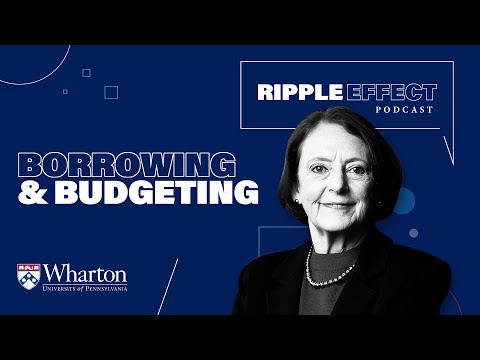
Financial literacy is more important than ever, as many people struggle with budgeting, overspending, credit card debt, and rising threats like scams and identity theft. Wharton Professor Olivia Mitchell explains how parents can teach money skills at every age and why early financial education is key to long-term success. With poor financial habits costing Americans billions each year, building smart money habits is essential for a secure future.
ABOUT THE PODCAST The Wharton Business Daily podcast features interviews with top business leaders, innovators, and renowned Wharton faculty about the latest news, fascinating trends, and issues impacting both consumers and the business world. Episodes are recorded at the Wharton School.
#FinancialLiteracy #MoneyMatters #PersonalFinance #MoneyManagement ----- The Wharton School of the University of Pennsylvania is committed to sharing its intellectual capital through Knowledge at Wharton, the school’s online business analysis journal.
Launched in 1999, Knowledge at Wharton offers free access to:
- Articles, podcasts, and videos highlighting Wharton faculty research and analysis of current business trends - Interviews with book authors from Wharton School Press - In-depth series of curated content like Wharton Executive Education’s Nano Tools for Leaders - A searchable database of more than 10,000 articles covering all aspects of business - A weekly newsletter that delivers Knowledge at Wharton insights directly to your inbox
Visit the Knowledge at Wharton homepage: https://whr.tn/3qUpSBE Subscribe to the Knowledge at Wharton YouTube channel: https://whr.tn/3DEAgAU
Read the full transcriptHide the full transcript
- Dan Loney: Well, the topic of financial literacy is one that continues to draw attention, but are we seeing significant enough change
- in how we approach the topic, as well as helping our younger generations be better prepared for the time in their lives
- where they have to be fiscally responsible? Pleasure to be joined by Olivia Mitchell, who's Professor of Business Economics
- and Public Policy, as well as Director of the Pension Research Council here at the Wharton School. Olivia, great to talk to
- you again. How are you? Olivia Mitchell: Very well. Thanks. Thanks for having me back.
- - Thank you. You and I have talked about this topic a few times over the years, and I know how much you have focused on it, and you know
- that I am a dad of three teenagers, and it's very important to me as well. So larger scale, where do you think
- we are on the topic of financial literacy at the moment? - Well, there are few silver linings out there. There's a
- rising chance of getting financial education in high school these days. Twenty five states now require a course in high school
- in financial education in order to graduate. So that's the good news. But overall, the story is still not a good one. The
- average financial literacy rate of US adults is low. Only 48 percent can correctly answer all three of our big three financial
- literacy questions, even though their self-confidence is very high. And financial illiteracy is actually rising over time. The
- percentage of US adults with poor financial literacy rose from 20 percent in 2017 to 25 percent just a year ago. So that gives me
- some concern. - What do you think still needs to be done in order to continue to
- grow and build the options to make those numbers better? - Well, there are several different topics that people need to get
- better educated about. One is they fail to budget. They don't track their finances. Also, they pay too many overdraft fees for
- credit cards and credit card interest, and they spend too much on luxuries, on top of which there's increasing scams
- online and identity theft. So all of these are things that I believe people could avoid and protect against if they were
- more financially literate. - How much, and I know you and I have talked about this as well,
- is I've been very focused as my kids have grown up about trying to implement things that I know I can help them with. And I
- think that's an important component to discuss here, is just where parents may be able to step in and help this process
- out. - I think parents have a critical role to play. For very young children, say ages three to five, we have to explain what
- money is, why it's needed, show them bills and coins, even though pennies are not going to be around much longer. Show them
- how to make change. Then when they're ages, say, six to nine, or maybe even younger, you can introduce the concept of doing
- chores or tasks to earn extra money. You can put in place a piggy bank or a savings jar to separate how much you're going
- to spend and how much you're going to save, and explain that time and money are finite resources, so you have to make
- choices. When my kids were that age, I set up the so called Bank of Mom, which was just a spreadsheet with their allowance
- on one side and their spending on the other. And if they wanted to spend more than they had, they had to do some chores. Then
- moving on to ages, say, 10 through 13, you have to introduce the idea of saving to hit targets for bigger
- purchases, maybe a bicycle, for example. I believe it's useful to open a savings account and explain what banks do. And then
- for your teenagers, 14 to 18, it's very important to teach budgeting, tracking expenses, discuss part time jobs, talk to
- them about paychecks, taxes, and how to live within your means. Also we have to explain credit and the risks of debt and why
- you want a good credit score. So those are some of the things that I think we can do and should be doing at various
- points along their growing up. - And I know it's also an important component for you as well, that
- doing this as kids are growing up can be important for their lives in terms of having this understanding and getting on a
- good savings path, so that they are prepared for when they reach retirement down the road. - Well,
- it's important for retirement, but it's also important much earlier than that. Almost 20 percent of American 15 year olds don't know
- how to comparison shop, budget, or track their expenses. So if they can't even do that, it's going to be very hard for them to save
- later for those bigger targets. - Then there is that -- I guess there is that impact of not
- having that understanding and what it means for retirement savings down the road.
- - Low financial literacy costs a lot of money. It's been estimated that low financial literacy costs Americans around
- 390 billion per year. So it wastes money. It also wastes time. People who are not financially literate are seven
- times more likely to spend over 20 hours a week dealing with personal financial and finance related issues. Moreover, if you
- don't save when you're young, you forgo all the beauty of interest compounding that will make you a happier retiree. So
- yeah, it has a huge impact. - And I guess there's also the important component of allowing
- kids and teaching them, but also allowing to make these decisions in terms of the critical thinking that they will need in
- a variety of different situations as they go through their lives. - I think that's true. Obviously, the parents need to lead by
- example. You can talk with your kids, depending on their ages, about household decisions, like, where are you going to go
- shopping? How are you trying to save? How can you reduce your debt? You can involve children in shopping
- trips, and if you have discount coupons, use those. I played Monopoly with my children, cards. My husband taught my girls
- poker. But financial concepts and how to manage risk. Then a little bit later on, we encouraged them to sell Girl Scout cookies and
- set up a lemonade stand and do a car wash. Each of those things contributes to understanding what's at stake, the money that
- you get from this activity, and what to do about it. And then, obviously, for teenagers, you have to talk about college and
- career costs, which is one of the big ticket items they all face. - Any other advice that maybe we didn't touch on that you think
- is very important in this process? - Well, I've always tried myself, and to talk to my children, about
- living within their means. That is, don't spend it all. Try to spend less than you can. In fact, my first house that I
- bought was the grand total of $45,000. And of course, it was a while ago, but it was a way to try to make sure that the
- mortgage didn't eat up the entire paycheck. It's also important to teach them the value of time. And like I said,
- time is a scarce resource, and if you waste it, then that's going to have negative effects on not only your spending, but
- what you're able to do later. I think a third thing I would say is teach them the difference between needs and wants, because
- a need is something, you know, food, a roof over your head, make sure you're safe. A want might be a luxury item, which today is trending,
- but you don't really, really need it. And then, of course, to reiterate, we need to teach them the habit of saving. And it's
- not that all debt is wrong or evil, but debt needs to be taken on with understanding and strategically. For example, if
- you take out a college loan so that you will be able to get a higher paying career, that could well be sensible.
- - Olivia, great insight. Thanks very much for your time. - My pleasure. Thank you. - You got it. Olivia Mitchell, Professor of
- Business Economics and Public Policy here at the Wharton School, and also Director of the Pension Research Council.
Brief Summary
Olivia Mitchell discusses the state of financial literacy and parental roles in educating children about money management.
Key points
- The State of Financial Literacy. Only 48% of US adults can answer basic financial questions correctly, despite high self-confidence.
- Importance of Early Education. Parents play a critical role in teaching financial literacy from a young age.
- The Cost of Ignorance. Low financial literacy costs Americans around $390 billion per year.
Episode highlights
- The State of Financial LiteracyOnly 48% of US adults can answer basic financial questions correctly, despite high self-confidence.“The average financial literacy rate of US adults is low.”1:13Apr 7, 2025
- Importance of Early EducationParents play a critical role in teaching financial literacy from a young age.“Parents have a critical role to play.”2:50Apr 7, 2025
- The Cost of IgnoranceLow financial literacy costs Americans around $390 billion per year.“Low financial literacy costs a lot of money.”5:20Apr 7, 2025