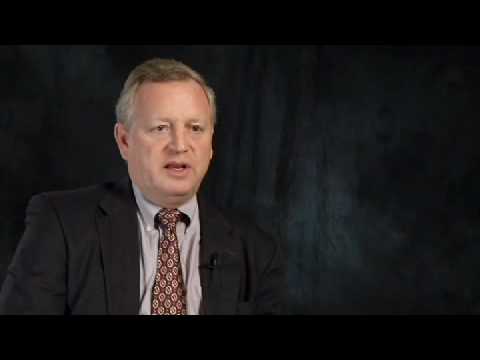
Views from a Top Contractor: David Melcher, president of Defense Electronics and Services at ITT
Ask about Knowledge at Wharton
Episode Description
David Melcher, president of Defense Electronics and Services at ITT, talks about the impact of the financial crisis on his company, the major challenges facing the industry under the new administration, how his company manages innovation and differentiates itself from competitors, and how it handles the challenges of managing across a global organization. Melcher offered his views in an interview during the sixth annual Wharton Aerospace Conference held recently in Philadelphia. View the Site: http://executiveeducation.wharton.upenn.edu/wharton-aerospace-defense-report/
Read the full transcriptHide the full transcript
- this podcast is brought to you by knowledge at Wharton for more information please visit knowledge. won.
- up.edu uh well it defense electronics and services is about a $6.2 billion uh defense group within it corporation
- which is about almost a 12 billion company it's a multi-industrial company and for our part in the defense group we
- tend to focus on Communications sensing and surveillance uh space based products
- as well as advanced engineering and uh services to our war Fighters wherever they may
- be you know we began to see a little bit of a downturn in the fourth quarter particularly in the commercial side of
- our business uh with respect to defense uh we continue to support all the needs of the Department of Defense as well as
- some other agencies and we have not yet seen uh any kind of a substantial drop off which I think makes sense given that
- a new Administration really has just come into power um they need an opportunity to take time to review the
- budgets and determine where they'd like them to go in the future so for now in this year we see actually more stability
- than not in the defense sector it defense actually began to look at you know different potential markets
- several years ago uh and had already been trying to move into some adjacent markets or to leverage some of the
- capabil abilities that we have within the company to provide a higher level of service in the markets that we serve uh
- we also have looked more at International markets uh because there is a quite a good demand for it defense
- products in the international Arena uh and so I wouldn't say that we have fundamentally adjusted the way that we
- do our strategy and our approach to strategy but we have looked for new markets to serve one example of that is
- in uh a program called adsp which is the air traffic control program for the Federal Aviation Administration not
- typically a place where a defense company would uh would reside but we uh started several
- years ago to uh you know pull together capabilities that would allow us to compete for and win that contract which
- has a lot of potential in a non-defense sector you know I would say that uh we are always looking for uh a supply chain
- that gives us the greatest benefit and you know the globalization that has occurred in all marketplaces I think is
- equally true with respect to it it's little tougher sometimes on the defense sector because of things like bamerican
- provisions and so forth that have typically been a part of that realm um but we are always looking to increase
- our productivity in the company and in fact uh have had a very robust uh you know value based Six Sigma uh approach
- that we have applied in all of our businesses for many years now certainly it goes right to our manufacturing
- processes uh you know and looking for ways to try and either you know uh increase the efficiency of the supply
- chain or to improve our processes uh or to use new technologies to to give us greater yield uh for the capital base
- that we have all that has been going on consistently uh and you know we have we have tried to make sure that we have
- multiple suppliers for each aspect of what we do whether it be production of radios or Jammers or night vision
- goggles uh to ensure that uh in particularly in this environment if somebody has economic difficulties as a
- result of the financial crisis that we will not uh have a a you know commensurate impact in our ability to
- produce our products for the government all of us uh are concerned about what is the future of defense
- spending uh I think uh you know if I were to try and get my crystal ball out I would say we would enjoy relative
- stability here in uh in fiscal year 09 uh I think we'll start to see some elements of change uh in the fiscal year
- 10 budget uh that will come upon the scene probably in the spring time frame after the new Administration has had a
- chance to review it uh and as you know during this year uh the Obama Administration will engage in uh an
- exercise called the quadrennial defense review which is a top to bottom review of strategy to resources and I think uh
- when that report uh goes in with the budget in February of 2010 we'll begin to see what are the big changes uh that
- will be in store for all of us in 11 and 12 time frame that being said uh you know it is finished a Very Good Year in
- 2008 uh we think we are somewhat resilient uh to the kinds of potential impacts that we might see in the defense
- Arena which are mostly oriented on large platforms uh and adjustments in how much
- we're buying of the big acquisition programs and because of the places where we tend to operate you know high value
- markets uh we still see a lot of opportunity uh even in the 10 11 and 12 time frame you know if you look at the
- priorities in this new Administration uh they tend to focus on intelligence surveillance and reconnaissance
- capabilities uh communication capabilities um you know sensing and surveillance uh some of the very markets
- uh that we are are most dominant in and so I still see a lot of opportunity there and and when you consider that we
- will be bringing back forces that have been in theater for now on to six or seven years all of that equipment uh and
- and Communications equipment and sensing equipment will have to be reset uh to get ready for the next challenge that
- comes along and I think that one of one of our goals is to make sure that we are
- positioning ourselves to have the best capability to reset to a higher standard uh so that you have something better
- than uh it originally was when you bring it out uh of a reset activity well we we try and invest
- appropriately uh you know in our own uh you know investments in science and technology uh a large part of our
- company tends to do a lot of work with Laboratories uh you know night vision Laboratories and others um we do a lot
- of work with specialized communities that deal in intelligence and so we tend to be on the front edge of a lot of the
- technological developments that occur um and that being said we always will look
- within our portfolio do we have the requisite capability can we grow it uh can we invest in it and if not where
- might we go to potentially uh buy or acquire that kind of capability which we believe is needed for the future so we
- end up partnering a lot uh with other companies both some of the big primes in the defense sector uh and in some cases
- they're the prime and we're the sub and in other cases we're the prime and they're the sub it all depends on the
- particular product well I think you know uh one it is understanding the context in which we
- envir you know the environment in which we are are uh existing right now to understand you know what are the
- priorities of a new Administration what kind of things are happening globally in
- terms of Defense markets or defense spending um certainly the economic conditions that uh face us all right now
- because no is immune to you know the the credit Market seizures and the other things that have been a part of this
- financial crisis so I think it is understanding that context uh building an appropriate strategy to deal with it
- for the future that has enough flexibility in there that you're you know you can weather what will be a
- business cycle or a defense cycle and still emerge from the other other end of that with the right products and
- capabilities that are needed by customers at the end of the day the customer will always drive the areas
- that we go into and the Investments that we make because because you know that is
- who we serve and we want to produce the best capabilities possible for them for more business news and Analysis from
- knowledge at Wharton please visit knowledge. won. up.edu
Brief Summary
The episode covers defense electronics, market strategies, and the impact of the new administration on future defense spending.
Tension
30/ 100Low tension