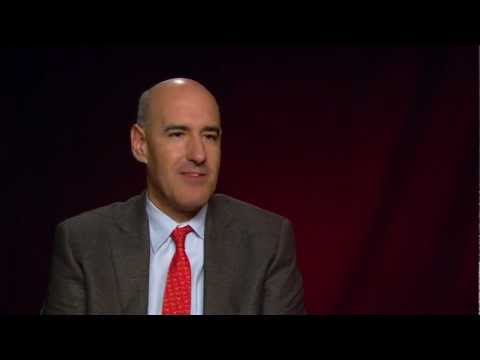
Wharton's Franklin Allen: China and the WTO
Ask about Knowledge at Wharton
Episode Description
Ten years after China joined the World Trade Organization (WTO), the country has become the world's largest exporter and accounts for some 10% of global trade. The International Monetary Fund predicts that by 2016, China will overtake the U.S. to become the world's largest economy. How did membership in the WTO help transform China? What will the next decade mean for China and its trading partners? To discuss these questions and others, Knowledge@Wharton spoke with Wharton finance professor Franklin Allen.
Read the full transcriptHide the full transcript
- [Music] [Music] Franklin thank you so much for joining us today my pleasure to be here uh I
- wanted to talk to you about uh the changes that have taken place in the decade that China has been a member of
- the WTO and also spent some time looking to the Future so to begin with I wonder
- if we could talk about what the situation was about a decade ago uh when China joined the
- WTO uh in 2001 its share of global exports was just around 4% uh today China has become the world's
- top exporter uh with a share of more than 10% uh any sense on how this has come about and how has Chinese business
- been transformed as a result I think it's partly due to WTO but a large part of is just due to the
- growth of China which since then has been phenomenal it's really gone from being quite small economy at that stage
- in global terms to having overtaken Japan last year and become the second largest economy in the
- world I mean so how exactly has China's membership of the WTO brought about the transformation of Chinese
- Enterprises and have they had to become more competitive and globally oriented and can you speak a little bit about
- that transformation process I think that's a longrun process and I think WTO has spurred that along and it's done
- faster than it would have done without WTO but it's been on this process now for about 30 years I I think one of the
- main effects was the opening up of the financial system to some extent and that has been ongoing and has been important
- but also all the other aspects of WTO membership have been important so for example speaking about the financial
- sector uh how has uh the WTO affected uh the the way in which the Chinese financial sector has evolved and the
- Capital Market has evolved well people or firms have been able to enter in a way that they weren't before it's not
- fully open in a complete sense yet but uh that will be a matter of time in my view but it may take some
- time uh could you do you have a sense of which sectors of the Chinese economy have been affected the most uh by uh
- China's after China's entry into the WTO and which ones are lagging behind and why
- so obviously manufacturing's done very well in this uh environment I think um services are still
- not as forward as as manufacturing so um there's a ways to go in the the globalization of the Chinese economy
- still right uh what are some of the opportunities and challenges that uh Chinese people face as a result of uh
- the China's participation in the WTO I think their main problem is still to build Global Brands they're very good at
- certain types of export but there are not too many Chinese companies that have Global names that people recognize there
- are some of course like Lenovo but not too many and I think this is the next big challenge to create these Global
- firms you you referred to the fact that China has now become the world's second largest economy overtaking
- Japan uh what is J China's uh growth meant for the world economy and can this growth be sustained
- because as we know the US market and the European market which have been the major markets for Chinese goods and
- services of primarily goods are are are sort of slowing down so to to foresee that in the next 10 years there could be
- some negative ShakeOut on the Chinese uh on on part of Chinese firms I think China will continue to
- grow at a high rate maybe not as high a rate as it do done the last few years but that's more to do with the problems
- in the global economy rather than than uh anything else I think their growth rate will probably slow to eight or
- maybe even 7% but it's unlikely to go below that simply because so much of their spending is on
- infrastructure and they current plan is to build out the tier 2 and tier three cities and that plan will take some time
- to implement and keep growth High see but is is there uh do you see rapid enough growth in China's internal Market
- uh to to offset uh you know uh decline in demand from overseas countries so there will will be
- some effect of that but people usually quote a figure of 35% or so for for exports but that's a
- gross figure includes imported energy and so on and materials the the net figure is about 10% is the number people
- usually quote and so it's not that large compared to investment for example which
- is around 40% of their GDP so this is the real driver and they can compensate for a lot with that and as opposed to
- exports now uh ever since China joined the WTO what are some of the biggest challenges that you find the country has
- faced especially in the form of trade disputes uh see with the us or Europe or Mexico so there are the classic ones
- like the tires and so on and I think these will be somewhat problematic going forward
- they are always going to be these issues about is Trade Fair and are there subsidies and so on and this is between
- all countries not just China and the us but also between China and uh the EU and
- the EU and the US and so on so I think there will be isolated incidents I don't think hopefully that they will get out
- of hand and become full-blown problems do the global economy you know continues to uh have
- some risks uh do you see uh protectionism becoming a factor I'm sure that there will be some
- protectionism I don't think it's going to be a major factor at least I hope not uh we'll see as as we go forward and how
- bad things become let's look turn now to what what's happening on the financial side
- uh with the RMB uh China has been making some efforts to globalize the RMB uh could you help us uh our audience
- understand what exactly is going on and what do you think is likely to happen over the next few years so they have
- been doing a number of things recently to try and move in this direction they have been encouragement
- encouraging settlement of trade in R&B and that's growing very fast but albeit from a low level so um but it is
- occurring and I think it will increase particularly in Asia the second thing they've been doing
- is to allow compies to issue R&B Bonds in Hong Kong and McDonald's and a number of other us firms have been doing that
- and that's again growing quite fast I think what remains is the most difficult and that is to have full convertibility
- of the R&B both on the current account and the capital account in the US we tend to emphasize the current account
- there is a deficit particular bilateral deficit with the us but I think really the more important issue is what is
- going to happen with the capital account the Chinese domestically have relatively few investment
- vehicles and I'm sure that if the capital account was to open up there would be a large outflow of
- R&B at the same time I think there are many people who would like to invest freely in Chinese assets and so there
- would also be a big inflow it's very difficult at this stage to say which of those flows would be bigger and which
- way the R&B would move in the long run what we've seen of course in the last few months and the last couple of years
- is that the capital account has become very important for the determin of exchange rates a classic example here is
- Switzerland so uh I think that that is a big issue and although people assume that the
- exchange rate would strengthen it's not entirely clear that that's the case I think when we get the new generation of
- leaders in China One of the hard things they'll have to decide is at what speed to move towards a fully convertible R&B
- I hope that they will do that and that in maybe 5 to 10 years we will have made significant progress in that
- direction uh what do you think will be the implications for other currencies like the dollar or the
- Euro I think in the long run we'll move towards a multi-polar financial system where the dollar will lose its Primacy
- as as the only currency the Euro has moved up significantly in recent years of course but that's now threatened by
- the problems in Europe my own guess is that there will be a bumpy road ahead for the Euro I
- don't expect it to disappear and so in the long run I expect there to be three Global currencies the US dollar will
- presumably still play the lead role but there will be two major Alternatives the Euro will be used
- widely in Europe and to some extent in in Africa and the R&B will be used in Asia and maybe also
- in Africa and then the dollar will be used in in uh nor North America and Latin America let's let's look to the next 10
- years and see uh how how do you see Chinese uh the Chinese economy evolving over the next 10 years what will be some
- of the major implications for other other countries I think it will continue to grow the IMF predicts that it will
- overtake the US in terms of GDP in purchasing power parity terms in 2016 so we're not that far away with all
- the dislocation in the world economy it may happen sooner or slower than that but at some point in the next 10 years
- it will become the largest economy in the world and then the big issue I think is how much bigger than the US will it
- get and in what's the time frame for that and So within 20 to 30 years it may well be a multiple of US GDP and this is
- going to have enormous consequences for the US and for other countries in the world the US
- May grow and and start to increase its growth rate by allowing more immigration and those kinds of things but the the
- way that people think about the world I think will change significantly if China
- does indeed become the largest economy so what could be some of the consequences to the US economy in the
- and Europe and other parts of Asia I think the big issue is is going to be competitiveness
- and at the moment as we talked about a few minutes ago China doesn't have a lot of brand names and a lot of well-known
- corporations I think it intended to develop a Hightech sector and it is doing that with Huawei uh for example
- getting the big contract in Sweden ahead of Erikson uh for their um telephone system however I think there have been
- setbacks I think the high-speed rail crash was an event which is significant in in this regard and I think the
- Chinese need to think hard about how to build their credibility in the high-tech
- sector and I think that will take some time and clearly that's the area where the US and Europe are still able to
- compete in in a significant way do you see any internal risks within China that could de uh sort of destabilize Chinese
- growth over the next years for example do you see a real estate bubble popping or some frisk in the financial system
- that could uh that could affect this sort of growth scenario I think what we're seeing in the Chinese economy at
- the moment is the bursting of a real estate bubble in some parts of the country I think that will have an effect
- on the financial system but as long as China is able to keep growing at 7 to 8% it can grow out of any of these issues
- and and I expect that to happen so there will be a bumpy time but I don't expect
- the long term to be significantly affected so any final words of advice for uh companies around the world on how
- they should U what should their China strategy be over the next decade I think they should be involved but they should
- hedge their risks and be involved in many places around the world Franklin thanks so much for joining us today
- thank you Mel [Music]
Brief Summary
Franklin discusses China's economic growth post-WTO, branding challenges, RMB globalization, and future risks.
Key points
- China's Export Growth. Since joining the WTO, China's share of global exports has skyrocketed from 4% to over 10%.
- Challenges Ahead for China. China faces challenges in building global brands and navigating trade disputes.
- Future of the RMB. China is making strides to globalize the RMB, encouraging trade settlements in the currency.
- The Multi-Polar Financial System. The future may see a shift towards a multi-polar financial system with multiple major currencies.
- China's Economic Predictions. Experts predict China will overtake the US in GDP by purchasing power parity by 2016.
Episode highlights
- China's Export GrowthSince joining the WTO, China's share of global exports has skyrocketed from 4% to over 10%.“China has become the world's top exporter.”0:51Dec 15, 2011
- Challenges Ahead for ChinaChina faces challenges in building global brands and navigating trade disputes.“The main problem is still to build Global Brands.”3:34Dec 15, 2011
- Future of the RMBChina is making strides to globalize the RMB, encouraging trade settlements in the currency.“China has been making efforts to globalize the RMB.”7:24Dec 15, 2011
- The Multi-Polar Financial SystemThe future may see a shift towards a multi-polar financial system with multiple major currencies.“The dollar will lose its primacy as the only currency.”10:16Dec 15, 2011
- China's Economic PredictionsExperts predict China will overtake the US in GDP by purchasing power parity by 2016.“China may become the largest economy in the world.”11:55Dec 15, 2011
Tension
45/ 100Some tension