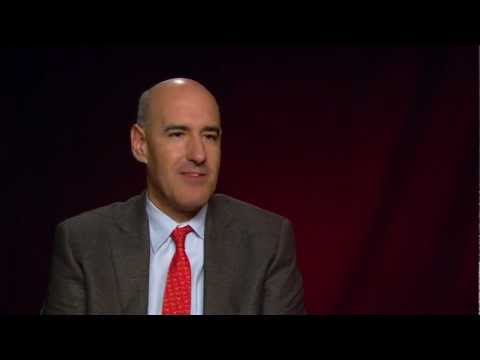
Zvi Eckstein: Global Economic and Social Hot Spots
Ask about Knowledge at Wharton
Episode Description
Fragile stability probably best describes how visiting Wharton finance professor Zvi Eckstein sees the world. From Cairo's Tahrir Square to Wall Street and beyond, the former deputy governor of the Bank of Israel recently shared his thoughts with Knowledge@Wharton about the world's economic and social hot spots. As 2011 draws to a close, people around the world -- including those in his home country, Israel -- face numerous challenges whose solutions are hardly easy. 📂 Finance & Accounting
Read the full transcriptHide the full transcript
- [Music] Professor Xin thank you so much for joining us today thank you thank you for
- inviting me uh I'd love to start by asking you about something that Israel's uh Finance Minister yal steinitz
- recently said he said that he thinks Israel's uh economy this year is going to do quite well but he's really worried
- about 2012 mainly because of Europe what is your view of Europe's sovereign debt
- crisis and how it could affect Israel's economy okay uh Israel economy uh has been doing very well uh growth this year
- is expected to be 4 .8 4.9 maybe reach even 5% uh unemployment went down to 5.6 uh inflation expectation forward are
- about the uh 2% so the economy in the macro sense is doing very well and uh export have been growing very well the
- key uh threat and risk for the economy is that uh the demand for Israeli product abroad would go down Europe hold
- about 35 to 40% of our exports and given the Slowdown expected in Europe which is
- going to be quite severe and we have seen already the ECB reducing uh interest rate uh uh we have seen just
- the forecast on the US economy together with Europe they are making more than 70% of the total exports so that's the
- key risk is really the reduction in Israeli grow of exports uh to go down to uh 4 5% and basically that means that
- the economy May grow next year in the range of 3.5 and that's what he sees main of the risk and 3.5 may actually
- may cause a little bit rise back in the unemployment I see well since we were talking about Europe and the ECB what do
- you think Europe's Central Bankers could have done differently well it's not only the
- central Bankers Europe now with the euro is putting together together 17 to 19 countries and then the EU which is
- consist of more than 30 countries uh did not really generate the central government uh decision making and uh and
- did not Implement uh strongly deviation from the M agreement of debt to GDP of 40% of deficit less than 3% etc etc and
- what we have seen is really Europe tackled back a big uh sovereign debt problems of uh uh Greece in particular
- but uh actually more threatening is uh uh potential problems with Italy and Spain and the key problem is that the
- Greece problem is already known to people who are analyzing data already from at least early 2010 if not before
- and it become to the public and uh markets reacted already from May 2010 and the main problem is that what
- has been done a few weeks ago and uh should have been done a year ago and that's mainly the one important decision
- they made is separating the European banking stability problem from the Greece uh debt uh default or or debt uh
- uh potential risk and that's what they did few weeks ago at least announcing they did it and that certainly reduced
- the tension in the way that markets now are less sensitive to the Greece problem
- because they view that June 2011 U mainly all the big banks in Europe will recapitalized to a 9% with a
- real haircut of 50 and more per of the Greek debt and potentially even an haircut on other debts if they would
- come and that's really provide the stability of the banking sector what do you think uh is on the cards in Italy
- and Spain well the cards in uh Italy is the main problem is that the political uh
- stability uh inside or instability inside generate uncertainty about the de to GDP ratio Italy economy has been
- doing not great to say the least really very slow growth even a negative growth uh debt is 115% of GDP um deficit is not
- terribly high but really to get back to a reasonable debt to GDP to back to the 60% sometimes in the foreseeable future
- Italy should take important steps and to revive its economy and to uh reduce the
- current deficit and uh to do that they need to probably have a more decisive government that they have now and as
- long as they don't do it we see the markets react and spread uh increase from the German debt and
- they have to finance this debt on a 6% interest rate that become going to be very very uh complicated and generate an
- increasing debt and if Italy debt which is trillions of dollars get into a the area of CDs uh uh risk that we might
- consider below AAA then uh Europe is in a real uh great trouble and the rest of the world world is in great trouble uh
- and Spain as well you feel I think Spain uh the feeling is that uh in Spain things are more stable uh is more
- manageable uh Spain the Spanish economy is doing bad unemployment is extremely high uh but uh it seems that overall uh
- the change in the political uh structure there will generate a path of back to uh
- uh normality also the level of the Deb they started with is much lower uh so there is overall Prospect of getting
- into instability are much lower and also the past behavior of the Spanish governments in controlling a very uh
- responsible fiscal policy uh and and banking regulation policy uh which come back they had one default on these local
- banks that generated too much household debt would be fixed I think uh Spain more likely will get very soon toward
- this year into a stable uh European standards let's uh come now to our this side of the pond uh looking at the
- persistent problems in the US economy how do you expect uh that to affect Israeli Farms well uh there are two
- aspect uh of course Israel more than about 30% of the Israeli export is going to the US however uh we are really
- exporting a lot to the high-tech sector and so far the high-tech sector has not suffered tremendously in the US and
- therefore the demand still uh uh was uh uh going well and we when we look at the
- indices of uh uh growth of the high-tech sector in the US it's still keeping up uh and that's where there is growth in
- the US it's not a big grow of uh jobs and therefore the US economy doesn't really get a gain a huge gain from this
- but the Israeli economy does so we see the new generation of the iPod and the iPhone and the Androids and all the
- different products and Israeli high-tech sector is a a key uh aspect there and so
- so overall uh uh the slow uh the the slow of the US economy G back to normality which is now foreseeable by
- the FED only to the second half of uh uh 2013 uh is going to have some effect on
- the Israeli economy but probably not tremendous effect right well as so as you have just said uh profin both Europe
- and the US economies are slowing down do you think that one possible solution for
- Israel could be greater economic cooperation with Palestine and the other Middle Eastern economies and would you
- what what's your view on that well in fact what has been going on in Israel is that that as the uh us and European uh
- economies were relatively growing slower uh since 2007 and even before we have seen an export shift into the Far East
- uh Israel exports are very Hightech uh we are on the if you do any comparison with other countries in terms
- of uh the combination of products that we are exporting we are really export software and uh and um machines and uh
- Pharmaceuticals and other things which are on the high-tech which is about 50% of our exports even more and therefore
- the possibility of exporting those goods into the Middle East doesn't seem to be
- the opportunity for Israel and uh we know that most of the trade uh of most developed countries is among uh more
- developed countries um what then can be done to increase greater economic collaboration within the middle east
- region I think the key to collaboration uh and the key to economic development for the Middle Eastern countries is
- stability peace and competition uh policies and uh I uh the key issue is stability and competition policies and
- uh really I think this is the main drawback of most uh Middle Eastern count countries and that's include the you
- know the West Bank and Gaza and maybe even Jordan Syria and Lebanon and Egypt is really uh uh economic stability
- political stability and then uh economic uh competition promotion uh in the country and also the open up of the
- country to Imports and Export and getting their comparative advantage to grow has has been the policies in most
- uh Far East countries which came from a very low income per capita to a growth um so one of the big importance uh to
- get really the West Bank is really to provide uh stability for uh the the economy there uh for the uh rules for uh
- rule of law for rule of property rights uh for ability to have a trade within the West Bank that's one of the main
- problem coming up from the um instability in the instability of the political and the defense problem and
- the terror activity and the and the involvement of the Israeli Army is the segmentation of this area and what we
- see is really the importance of first of all having an internal economy working and blooming but then the second part is
- really to let uh to them using their comparative advantage in some products and getting them exported because it is
- small economy and they can export export to Israel but really what they can do is
- really uh developing a large export abroad and not necessarily only to Israel well as you know the uh the re
- the political balance in the region has shifted quite a bit because of the Arab Spring uh do you think that the
- political shifts that have taken place in the Middle East as a result uh will uh enhance the possibility of great
- economic joint development with Israel and the region or could it hurt the situation I think why uh well first of
- all the the spring that we see in I think uh the the call in uh uh the square El in Cairo of uh justice and uh
- and social freedom and freedom and democracy hard moving to anyone who has been living in the Middle East
- and seeing Israel as only the model of what I would say modern democracies uh so just the possibility of having uh de
- democracy at pure democracy uh on a style which is close to what we see in the developed World in Egypt in Tunisia
- in uh Libya uh I I think uh would be uh great hope for the people there and that's I think the key what is important
- it's great hope for the people now how this democracy will shape into their economic policies it's a huge question
- mark um I think there are two important so if I have to mention two and I mentioned two I said it the other time
- what we need is first of all stability it's a uh political stability it's uh security stability and it is
- macroeconomic stability it's a budget policy stability and monetary policy stability those are necessary conditions
- but they are not enough without promoting competition and using the comparative advantage of the country in
- the world trade and getting integrated in a global economy it's hard to economy to start growing and what we see in
- India what we see in China what we have seen in Singapore Hong Kong Taiwan Korea
- and Japan many years ago it's really the this aspect that I mentioned stability consistent macroeconomic policy
- promotion of competition and I hope these countries uh will learn the lesson will listen to IMF uh uh advice on this
- aspect and uh then they will grow I think the relationship with Israel is one aspect of that I would say with
- Israel the key is to establish a stable um political environment and and uh uh geopolitical uh situation once we reach
- a stability and rather getting into uh debate and and fighting on every little aspect then it will grow I mean the key
- good example is the gas pipeline I mean there is a gas pipeline going from Egypt
- to Jordan and to Israel it it provides a lot of benefit to the Egyptians I mean very cheaply they provide us with a
- great gas to use uh for our electric uh production and for Jordan which a cheap price they make a lot of money out of it
- but then if they cannot really control the viability and the stability of this product it's very hard to see uh
- cooperation in other things I can give you just one more example I mean Israel in the south is a desert country Egypt
- in the sou in in in the area between Israel and Egypt is a desert country Egypt has a huge amount of water from
- the Nile for several thousand years um um it's Unthinkable uh in the geopolitical situation today to think
- why we not use this water to really Bloom the area why people think to bring water so far away from Turkey why not to
- bring the water which is already flood flood from the Delta to Alish which is just on the border why not to bring it
- into Israel into Jordan where we pay a huge amount for water maybe twice as much as would cost to transport it but
- it is the history and the geopolitical and and the threat and why do you take my water to give it to you water rather
- than thinking about the benefit it can bring to the people on two sides of the Border that's something that we have to
- really go through and if they would be able to do it politically it would be a huge gain yeah I think that's a thank
- you for that very thoughtful answer uh but speaking of protests as you referred to you know the the T Square um protests
- Israel also during the past summer saw a lot of protests in many different cities
- uh a lot of young people were shouting slogans against the Tycoon I think as they are called tycoons uh what what do
- you think are some of the main issues economic issues that face young Israelis and what policy changes are required to
- deal with those situations I think uh it's hard to me to say What are the underly mechanism to generate this
- protest uh first of all I'm not a sociologist or Psy social psychologist uh so I would just want to
- point out to an important issue which come up also with Occupy Wall Street which came later and which came uh there
- in Israel and maybe to some extent in the Arab Springs I mean young people want to see
- lights in front of them they want to work hard and to get to a better place um that has been in the last uh I would
- say during the 20th century or the second half of the 20th century of many young people in many places not old
- people old places and I think what the people at the streets of Israel the young people were telling us um we
- telling the policy makers we don't see uh a hopeful light there uh we see uh inequality we see deterioration in
- the services we receive uh we see uh a lot of people which are below poverty line uh and we ourself do not see
- ourself living in that standard that we were thinking we could in terms of uh reaching
- uh houses and reaching uh support we can give to our children support for education and so forth and I think to
- some extent there is a common view about this in uh in Wall Street uh I I would say that it's it is a populist uh
- common uh phenomena historically that when uh things get worse and you don't see the light then you point out to the
- very top people who entrepreneurs which some of them probably um earn their income legally but using Monopoly power
- um maybe some of them were even uh uh some of them were cooks and the police callede them or did not it's easy to
- point out to these people but really uh uh things are much deeper and much more complicated and uh and I think this
- aspect of uh uh actually trying to blame uh few people who were at the top of the
- earning scale uh in the last few years is not uh the way to think about changing the economy in fact when you
- look back on history there were always some people at the top of the scale and um there were people trying to um uh
- replace them and usually what happened is that they replaced them with other people it didn't change the situation I
- think what we have learned over time as Economist is that policies set by governments which uh enable people uh
- equal access to Opportunities and prevent monopolies and enhance competitions hard the policies that
- enhance growth and the light for the people at the end of the road and that's I think is what we try to implement in
- Israel and I would say not necessarily always with great success uh Professor xan I'd love to ask
- you some questions now about your research uh maybe I could start with a small question about a big issue what
- role has education played in shaping Jewish history oh that's a topic that uh we have been studying for the last more
- than 10 years we are publishing a book which says the Chosen Few our education the shape uh Jewish history uh I think
- the Jews uh have made a big change in their religion uh very much after the destruction of the temple um at the year
- 73 when where they make uh the learning of reading and later of writing by the boys
- of the Torah as the core of Judaism and when they promoted it over the years they basically generate the
- society or the first Society of mandatory education and I think uh uh already uh
- before the turn of the millennium Almost 100% of Jewish boys knew to read where the level of literacy
- on the farming societies around was at most 10% and that provided the Jews a big uh
- Advantage economically in choosing occupations that can fit their ability to read but not only to read I mean
- basically the reading was an infrastructure to a Jewish religion which is based on the Jewish law and
- rabbis and a whole system of uh decision and uh and uh there is a mishna which is
- the interpretation of the Torah the Torah itself is a law but then there is the mishna which take it into details
- and in the mishna it says that you have to read and then this mishna was interpreted by another set of law which
- is the Torah the talmud and then with the talmud there were rabbis who are using the talmud for years and they
- built on each other and and that generated an infrastructure for the Jews in the Muslim empire to start to become
- Traders on different distances where they can write contracts and they could if they have a disagreement on the
- contracts they could assign arbitrators which were the rabbis and they can move their
- families and they were trading from India uh from China all the way to Spain and to England and to France already in
- the e n 10 centuries way before Marco Polo in the 14th century start traveling over there and that's
- basically base the Jews as a what is called a merchant Society Urban society and they move into being Urban dwellers
- um earning uh relatively much more than most of the population around but in the
- process of moving to that um they separate themselves from the other religion which was
- Christianity which they called themselves the new Jews when they started which based on a on not
- requiring people to learn and expanding to a lot of people and basically the Jews live next to the Christians and to
- the Muslims mainly as an urban uh uh minority that migrated from its own will to find more income and being merchants
- and money lenders doctors Etc um I mean they continue to be leading in this aspect the world because the rest of the
- world reached to mandatory education only in the early 20th century so that was a big advantage of
- the Jews uh when they uh came to the US uh in the end of the 19th century they were they all came literate so for them
- gr into the education system in the US was kind of a natural so education that started with
- the change in the religion Norm had a huge impact on the whole occupational migration and population size of the
- Jewish people that's what we find in the book and we document it year by year our
- book actually end up just before the uh where the Jews were expelled from Spain in uh 1492 96 uh so we but we basically
- show that up to this period the key reason for the Jews choosing the particular occupation they were was
- mainly uh the comparative advantage they had from literacy and their uh goal of uh of uh of uh uh building up this
- Jewish community and this Jewish law rather than uh uh uh restrictions or uh as sometimes other historians and other
- people were saying the Jews couldn't own land most time they could own land they
- could be Farmers but the jobs they have chosen to do gave them much higher standard of
- living uh thank you for that do you also have a very uh uh another very interesting book coming out next year
- dealing with uh large of large scale immigration into Israel could you tell us about that research and your main
- findings yeah in uh in the early 1990 when uh uh we start seeing the large wave of immigrants from the former
- Soviet Union to Israel uh we established a group of researchers uh and we uh together um collected data on their
- integration of the Jews immigrants who arrive from the former Soviet to Israel uh during the decade from 1990 to 2000
- about 900,000 people came and they become like 20% of the Jewish population and which
- uh what we study is how well they integrated in the labor market and and there are several question one question
- is do they affect negatively the local the natives you know always the native are afraid of immigrants and what we
- document is that the the negative impact on netive was is very minor was very little was maybe for a year at the
- beginning and and really the main reason is that the government provided them way
- to invest in local human capital meaning they invested in adjusting their skills
- to the local market learning the language learning the uh jobs that are available in the new country like
- engineers in the new countries in the new country or other jobs uh with the with the machines that are available in
- Israel with the Israeli market and very quickly they integrated into the labor market and basically they expand the
- economy and the economy expanded by their interest in working in this and learning how to work in this so
- basically by allowing them to choose their occupation by allowing them to choose their location of study but
- helping them in investment in local skills uh made the integration in to the economy very smooth and make the economy
- growing through the entire period without any uh downturn so I think what we learn is uh
- if you bring immigrants the main issue that you have to worry about is uh providing them the
- resources to invest in the local human capital to get them integrate in the labor market and uh providing all the
- gains for the economy from their human capital to the economy that's sounds really fascinating because as you know
- immigration is such a huge issue in Europe in you know many European countries and also in the US what could
- uh the rest of the world learn from the way Israel dealt with this issue I think
- uh the Israel the way it uh mentioned is that you have to manage your immigration
- policy and um you cannot just uh think about uh immigration as a whoever want to come we make a qu or something like
- this uh what we what you have to think about is when you let people to come in you really want to provide them the
- mechanism by which they can learn how to integrate into the economy otherwise they may have a negative impact
- especially if you bring a low skill people in large amounts they really push the wage down to the to the low skilled
- people and that generate uh inequality and that's really the devastating so what you need is to control uh when you
- get immigrants in you want to control the diversity so they would come with different uh um skills and then when
- they come in you want to uh make sure that they have the means how to invest in the language in the skills required
- in the new country because the market does not provide uh the resources for this investment and the government uh
- investment there would pay uh very much with through the tax system to Y return to the whole country that's a great uh
- thank you for that I have one last question for you uh Professor xan you are a labor
- Economist and as you know the US economy has been struggling to create jobs if President Obama were to ask you your
- advice on on how can the US generate jobs what would you tell them well I have to study this uh issue I have to be
- honest I we have to really identify where are the main uh blocks in the labor market and the key question
- always in labor market is to match demand and Supply uh we have uh a long-term unemployed a lot of them from
- construction business uh with a lot of experience and relatively some of them with high wages in the past um and now
- we have uh the housing market is not really absorbing in them back um we have to study in detail what is the main uh
- blocks what are the main uh problems they find is it the demand side or is it the supply side in terms of adjustment
- of their skills and what we learn in the labor market is that uh it's not just the demand and supplies the matching
- quality you need to find the right workers to the markets uh so this I think is a today in
- the US it's highly complicated because what we do see already is a real problem in the uh demand side uh because still
- investment and consumption and uh consumer and investor and public um feeling and and uh and public perception
- of where the economy is going are not high enough to provide demand another thing is really I'm not sure that the
- workers who are there really understand fully the opportunities and whether they
- invest really in the right skills for the job market that they would face given the change uh of the economy and
- the Del leveraging and other things so I the one thing I want to say that I have
- not seen a good uh comprehensive research that um survey this data map the problems and provide a good enough
- uh solution that works on the two sides on the demand and the supply side focus on the on the people who are really
- unemployed and search for work and that I think is missing and um well Alan Krueger is a good Economist uh he's a
- labor Economist in fact most of the advisers to the government to the president now are labor Economist
- microeconomist and I hope they do this kind of research and really study the details of what's going on but if I want
- to summarize what we learn in the academic research it's really the matching and the quality of matching uh
- between uh the workers and the firms if I go back to the if I go back to my uh story on the uh immigrants what we find
- is really the mismatch of the quality is something we want to fix and when we enable the
- two-sided uh uh to overcome that it was uh much easier one reason there in Israel it was easier that the people
- came from the Soviet Union were willing to work for a low wage and that generate a lot of Demand
- by the firms I am afraid that one of the main problems now in the US is a lot of
- the people are not willing to work for a lower wage than they used to in the past
- it's hard for them to do that and that's uh uh make a problem for the firms to hire them and uh in this sense there
- might be a place for some subsidies on the match between workers and firms but I want to be careful
- on before I go and provide a to President Obama and his advisor a menu I I'm just guessing that that's could be a
- a way to look into this problem Prof Xin thank you so much for speaking with us today thank you thank you for inviting
- [Music] me
Brief Summary
Professor Xin discusses Israel's economy, European debt risks, and potential Middle Eastern cooperation amid global economic slowdowns.
Key points
- Israel's Economic Outlook. Professor Xin discusses the risks to Israel's economy due to Europe's debt crisis.
- Political Stability in the Middle East. The need for stability and competition policies in the Middle East for economic growth.
- The Role of Education in Jewish History. Professor Xin explains how education shaped Jewish society and economic success.
- Impact of Jewish Migration. The migration and population size of Jewish people had a huge impact on their occupational choices.
- Integration of Soviet Immigrants. In the early 1990s, Israel saw a large wave of immigrants from the former Soviet Union.
- Job Creation Challenges in the US. The US economy struggles to create jobs, particularly for the long-term unemployed.
Episode highlights
- Israel's Economic OutlookProfessor Xin discusses the risks to Israel's economy due to Europe's debt crisis.“The key risk is really the reduction in Israeli growth of exports.”1:50Nov 28, 2011
- Political Stability in the Middle EastThe need for stability and competition policies in the Middle East for economic growth.“Stability and competition policies are key for economic development.”10:12Nov 28, 2011
- The Role of Education in Jewish HistoryProfessor Xin explains how education shaped Jewish society and economic success.“Education had a huge impact on the occupational migration of the Jewish people.”25:14Nov 28, 2011
- Impact of Jewish MigrationThe migration and population size of Jewish people had a huge impact on their occupational choices.“The key reason for the Jews choosing their occupation was mainly their comparative advantage.”25:45Nov 28, 2011
- Integration of Soviet ImmigrantsIn the early 1990s, Israel saw a large wave of immigrants from the former Soviet Union.“About 900,000 people came and they became like 20% of the Jewish population.”27:03Nov 28, 2011
- Job Creation Challenges in the USThe US economy struggles to create jobs, particularly for the long-term unemployed.“The key question in the labor market is to match demand and supply.”31:10Nov 28, 2011
Tension
45/ 100Some tension