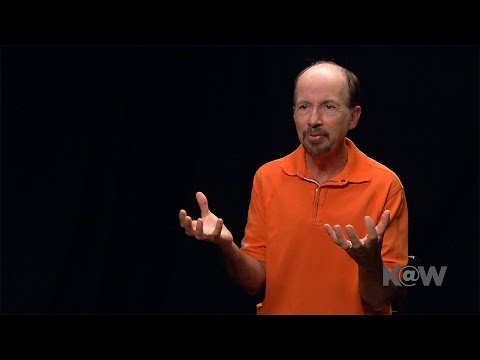
What Ostriches Can Teach Us About Risk
Ask about Knowledge at Wharton
Episode Description
A new book by Wharton professors Howard Kunreuther and Robert Meyer offers an innovative solution for addressing the biases that prevent people and groups from adequately preparing for disasters. More: http://knlg.net/2kfOEXy 📂 Finance & Accounting;Innovation;Public Policy
Read the full transcriptHide the full transcript
- we're here today with Wharton professors Howard kther and Robert Meyer to talk about their new book the ostrich Paradox
- why we under prepare for disasters Howard and Robert thanks for being with us thanks so much now I first wanted to
- ask you about the title of the book because like most people I assumed what it meant was that we should we should
- not be like ostriches that we should not keep our heads in the sand when it comes
- to disasters but actually it turns out that that's not quite the case so could you tell us yeah absolutely the um uh
- that what motivated the book because we were very much interested in writing about uh why it is that uh we can't seem
- to get a hold on disasters that that even though scientific abilities to forecast hurricanes and so forth has
- really grown considerably over the years that hasn't really been matched with it
- with any sort of a noticeable decrease in the uh uh in the costs both in terms of lives and monetary losses from uh
- from natural disasters or man-made disasters and and often the the reason that that's given is whenever that
- happens we say that well people are putting their heads in the sand they're they're ostriches and uh and that's sort
- of the the old cartoon notion of what an ostrich is when thread is coming a lion
- is coming they dig their head in the sand and sort of pretend it doesn't exist um and it turns out that actually
- that that's uh ostriches have been given a a severe bum wrap for that over the years because actually ostriches are
- incredibly good at dealing with risk uh they have enormous limitations they can't fly but the but the Nature has
- allowed them to overcome that by having enormous ground speed and have all sorts
- of risk of avoidance strategies so then occurred to us that actually therein is sort of like might be a a key to the way
- in which we can get people to be better uh at preparing for risk rather than being um less like ostriches actually to
- be more like ostriches to first start off and say what are the limitations that we have what are the psychological
- limitations that prevent us from being better and preparing for disasters and once we understand what those are are
- think about ways in which we can better adapt to those limitations so we're more
- like ostriches rather than less hence the Paradox yeah and the only point I'd want to add to Bob's comment is uh that
- I learned a bit about ostriches just in the context of the discussion that the two of us had together in terms of what
- they did and also that we do bury our heads in the sand often and so in some sense we felt that in a way using the
- ostrich as the as a way of an analogy to kind of the things that we do we might be in a position for people to pay
- attention and I think the real challenge in any of this area is for people to pay
- attention before something happen rather than afterwards and ostriches are very good at doing that and we hope that
- human beings can do a better job than they have up until now right now I mean the book actually starts with a really
- interesting example of galvaston Texas it was two I believe it was hurricanes hundreds of years apart maybe almost but
- the same reaction even though for the second time technology had Advanced significantly science had Advanced
- significantly Communications had Advanced significantly and yet there was still this same under response to the
- disaster and I wondered I guess the book is actually full of stories like this and
- was there one in particular that inspired the book well actually let me jump it there because for me the thing
- that inspired is actually a story which is not in the book okay and uh and it was like in I think it was 2008 I was um
- visiting New Orleans and I decided uh to take a drive along the Mississippi Gulf
- Coast and as I was driving along near the town of past Christian Mississippi which was an area which had been
- devastated by Hurricane Katrina I was sort of noticing how how quickly the place had recovered and there was what
- there was just a lot of nice grass fields and I was walking along I was driving along the road and I noticed
- that in one of the fields was a an ATM machine that was just sitting up by itself and uh and I and I looked at that
- and I pulled over and I said what's an ATM machine doing out in the middle of a field so I kind of walked up to it and I
- looked at it and then I began looking around and then I discovered afterwards that what what this was was used to be a
- shopping center that used to be right on the coast that had been completely destroyed by Hurricane Katrina and the
- only thing that was left was uh the the the the ATM machine and then I kind of did I was interested in this this how
- this happened and then the interesting thing was it turned out that this shopping center was built on the exact
- same spot that in 1969 a condominium complex used to be there and 23 people died when the condominium complex was
- blown away by a hurricane and and so basically so I contacted the the the person who was uh who own the land of
- the shopping center and I said did you know that this used to be have this horrible history and they said yeah it'
- been but it been so many years since there had been a storm I didn't we didn't think it was in under much risk
- and so then I said well what do you plan to do with the property he says well we're thinking about us selling it and
- hope to put build up a condominium complex here again and so I was sitting there and I was thinking there's got to
- be a story there there there there has to be uh uh you know what why is it that we kind of keep uh don't learn from
- experience why is it that we're not better at thinking had in terms of what the the consequences are of of uh of of
- threats like this and so what are all the different types of psychological factors that that caus us to be so poor
- at preparing for disasters I think that U just to follow up on on a story in the
- book that actually did started off is a story of Glenda Moore who uh was in a position where she had to figure out
- what decision she was going to make after Hurricane Sandy and I think all of us were very very cognizant of the
- challenges we face after a storm occurs in in the sense that we know there are things we should do and we are things
- that we might not do but we don't really know them as well as we should and I think that Glenda's first concern was to
- be with her husband who had actually left and she and was in Brooklyn and made a set of decisions without
- necessarily carefully thinking them out and our concern I think when uh with respect to pointing this out to others
- is that to a large extent we react to two situations at the moment without necessarily doing an analysis of all of
- the possible dangers and the communication mechanisms are sometimes good but we sometimes don't hear them
- and so she actually made some decisions to leave that actually resulted in her losing her children and as a result of
- that uh there was a whole set of media attention given to that and our feeling was it was a way to start the book to
- point out the fact that we would like everyone to reflect on what could happen after a disaster then and do some steps
- beforehand to prepare and also to listen to the kinds of things that one is hearing and try to get the right kind of
- information so one doesn't do the things that could result in tragedy and now you
- actually outlined six different biases that may be at play that may lead to some of this under preparation for
- disasters and I somewhere in the book you had mentioned or maybe it was in this other interview that came with my
- book about that perhaps the most dangerous one of these six might be optimism which I thought was very
- interesting just because we usually think of that as a good thing yeah yeah yeah no absolutely I think in fact it is
- the good thing to have in life I mean uh you know we've been fortunately endowed
- with an optimistic Outlook uh uh and so forth the problem is is that in fact I think this is true with almost with all
- of the biases that we talk about in the book these are things which uh which the
- reason why we have them is they serve a good functional purpose and most of the time and most the the decisions we face
- on a day-to-day basis they basically serve us well and and um however it's also the case that when when you
- suddenly now we're in a situation of facing very very rare events things that we decisions we don't have to make on a
- day-to-day basis uh that's where when you start applying these same heris sixs all of a sudden all sorts of stuff goes
- wrong and optimism is a great case of that um you know it is good to look on the bright side of life and all of that
- sort of thing however when uh when you're talking about something that might happen to you that might mean the
- end of your life uh then being optimistic is not necessarily the best thing to do and and uh and one of the
- things we talk about is sort of you know what are the different ways in which people become erroneously optimistic in
- a way that's harmful and I think one of the things with optimism is that we try to find ways to sort of defend our
- optimism and so we think about a a n a disaster a flood or a hurricane we don't really want to think about those
- disasters we're optimistic because we are living in an area that we say this is a great place for us to live and we
- want to sort of keep that image alive and so we say well let's you know this is so low the chances of anything
- happening are so low that we're not going to really think about it it won't happen to us it may happen to others it
- won't happen to us it's below we we use the Expression our threshold level of concern we're not going to worry so we
- keep that optimistic bias in the sense of trying to avoid having to think about things that we probably should be
- thinking about beforehand and our whole idea in bringing that up along with the four or five other we have six biases uh
- is to say they're all connected in some sense uh and in one way or another we have to try to figure out ways to let
- people know that these are things that we all do and we all have our own personal examples and then we can think
- about ways to improve the decisions by trying to avoid them in the future and now your method of improving this what
- you lay out in the book is called the behavior risk audit and this sort of this involves looking at each of these
- risks and kind of turning I mean each of these biases and kind of turning them on
- their heads and seeing how can we create polies that actually address these biases and maybe get around them can you
- talk a little bit about how people could do this well let let me illustrate with
- one and and Bob May pick one another one um myopia is one of the biases that we have people are have very very short
- term we all have short-term Horizons we want to get immediate returns in some sense and if there are things that we
- can do for the long term we often find they are very prohibitively expensive they're costly we can't really do them
- let's take an example of having to make our house safer against uh Hurricane Sandy or flood uh or hurricane uh
- there's a lot of cost to doing that you could elevate your house but that's very
- costly you could maybe flood proof or you could do a set of things and people will say well look what are the benefits
- that I'm going to get from that in the next period And so they'll be very reluctant to put in the money because
- they say the benefits we have to get are going to be very short run and they're right I mean in some sense if you're
- going to get a short run benefit like a reduction in your insurance premium uh you'll say well I'm not going to get
- enough to pay for that expense so we would recommend that instead of thinking about just the long term with respect to
- this there are two things that one can do one is you might give a person a loan to help them out and spread the cost
- over time and the other thing to deal with the it won't happen to me instead of saying it's going to be a one in a
- 100 chance of a flood occurring next year which is kind of what the probability is stretch the time and say
- to people think about the fact that there might be a a hurricane in the next 30 years and that likelihood is greater
- than one in four or one in five and then people will think about the long term and maybe decide that they can take some
- action yeah another example another one of the biases we talk about is uh is simplification and the the idea there is
- is that most people don't like to consider lots of different factors when making decisions and uh and one feature
- of this is a thing called The Single Action bias and what it is is that when you're faced with the problem uh you
- basic as soon as you take like one action to try to solve it there's a tendency for your brain to go good there
- was the problem I took some action problem solved and uh so in a lot of walks of life that's kind of an okay
- thing to do but think about in the context of of preparing for natural disasters when in fact there's large
- numbers of things that you need to do or or you're trying to build a safer house
- in which in order to make the house structurally sound there's lots of different things that you have to do
- well often kind of historically the way in which uh agencies like uh uh Noah and
- and FEMA and whatnot have encouraged people to prepare for disasters is to give them checklists and the checklist
- will have 60 items on them and you say make sure you do this with your dog make sure you do this and so forth well the
- single action bias will say people are going to ignore most of those things but they are going to see the list they are
- going to be aware that there's a threat the problem is is that they're going to go down this list randomly and take care
- of the dog or whatever and once they've done that that's the end of the list and
- they feel that they're sort of prepared for the disaster when and they're they're really not so so one of the
- remedies for that is to say now that we know people simplify and they tend to focus on one action what an agency needs
- to do is don't give them a massive checklist say if you're going to do one thing here's the one thing to do okay
- and once you've done that here's the second thing to do and you have to kind of walk people through that and that's
- going to be a much more effective way of of of getting people to prepare now do you
- know of examples of agencies or governments or companies that are that are doing things like this that have
- developed policies like this or do we do they all need to get a copy of the book
- they got to get a copy of the book they definitely have to get but I'll give one
- example and and related to what I said a few moments ago the Federal Emergency Management agency is very concerned with
- communicating risk and they have actually changed the way they're presenting information on the flood
- Hazard they used to talk about a one in a 100e flood or return period they're now telling people think about the next
- 30 years when you and what could happen to you and you should be considering buying insurance for next year even
- though uh you are thinking about the fact that it's low probability it could be greater than such and such for one
- and four for a disaster to occur so they are actually trying to take that seriously we don't but they have to do
- this in such a way that they communicate so people at least read that which of course is a challenge and of itself I
- mean because I would think with that it's like they're taking it from 100 to 30 actually takes it back within the
- realm of their lifetime so they're doing it for them not for the people who are going to live there in the future that's
- exactly right they want to get a reasonable time period but if they said and and they and and when they do that
- they of course stretch the probability and make it a lot higher than it would occur next year now could a family or an
- individual use this Behavior risk AIT to help themselves prepare for disasters or
- is it more for policy makers ERS or companies no I think it's absolutely can be used for for individual households
- because I think that often it's the case that that often it's the case the companies themselves at a very very high
- level are actually fairly good at thinking through all the details and having very well-developed um you know
- risk avoidance plans or something like that for example a a a utility compan has actually tend to be very good at
- this sort of thing on the other hand a lot of the kind what with this book I think is a little bit more targeted at
- is uh organizations which aren't necessarily all that experts in terms of R risk preparation and so for any given
- family uh you need to sit down and think through well well how is it that we as a
- family are thinking about risk and these biases actually even more so apply there
- um and Howard was given the example of start that started out the book about uh the Glend deore family where a woman um
- uh hastily put her children into a van and then took them down and uh in front of the and they she lost the children
- and in a Hy in a Hast evacuation I that you know we would like to think that this is a book which kind can help
- households like that um make sure that those events never occur and what it does is it says look you know when
- you're faced with disasters these are the kind of mistakes that you're likely to make and it's not because there's
- something wrong with you you're just human and these are these are hard grain hardwired biases that we have and once
- we understand what those are you can kind of anticipate the kind of mistakes you're going to make and so and then
- that's the first step in trying to avoid them here's what our hope is there are a
- series of stories that are graphic and people do react to graphic stories in a way that they don't react to just the
- facts or whatever and and our hope is that people will read these stories and recognize that it can happen to them in
- some way and it has happened to others and that they'll pay attention to the very last part of the book on here ways
- to improve and then we would like to use one of our biases that we hope makes this book more than just one person
- reading it and that's the her effect and we hope that there will be somehow a notion that people will see this and say
- you know this is something I'd like to talk to a few other people about and it isn't just our situation it may be
- others and I hope it becomes a topic which generally is not a topic of conversation of the fact that we have
- these kinds of biases we have these things and we all think of our own sets of activities that might reflect that
- and we have our own personal ones which we can experience and that that becomes really more of a social Norm that this
- is something that people should recognize they have and there's a tendency with with the kinds of events
- we're talking about for people not to want to pay attention and our hope is that the stories that we tell here will
- resonate enough so that people will want to actually think about them I mean it seems like we don't you know we hear
- about hurricanes when they're a day away or two days away or maybe in the immediate aftermath but then we don't
- hear about them again until the next one comes along and you talk a lot about those types of events in the book but
- you also talk about more long range events specifically about about climate change which is not something that the
- be the worst part of it's not going to happen tomorrow or next week next year maybe even not in the next decade but
- how does the behavior risk audit apply to something like that where it's more of a long-term broader risk well this is
- a real Challenge and I think we recognize it's a challenge that we're facing right now because climate change
- is not necessarily being discussed in a way that I think we would like to see it
- discussed it is a critical problem um and Miami where Bob has lived there for a while and can and can talk about that
- directly is facing major problems with sea level possible sea level rise and people may not be paying attention right
- now and I think what we would say I and a way to say it is first of all construct some scenarios that you begin
- to see what might happen and think about how you can take some steps now to avoid
- those scenarios and also to think about the fact that it isn't just yourselves but there's future Generations at stake
- and what is going to be what is this going to do to my children and my great grandchildren and how can we take some
- steps and try to make the case to recognize that there's a tendency to say this is not going to happen and it won't
- happen necessarily tomorrow but there has to be planning and it isn't just for the individuals it's for communities and
- that's why I point out Miami being one example of that uh yeah that as Howard said I think long run risk is very
- difficult uh and particularly if it's the case of let's say if you're living in in any Coastal area you're worried
- about SE level rise and you say well scientists are forecasting that in 60 to 70 years this area that you're living in
- is going to be underwater uh well that's I'm not going to be living there in 607
- years so why should I particularly care about that and you what how do I justify
- that and this is particularly the case for communities who are thinking about doing things like raising taxes and bond
- issues to put up Public Works projects to prevent sea level rise when the people who are voting for them are going
- to have to pay these taxes aren't going to be the ones that are actually going to be benefiting from it and so I I
- think that that people might understand well maybe we need to take care of it but maybe we should just do this next
- year okay that uh this to put off yeah it's it's easy to put off because nothing's going to change that much and
- so so of course what happens is you keep putting it off till the next year and it
- never never gets done so some of the things we we were kind of thinking about within the book are what are ways in
- which you can kind of get people to take uh safe actions or have a culture of safety in a situation where they don't
- have to they're not the uncertainty is actually not is on taking risk rather than than not taking risk so for example
- um normally it's the case of you have your your city budget and one of the light items should be should we put
- multi-million dollars into a pumping system okay and that's an add-on and then you have to think through is this a
- good use of the money now well what if it was the case that every year just is a standard starting point in the in the
- in the community budget that there's money set aside for infrastructure improvements but then that can be
- removed so all of a sudden then the discussion is uh do we want to not take a safe action this year or not and then
- that might be just enough to basically keep some of those items still on the budget which they might have might have
- otherwise been removed and the hope is through those little sorts of steps that might we get a little bit closer at
- dealing with some of these these extremely difficult Long Run problems and you could couple just what Bob is
- saying with the notion of let's not make make sure we don't have the cost immediately on top of us having a
- long-term loan so that you do spread it over a number of years will make it more
- attractive and then if you can show that there are benefits that are going to occur even in the short run that maybe
- property vales will go up maybe people will want to move into the area and you can sell your home a little more easily
- by the fact that one recognizes the community is taking steps now to avoid this problem that might be really
- serious 20 or 30 years from now and now would be a lot less serious and I think those are problems facing coastal cities
- again bringing up Miami that really has to be concerned about what is going to happen to the property values of their
- homes all of a sudden when people say we're not really taking the steps and now we are seeing that this is going to
- be a major problem so I think if we can combine these things with economic incentives with the default option that
- Bob mentioned and which is one of our Notions is if you don't do this the fact is you have to say I'm not going to do
- this rather than I'm going to do this and also to recognize one of the challenges and Bob brought it up very
- directly on the political process we have a little acronym that we occasionally use and I'll use it right
- now uh Nim not in my term of office if we can avoid that avoid the notion of having
- expended and recognize that there are benefits of being doing this in my term of office rather than saying it's not in
- my term of office then I think we have a chance of at least getting people to pay
- attention now what about different kinds of risk like political risks I some of the things that I read in the book
- really reminded me a little bit of some of the things that you know you heard heard people in the UK say around the
- time of brexit that oh this won't happen it won't pass or even around the time of
- the election that I feel like there was maybe some myopia or or optimism at play
- a little bit there do I mean do you think that the principles in the book can apply to different types of risk
- other than natural disasters or environmental risk well uh I mean we haven't thought explicitly about brexit
- uh in terms of that or and use an example but I think there is a a notion here that the of a feeling that people
- may not really necessarily appreciate all the elements of a particular problem I think that's what I would want to use
- and I think we can say about brexit and I think we can say about the election that occurred that there was a degree of
- optimism by people who felt that they really didn't have to be concerned about necessarily voting in a particular way
- on the basis of feeling that this was a foregone conclusion that things were going to work out that way and so in
- that sense we come back to the optimism bias in terms of what one hopes will happen but may not actually happen yeah
- and I I certainly you can go through those biases and they can provide kind of an explanation for why maybe a lot of
- people were very surprised by the uh uh the the uh the last election or alternative looking at half you know
- half the country was not at all surprised and the other half was extremely surprised and and I think that
- the part that was extremely surprised was influenced by things like herd think uh they went around and the people that
- they talked to were people had their same values that they did and they became under the belief that this is the
- way the world is and uh and and and so on and so on and you know simplification there's a tendency to to not look
- broadly and looking for evidence that maybe there are people out there who don't think like you do and and when you
- take all these things together all of a sudden there's this group think which in
- many cases may have led for a lot of people who were for example Clinton supporters to feel they didn't need to
- vote on and so forth and it's such a foregone conclusion so Howard and Robert thanks for being with us good to be here
- yeah glad to be here thanks [Music] [Music]
Brief Summary
Wharton professors discuss disaster preparedness and psychological biases in their book, <i>The Ostrich Paradox</i>, emphasizing the need for proactive measures.
Key points
- The Ostrich Paradox Explained. The book reveals why we underprepare for disasters and how we can learn from ostriches.
- Lessons from Hurricane Sandy. A personal story illustrates the consequences of poor decision-making during disasters.
- The Role of Optimism. Exploring how optimism can hinder disaster preparedness, despite its positive connotations.
- The Challenge of Climate Change. Climate change isn't just a future problem; it's a critical issue we must address now.
- Planning for Future Generations. We must consider the impact of our actions on future generations and take steps today.
- The Danger of Complacency. It's easy to delay action on climate change when immediate consequences aren't visible.
Episode highlights
- The Ostrich Paradox ExplainedThe book reveals why we underprepare for disasters and how we can learn from ostriches.“We should be more like ostriches to prepare for risk.”2:00Feb 7, 2017
- Lessons from Hurricane SandyA personal story illustrates the consequences of poor decision-making during disasters.“Glenda's decisions resulted in losing her children.”6:16Feb 7, 2017
- The Role of OptimismExploring how optimism can hinder disaster preparedness, despite its positive connotations.“Optimism is the most dangerous bias.”6:55Feb 7, 2017
- The Challenge of Climate ChangeClimate change isn't just a future problem; it's a critical issue we must address now.“Climate change is a critical problem we need to discuss now.”17:56Feb 7, 2017
- Planning for Future GenerationsWe must consider the impact of our actions on future generations and take steps today.“Future generations are at stake; we must take steps now.”18:26Feb 7, 2017
- The Danger of ComplacencyIt's easy to delay action on climate change when immediate consequences aren't visible.“It's easy to put off action because nothing seems to change.”19:38Feb 7, 2017
- Understanding RisksPeople often overlook the complexities of risks, leading to poor decision-making.“People may not appreciate all the elements of a particular problem.”23:05Feb 7, 2017
- The Influence of Group ThinkGroup think can lead to complacency and surprise outcomes in elections and decisions.“There’s a tendency to not look broadly for evidence.”24:05Feb 7, 2017
Tension
45/ 100Some tension