Federal Reserve Independence After Jerome Powell: What Comes Next
Ask about Knowledge at Wharton
Episode Description
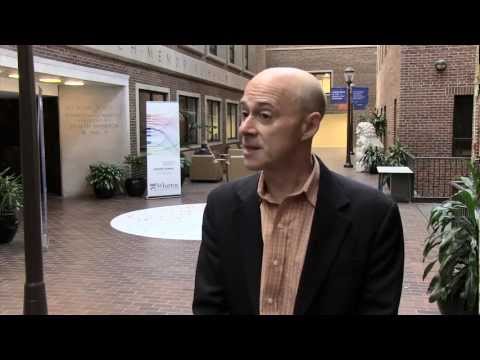
ABOUT THE EPISODE Peter Conti-Brown, Associate Professor of Legal Studies & Business Ethics at the Wharton School, discusses the implications of a new candidate for Federal Reserve Chair in 2026 including how leadership transitions shape consensus, U.S. monetary policy, and what potential changes could mean for markets and the economy.
ABOUT THE PODCAST This Week in Business features interviews with Wharton faculty about the latest news, fascinating trends, and issues impacting both consumers and the business world. Episodes are recorded at the Wharton School and published twice per week.
#federalreserve #jeromepowell #monetarypolicy #governmentshutdown #centralbanking ----- The Wharton School of the University of Pennsylvania is committed to sharing its intellectual capital through Knowledge at Wharton, the school’s online business analysis journal.
Launched in 1999, Knowledge at Wharton offers free access to:
- Articles, podcasts, and videos highlighting Wharton faculty research and analysis of current business trends - Interviews with book authors from Wharton School Press - In-depth series of curated content like Wharton Executive Education’s Nano Tools for Leaders - A searchable database of more than 10,000 articles covering all aspects of business - A weekly newsletter that delivers Knowledge at Wharton insights directly to your inbox
Visit the Knowledge at Wharton homepage: https://whr.tn/3qUpSBE Subscribe to the Knowledge at Wharton YouTube channel: https://whr.tn/3DEAgAU
Read the full transcriptHide the full transcript
- Well 2026 is not only an important year for the history of our country, but it will also be a very important year when
- you think about the Federal Reserve. Chair Jerome Powell, will see his term end in May, and the new chair, to be
- appointed by President Trump, we'll probably find out sometime in January. The biggest question being asked right now, though,
- is whoever that person ends up being, will that person continue to have the same level of independence that other Fed
- chairs have had? We asked that question and more of Peter Conti- Brown, Associate Professor of Financial Regulation here at the
- Wharton School, and also, very much a Fed historian. Peter, great to talk to you again. How are you, sir?
- I'm doing very well. Glad to be here with you, Dan. Okay, so I guess I'll start right there. Is the independence question one that really draws
- your attention as much, whoever the candidate will be? Oh, unquestionably. That's always the dominant question
- anytime there's a change in power at the Federal Reserve. But it's never been more important than it is today. And
- that's because we've never had a president like President Trump, who has made the independence of the Fed so central a question.
- When you look at the candidates— and I guess maybe even more so, as you alluded to being beholden to the president, from a
- historical perspective, has that happened before? Have we seen the White House, you know, try to influence the Fed Chair in
- terms of the decisions that are made by that entity? Oh, unquestionably. That's not unique to Donald Trump. The
- interest from the Oval Office, in what the Fed does is unrelenting. We've had a couple of periods where just the nature
- of the macro economy and the nature of the political preferences of the president have overlapped. So I'm thinking
- about during the presidency of Barack Obama. And in that time, you didn't see a lot from President Obama, a lot of
- concern about the Fed. That's because what the Fed was doing is what the president would want the Fed to do anyway.
- But otherwise, from presidents as diverse as Franklin Roosevelt to Lyndon Johnson to Ronald Reagan, George
- H. W. Bush, Bill Clinton, all of them have been keenly interested in the Fed and trying to shape what the Fed does. What we have
- that is different this time is a president willing to go to war against the Fed, using law, politics, publicity and all
- kinds of tools to try to delegitimize the Federal Reserve. That's why this appointment, more than any
- other, matters so much. One of the things I've heard talked about is that whoever
- this person ends up being, that he will still be just one vote on the FOMC, and there will be, obviously, many others. But even
- just the one vote, how much influence does that person have on the FOMC when they're making the potential rate cut decisions?
- You know, the Federal Reserve, legally, is structured a lot like the Supreme Court, where the Chief Justice is just one vote
- among nine, and the Fed Chair is just one vote among seven or 12, depending on the committee. But it's— in its long history, it
- doesn't act that way. So the chair has much more influence over shaping the agenda, for example. But also, view— the chair
- has always viewed his or her role as shaping a consensus, so that we don't have a norm where the policy messaging coming out
- of the Fed is incoherent to the rest of us. The new Fed Chair will almost certainly not be as good at consensus building as
- Jerome Powell. And that's because Jay Powell, he's the Michael Jordan of Federal Reserve consensus building. This
- is his— been his primary target. He has been very good at it. He knows how to use the various levers of power available to him
- to forge that consensus. And even with the odd dissent, or even split dissent, he has succeeded in forging a consensus
- during times of real uncertainty. His successor won't be as good at that. - Right.
- And I guess when you look at the most recent votes that we've seen come out, and the information in the minutes of
- the FOMC meetings up, until this last meeting, it pretty much has been a consensus. I think this past meeting was the first time
- we had three dissents in quite a long period of time, correct? Yeah, the meeting before the last one was the one that had
- this split. The— you're totally— you're absolutely right about that. The— you know, we've had those three-way votes in the
- past a number of times. About a dozen times in the Fed's history, but not in a long time. And what is more remarkable to
- me is not that we had the split votes, but we didn't have more of them. That we didn't have larger camps. Because we do have
- ideological disarray at the Fed. And the fact that Jay Powell has been able to forge a consensus as tightly as he has despite
- those— those couple of dissents is really impressive. So I'm not going to hold the next Fed Chair to the Jay Powell
- standard. But I am going to hold the next Fed Chair to the Fed standard. And the Fed standard is simply, is monetary policy
- being made to appease the president? And if it is, then that Fed Chair is a failure. If it is not, no matter what
- direction it might be, even if they're going in a direction that I think is macroeconomically incorrect,
- that's not necessarily a failure. That's just a difference. And certainly the role of Jay Powell has been challenged—
- challenging, I should say, over his period of time, for various factors. The White House being one. But most recently, the
- shutdown of the government, which made the flow of data to make these decisions a lot more challenging than maybe it had
- been in months or years past. Unquestionably. I look back at the Powell era, and I see just
- an unrelenting series of crises and challenges. And I give him high marks in monetary policy and political handling. I'm a
- little bit more ambivalent about Jay Powell's role as a regulator. But he's got a lot to look back on for his
- legacy and be pleased. I mean, we— it's crazy to think that, you know, six years ago, you and I were probably in this—
- in person, having a conversation about the Fed when people were starting to make squeaks about this little coronavirus that
- might be coming out of China through Italy. And Jay Powell handled the COVID-19 crisis masterfully in all the right
- ways, and that was just one part of his legacy. So he's got a lot to be proud of.
- How important then, in that balance of what a Fed chair must do is that regulatory side?
- Increasingly important. It's always been important. The Fed has always been a regulator. Indeed, in some sense, that was
- its first role in Washington, DC. And what we're having right now is a very wide open debate about regulation and
- supervision, not only about what it should be for, how we should regulate the banks, but kind of a meta-level question that I
- think is even more important, which is, how responsive should regulation supervision be to elections? And there's a big
- split there. Jay Powell takes a view that it should be less responsive to elections. There should be more stability. We
- should have the same kind of supervisory and regulatory independence that we have for monetary policy. I disagree with
- that. I think that regulation and supervision are necessarily much more politically inflected with trade offs that split the
- electorate, and the best way to resolve those doubts is through an election. Is there— of the candidates that we have heard their names, is
- there one that really stands out to you as one that you would be most intrigued to see in that role, because of their
- background, because of their history, to be able to really manage this role and bring the best forward, so that the Fed,
- banking, the economy can continue to try and move forward? You know, as long as I've been watching the Fed, which started
- really in the 2000s, right before the crisis, I've been excited by every Fed Chair announcement. I think that these appointments
- from Bernanke to Yellen to Powell, and the reappointments of these, have been— have been really terrific. Here, I have
- less enthusiasm. I think that the three leading candidates have real strengths, each one. Some different— one different
- from the other. But also, they bring with them real weaknesses. And so I wouldn't, I would say, you know, in the old adage,
- rather than three cheers for the next Fed Chair, I'm ready to give one cheer. Or two cheers. But there's a lot to see about
- what— what they might do. And just for our listeners, the three leading candidates are Kevin Warsh, Kevin Hassett and
- Chris Waller. Very different people, very different central bankers. Each one gives me a little bit of pause.
- As for Chair Powell, there's talk about whether or not he will stay on in a governor's role after he gets done
- leading the Fed. Is that a possibility, or is a break more of a likelihood for him to kind of move off from the Fed for a
- period of time? History suggests that he'll leave when he— when his term as chair is over. But there's a historical example Jay
- Powell is keenly aware of, and that's Marriner Eccles. When he was passed over for Fed Chair reappointment in 1948, he decided
- to stay on through 1951. And during that time, he fought a very major, very public battle to protect the Fed's
- independence from the Truman Administration. And as soon as he achieved that result, he resigned. And so I think Jay
- Powell's decision to stay or leave is not foregone. I think it'll be a big question of who President Trump nominates. So
- for example, if he nominates somebody who's not on that list of three that I just named, but instead is Trump acolyte with no
- relevant experience, then I would expect Powell's decision to change. I'll finish with this. How do you view, then, this entire
- process, when you think about the history of the Federal Reserve and the role that it plays in our— in our
- economy and our banking regulation? You know, this has been— 2025 was a year of reevaluation. So
- many of our institutional principles. I think the one that has stood best is the idea that monetary policy, whatever it is
- to be, should not be dictated by the sitting president, depending on whether he had waffles or french toast for breakfast that morning.
- And that seems to be what President Trump would like to achieve. He wants to direct monetary policy. He's backed up that sentiment
- just a little in December. But that seems to be his ambition. And my hope for 2026 is that that ambition is not realized.
- There is so much that we should do to reform the Fed, to reevaluate its— some of its policies, its premises. But not
- that one. Independent central banking is a bulwark for the good society, and we should try to protect it.
- Peter, always great to catch up. Thanks very much. What a pleasure. Thanks, Dan.
- You got it. Peter Conti-Brown, Associate Professor of Financial Regulation here at the Wharton School.
Brief Summary
Peter Conti-Brown discusses the future of the Federal Reserve and the importance of its independence amid political influences.
Key points
- The Independence Question. The independence of the Federal Reserve is more crucial now than ever, especially under President Trump.
- Jay Powell's Legacy. Jay Powell's tenure has been marked by crises, but he handled them masterfully.
- Future Fed Chair Candidates. The leading candidates for the next Fed Chair have strengths and weaknesses, raising concerns.
Episode highlights
- The Independence QuestionThe independence of the Federal Reserve is more crucial now than ever, especially under President Trump.“That's always the dominant question anytime there's a change in power at the Federal Reserve.”0:55Jan 9, 2026
- Jay Powell's LegacyJay Powell's tenure has been marked by crises, but he handled them masterfully.“I give him high marks in monetary policy and political handling.”5:57Jan 9, 2026
- Future Fed Chair CandidatesThe leading candidates for the next Fed Chair have strengths and weaknesses, raising concerns.“I’m ready to give one cheer. Or two cheers.”8:47Jan 9, 2026