How Ben & Jerry’s Got Bought Out Without Selling Out
Ask about Knowledge at Wharton
Episode Description
Despite being bought out by Unilever in 2000, Ben & Jerry's has managed to keep intact the commitment to social justice that was baked into the firm by its founders. More: http://knlg.net/1NY65Tr 📂 ESG
Read the full transcriptHide the full transcript
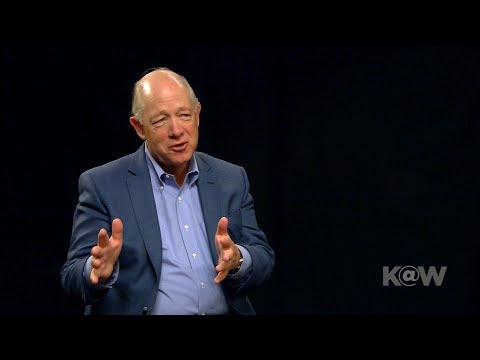
- hello I'm Katherine kleene I'm delighted to be speaking at knowledge of Orton today with yosin solheim CEO of Ben and
- Jerry's the iconic delicious ice cream company and we're really here to talk about not only your ice cream we must
- talk a little about your ice cream but really the social mission of the company uh and how you have maintained that
- social Mission even as Ben and Jerry's has become part of Unilever uh and has continued for many years well yeah I
- know great to be here thank you for I uh you know I think it's like all companies
- with a long history Ben Jers is now 36 years as a mission Le company I think the the key thing in the whole
- transition to one shareholder from multiple shareholders was the Govern structure that was put in place and I
- think Unity was very Visionary in recognizing that you know it says Ben and Jerry on the packaging yes if Ben
- and Jerry go out and say well this is all you know it's not really true anymore this is not a mission Le company
- anymore that would really undermine the value of that acquisition so unever acquired uh Benes in
- 2000 and uh this was a company that where the brand where the social mission was part of was baked into the brand
- it's an integral part of how we do business and and Unilever saw that and its investors saw this from the
- beginning and saw value and and even at that time saw value in this so that's why they set up and together with the
- then sitting board agreed to set up an independent board of directors and that act basically like our benefit uh
- Corporation director they are responsible for the social mission for the Integrity of the Ben andary's brand
- our policies they even get involved in basic things like wage setting in the factories where we have a livable wage
- policy uh that is overseen by by the board of governor of directors and and the directors are self- selecting so un
- has two seats of 11 board members fascinating and so so unusual very and had a career in ice cream at unever
- before coming on five years ago as CEO of Ben jer's how how was that transition to go from the larger entity of unever
- to this interesting different uh Mission driven company yeah I don't know whether
- that transition was tougher for them or for me uh but no I I you know unver as a
- company is very aligned in its values it actually has a lot of diversity in it in
- terms of management styles personalities it has a history of quite a lot of autonomy in its in its senior leaders so
- it wasn't like a a super stark contrast you know I worked in Italy I worked in Sweden the culture of Ben and Jerry's is
- actually similar right to uh to typical Scandinavian company it's a flat non-h hierarchical sort of approach to
- business so uh no so the biggest thing for me was I felt a big sense of responsibility sure uh and uh but with a
- really exciting group of people to work with and have stayed involved in some in
- yeah you know they're they're not they are involved uh but they do more of their own things they have the best jobs
- in the world their job is to be Ben and to be Jerry and they basically just have
- to deliver on that uh so day today is really the management team and the board of directors interesting so Ben jer's
- describes itself as a as a values-driven company um you celebrate the your social
- environmental governance uh values on the website can you talk with us about how that plays out in action you know
- how how do we move from words to to deeds and actions well I think that's the key point a lot of companies would
- say they're consumer Le yes you know whether that's in product development or in ad Mission similarly when companies
- that come to the world of CSR or whatever they look at what do people really care about and then how can we be
- part of that as Ben and J we come out it the other way we actually start with what do we truly believe in us and then
- we execute really well because we truly believe in it and hence convince others to join us so that's what we really mean
- by values that it starts with our values and then we apply it enjoying movements
- and other partners to make change so talk to us about some of those specific values and and how they are enacted
- through your products through your Employment Practices and we one yeah take one with just just one uh let's
- take samesex marriage yeah uh so that came uh on the agenda in the 80s at Ben and Jerry's Ben and Jerry was one of the
- first companies to offer samex Partners the same rights yeah Health Care Etc so when that started to come into uh the
- public domain and and become a debate it's very clear for the company we can't just say well you're okay if you're a
- Ben and jerus but if you're not you're not so it was very natural for the employees to join in and campaign for
- same-sex marriage and then as we grew bigger and bigger we scale that campaign up whereby now we have you know we we
- finished in the US with a supreme court uh decision this year but we also won in
- Ireland we put it on the map in Australia in France uh in multiple countries where this comes up uh it's
- something that we believe in we don't do an assessment if this is popular or unpopular when we started a same-sex uh
- marriage uh campaign in Australia not a single political party supported samex marriage and everybody came to us what
- are you doing you shouldn't do well sorry this is something we really believe in right and as you do that so
- you've had employee individual employees engaged in these campaigns um B Jerry's
- as a company as a major uh donor or leading a campaign yeah no I mean we run this you know it's it's the amazing
- thing is that selling ice cream and uh running campaigns is the same set of skills you want to get people's
- attention you need social media H you need events and and the one great thing that we have of course is ice
- cream right it's very hard to be angry and eat ice cream at the same time it's very tempting to stop and and sign a
- petition if there's free ice cream so ice cream plays a really important role in how we connect with our fans but no
- we we we we treat those campaigns in exactly the same way as we would treat a new product launch and sometimes they
- actually appear on the on on your products right I saw this but I I I do I do or I I I do I do was the celebration
- of of the same sex marriage act right now we've just launched a product uh save our swir where which is in support
- of a binding climate uh uh agreement in Paris the cop in five weeks time and we launched that with uh Tesla out on the
- west coast and then we actually launched the European version in Bon during the climate negotiation
- inside the climate negotiations at the UN so we had the opportunity to to feed all those people trying to work this out
- for us right and and and you actually use ice cream as a as a metaphor for global warming right we show what ice
- cream looks like if it's just two degrees warmer and it's a bit of a mess it's a bit of a mess yeah it's a
- fabulous a fabulous metaphor like this is what happens to your ice cream cones in two degrees what happens to the world
- if it's warmer in two degrees um are there instances where you uh as a CEO you as a company have said yeah we care
- about that issue we can't go there that we're that's too that's too hot that's too
- controversial there are many issues where we've had to say we can't go there not necessarily because they're too hot
- or too controversial more because we don't judge our that we have a real ability to
- make an impact or that we are really prepared pred you know we really believe we got to walk the talk not just talk so
- we want to really align our internal programs with the external campaigning so there are issues that come up that
- are important and legitimate issues and we we haven't you know built an internal
- program and we'll start that and then join in uh but controversy is not something that that scares us maybe it
- should but it doesn't you know we we were the only Corporation to support Occupy Wall Street uh at sone Park which
- was a surprise to them yeah as well and uh you know and as I say nothing bad really happened to our business as a
- result of that yeah so what so what are the as um you know we like to uh hope in
- the social impact space that that one that companies can actually achieve a positive Financial return and a social
- return uh on investment and on their on social impact strategies what's your sense of uh you know how this pays off
- or doesn't pay off for for Ben and Jerry's is there is there I mean it sounds terribly craft
- but is there money to be made through Corporate social responsibility through this kind of values driven
- company there is there is because people want to make a difference with all the things that they can actions and
- activities that they can can do so what you buy and how you buy it is a big part
- of your everyday life and increasingly uh consumers are saying I don't want to waste my money on on
- products I don't try to make a difference now there's a lot of greenwash out there
- and I would uh you know so people are are rightly so skeptical and demand you know real evidence and and and and some
- other uh authorities and just what a company say but uh it's the fastest growing area of fast moving consumer
- goods by far socially responsible companies are making up 60% of the growth in fast moving consumer goods in
- developed markets and if you look at like a neelson statistic that just came out now which was across 14 countries
- what you're seeing is the rate of change is really picking up uh in 2013 50% of respondents said that they would pay
- more for a socially responsible product today that's already at 66% and accelerating and obviously a Big
- Driver of that is our wonderful Millennials yeah yeah and and do you see this as something that any company can
- do I mean there Ben and Jerry's what could be criticized on some you know is this a healthy product I'm thinking of
- other products that we may look at and say that's not a that's not a healthy product that's not a product that's good
- for the environment and yet can any company um find ways to AB absolutely to to live this Mission absolutely uh I
- think you know not every company will become a a you know an activist company or a campaigning company uh like Ben and
- jares I wouldn't I wouldn't think that's that's appropriate for every company but
- every company can make uh those decisions that optimize their social impact and their business impact in any
- industry anywhere that benefits their employees their communities the environment um whichever
- constituents that they they address so I don't think this is something unique to
- specific companies uh on the on the healthy or non-healthy products and good products and bad products again you know
- for us it's all about transparency and I always say you know when you're tucking
- into a Ben and& jer's and you're on a diet you you know you know there's no hidden calories here they're right there
- right for you to enjoy and the world needs all sorts of different things uh to function so now I think transparency
- is critical MH uh in any offer people should really understand what they're getting into and we shouldn't try to
- fool people we shouldn't have hidden sugars and hidden fats Etc it's got to be transparent and open and open choices
- uh and and it goes the same for all other Industries so again I think it's very hard to say oh I'm in this business
- and this product hence I can't get a social impact right strategy right interesting um and as you think about
- the social impact that that Ben and Jerry's has had in the places where you've tried to make a difference um and
- I'm particularly interested in your own operations whether this is your supply chain uh your HR practices um can you
- talk to us about something that you're particularly proud of perhaps something relatively recent and then areas where
- you say we haven't cracked this nut we still have work to do in this area I think actually we could could be the
- same example actually in a sense you know when when we uh we did a sort of a assessment around what are the really
- big and important issues and what are the really urgent issues uh that are important to us I mean we did a lot of
- internal discussion and it was very clear to us that there were two big big topics that we need to address over the
- next 5 to 10 years and that's climate and climate Justice right and it's urgent and that's Equity as we're seeing
- Equity both racial and income uh the inequities that we're seeing is creating such a tension in society it's hard even
- to operate businesses neither in that environment of climate change and the environment or inequity so we've really
- embraced these two topics and what I'm the most proud of is to just see how our teams our partners really embrace it and
- scale it and and really throw themselves into making a difference that's probably
- what makes me the most proud right uh what we have in crack is how do you reduce your carbon footprint by 80% true
- when you you know there's a lot of again noise out there or we going to be carbon
- neutral or this or that well the carbon footprint of a business goes end to end it starts on a farm and finishes with a
- you know the waste product sure and you need to take responsibility for the whole thing and we need to reduce that
- by 80% 50% of our carbon fopr is in ingredients wow so so it originates on a farm and and we really believe that
- carbon neutrality is a real opportunity for Farmers to generate another income stream in carbon in setting so it's one
- of those things we haven't cracked it because we're not there but what we did was we put a price on carbon so we said
- we put arbitrarily $10 end to end per ton yeah and then we allocate that money to a carbon insetting program where we
- inherently are investing in Farmers to inset Carbon on their Farms fascinating and and on the the inequity inequality
- front uh I maybe two questions um making clear so what what is the I mean it sometimes intuitively we can see
- this but what is the connection you're between business success and inequality what is that negative relationship
- you're seeing uh and and how might you take action in this space so you know that's typically the first question you
- get when you're getting involved in in structural racism H and and other of these really
- Dee rooted social issues and what's in it for a business if you actually look at the correlation of success of
- economic success and inequality uh is highly correl ated so so we have an inherent value and
- belief that a society where everybody's treated justly and equally it's just a better Community to be in uh but
- actually if you look at the econometrics of it it Maps out very nicely as well in
- terms of economic uh opportunity and success so it's not a direct correlation it
- comes from our human values it comes from the values we have in our company uh but we also really see those
- communities thriving and doing better and being better for our business so that's a that's a sort of a link now
- climate Justice is about climate change but it's also about the fact that it's the poor people right disadvantaged
- people they get hurt first the wealthy can move the you know and can shift around the poor cannot so that has an
- equity component in it but as we're moving now into the next phase for us you know we have to recognize that we're
- a terribly white company you know we we come from Vermont Vermont's 96% white so
- we've had to do a lot of work in our company to really really really understand it and we've partnered with a
- whole host of different amazing Partners we've had a lot of Nos and activists has
- have taken their time and invested in us right uh to to make it get a better understanding of this and and I think
- 2016 will be exciting it's a it's election year it's a great opportunity as I like to see to say to rearrange the
- lighting to get a disproportionate impact on certain key issues like voter rights and and and
- minority participation and our democracy great fabulous talking with with you and
- uh you know just a extraordinary impact through ice cream and starting with ice cream so thank you much for thank you so
- much for being with us thank you C great thank you [Music]
Brief Summary
Yosin Solheim discusses Ben and Jerry's social mission and activism under Unilever's ownership, emphasizing corporate responsibility and community impact.
Key points
- Ben & Jerry's Social Mission. Ben & Jerry's maintains its social mission even after being acquired by Unilever.
- Campaign for Same-Sex Marriage. Ben & Jerry's was one of the first companies to support same-sex marriage rights.
- Corporate Social Responsibility Success. Ben & Jerry's sees financial success through its commitment to social responsibility.
- Transparency in Business Practices. Ben & Jerry's emphasizes transparency in its product offerings and practices.
- Climate Justice Commitment. The company is focused on addressing climate change and social equity.
Episode highlights
- Ben & Jerry's Social MissionBen & Jerry's maintains its social mission even after being acquired by Unilever.“The social mission was baked into the brand.”1:08Jan 15, 2016
- Campaign for Same-Sex MarriageBen & Jerry's was one of the first companies to support same-sex marriage rights.“We can’t just say we’re okay if you’re a Ben and Jerry’s.”4:49Jan 15, 2016
- Corporate Social Responsibility SuccessBen & Jerry's sees financial success through its commitment to social responsibility.“There is money to be made through Corporate social responsibility.”9:07Jan 15, 2016
- Transparency in Business PracticesBen & Jerry's emphasizes transparency in its product offerings and practices.“Transparency is critical in any offer.”11:51Jan 15, 2016
- Climate Justice CommitmentThe company is focused on addressing climate change and social equity.“Climate and climate justice are urgent topics for us.”13:09Jan 15, 2016
Tension
40/ 100Low tension