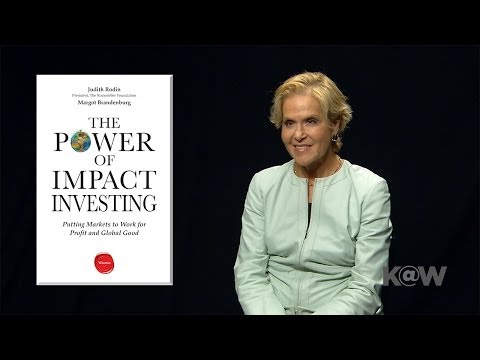
How Impact Investing Can Change the World
Ask about Knowledge at Wharton
Episode Description
📂 ESG
Read the full transcriptHide the full transcript
- thank you for joining us my name is Stephanie Kim and I'm the associate director of community strategy at the
- Wharton social impact initiative and I'm very excited to welcome our guest today
- lisel pritzker Simmons whorton social impact initiative's 2015 nazarian social innovator and residence the Angela and
- David nerian social innovators and residence program host leaders who leverage business-based solutions to
- solve economic and social challenges in communities around the globe leel is a co-founder and principal of Blue Haven
- initiative a family office dedicated to investing for-profit and nonprofit Capital to advance solutions to social
- environmental challenges leel thank you for being here thank you it's a pleasure
- so you supported wsi's impact investing research this year our report Great Expectations was released at socap last
- month and aimed to debunk the expectation that impact investors must always sacrifice Financial returns when
- seeking social returns we found no evidence that supports the tradeoff what was your reaction when you heard these
- results uh quite frankly I was not surprised I was very pleased to see um sort of the weight that Wharton can
- bring and the rigor that they can bring to the research but anecdotally from my own experience as an investor and um and
- working with other investors we have not actually seen that tradeoff that I keep
- sort of hearing about from um more traditional investers and so um I was I was very pleased that my sort of
- anecdotal experience was now um had some some some academic rigor behind it um cuz I think that's
- one thing that's been um a real struggle in the impact investing space is uh traditional
- investors sort of uh believe this myth that there needs to be a tradeoff sometimes there can be but if you're
- seeking commercial returns or market rate returns chances are you can achieve those and also achieve your impact goals
- as well awesome well let's talk about Blue Haven initiative with so many options for interventions and impact
- areas how did you decide upon your company's investment strategy and portfolio sure so Blue Haven initiative
- is the single family office um of me and my husband and um we sort of several years ago had a fairly traditionally
- invested um portfolio so was Diversified across asset classes according to a risk
- return profile that you know made sense for our family and our sort of capital preservation and growth um uh goals um
- but really didn't wasn't paying attention to what the social and environmental impact of those
- Investments were and we decided that that was something that we cared a lot about um we care about what our what our
- investments are doing in the world uh I don't think that uh Investments are just
- neutral I think that um where you put your money and how you invest it makes a difference and so it has an impact and
- we really wanted to make sure that impact was a positive one on all three fronts social environmental and
- financial and so starting sort of with that premise the real challenge um for us and
- for our financial advisers is can we do that with all of the Assets in our portfolio not just to sliver but
- actually with everything can we look across asset classes and um find best-in-class managers and strategies
- that meet our hurdles socially financially and environmentally um and so starting
- though with an asset allocation so again what makes sense for our family and then
- just finding managers that are also paying attention to their social and environmental strategies and so we
- started um we started with that approach and then populated the asset classes is
- uh once we found managers and strategies that that uh we felt proud of great so we have good managers that you can trust
- and you know that they're thinking along the same wavelength as you what about the target areas there's poverty there's
- hunger there's Health there's you know a million different solar panels there's cook stoves how do you pick what to
- invest in so that's a great question and um different investors will give you all
- different kinds of answers and and they're all right it all depends on what your approach is for us we decided to
- really start with the financial asset classes and be impact agnostic as to what the sector was that that manager
- was working in um because for us I think it's very difficult with the size of portfolio that we were dealing with to
- say we're going to solve water or we're going to fix women or um or to even set a certain geographic area it would be
- very limiting um to really try to find Best in Class managers um so with the majority of our portfolio we really said
- we're going to be geographically and uh sector agnostic and really look for diversity um across
- the financial instruments and strategies that they're playing with so you end up
- with you know you know Green real estate that has a steady yield we've got you know um uh private Equity Funds that you
- know obviously have a longer lockup but are focused on financial inclusion um there are some areas that are focused on
- health um a lot of uh uh project Finance into renewable energy projects I would say the environment is probably one
- theme climate change and environment that um we have a pretty heavy exposure to Across the entire
- portfolio um so with the sort of the majority of of of the portfolio we really we want the managers to pick the
- area and strategy from the impact standpoint so exposure to impact um really was more opportunistic than
- strategic however in our direct Investment Portfolio where we look at um sort of early and growth stage uh
- companies and make debt and Equity Investments directly into them there we have a very sort of focused strategy
- around Financial inclusion uh and renewable energy in in East Africa particularly so what does it mean to
- have a very focused strategy is it just finding a lot of different companies that are doing similar things are you
- taking a more systems holistic approach what does it look like what we what we've done with our direct
- investment strategy is we started sort of with a premise um we were very interested in um in East Africa as a
- geography it's growing pretty quickly and there's a very high penetration of mobile money there which allows a lot of
- really interesting technology platforms to be built off of that high penetration
- of not just mobile money but mobile phones in general um and the the fact that you've got a pretty large consumer
- base um that is extremely comfortable transacting over mobile money the highest penetration in the world you get
- lots of interesting companies that are popping up and and using that as a base for different kinds of financial
- services platforms um I personally have a background working in micro finance and
- so really good financial services for consumers that are um underserved with Good Financial products I have seen
- firsthand what kind of a difference that makes being able to have insurance products to cover a funeral of a loved
- one can keep a family above the poverty line um in a pretty significant way um being able to access savings accounts
- being able to access loans that are appropriate for your business and appropriate for your own cash flow needs
- um are uh make a very very big difference in somebody's life and so for me naturally I'm inclined to look at
- financial services and then the technology platforms that can help to disintermediate and lower costs for
- those consumers um that's an area I have deep passion around and as a financial investor makes a lot of sense you know
- I'm not coming into this with a deep background in how to develop wind turbines sure you know but financial
- services and products I get I understand um I understand those business models and so um as an investor it makes sense
- for me to play there and I think it's an area of sort of Deep Impact so East Africa um is good geography again with
- the mobile money um there's very high demand and um we we have seen a lot of innovation happening there right so you
- have the asset managers you have the different strategies that they're all choosing to take based on what they see
- makes sense for the asset class that they're managing you have a really focused uh F you have a strong focus on
- certain interventions that you see working and proven to work and that makes sense based on your interests and
- competencies rolling it all back up again to this idea of financial return and desired impact how do you make sure
- that happens well we do our very best um to measure and to monitor um and a lot of it is based on intentions so if we're
- invested in a certain fund manager that says well we would like to have this kind of mix of Muni bonds that are
- working and underserved communities or this kind of mix of corporate bonds that are um uh you know lending to
- corporations that have very high ESG standards um then did they meet those targets really um on the on the social
- and environmental side and then of course what's happening with the benchmarks that they're that they're um
- tracking against and so really did you do what you say you were going to do and for me as an investor did my money
- participate in what you said it would participate in um and you know hopefully the answer is yes and so we track
- against against those things and it's the same thing with with our with our companies directly as well um one of the
- wonderful things about the direct investing and with the companies that we're targeting um we look for companies
- where the impact is embedded in their business model so the more they scale the more they grow the deeper our impact
- is um and so we tend with those companies to be even less Hands-On on the impact side
- because really what those companies need are to be you know operationally totally
- streamlined and efficient and grow as sort of as quickly and as rapidly as they can and then you know by default
- our impact is is deeper and we're there though if there are if there are decisions that companies make to Pivot
- away from the impact we're there to try to help keep them on track but um so far
- we haven't found a lot of that and you know at Wharton we love seeing those types of companies where the impact is
- baked into the business model it's not a campaign it's not something on the side
- and you know the slogan that we've used many times is that business for good is good for business it is and actually
- with the um Great Expectations with the Wharton study that came out a lot of that was around preservation of mission
- on exit um for those companies and and did managers and and did underlying portfolio companies think that their
- mission was compromised upon exit and the answer is no really because if they were to Pivot away from from the impact
- piece their Core Business would probably change right and their consumers wouldn't want that right and so it's
- that's the thing is that really you really can have those things in alignment um and that's what I think is
- so exciting about the space and why I think it's it's growing as quickly as it is so at the end of the day we're all
- working towards a similar vision of a world you know without poverty without hunger preventable diseases Etc impact
- investing is a growing vehicle to address that but we're still working in a world with a lot of traditional
- philanthropic models traditional philanthropy charity how do you think that practice of philanthropy will
- evolve as impact investing continues to grow well I think that that I mean as you said there are there are lots of
- different kinds of tools um that that people have in their tool belt to try to attack some of these problems and impact
- investing is one of them and at Blue Haven so we engage in you know commercial rate return market rate um
- impact investing there are foundations that are happy to take concessionary returns um and that's wonderful and
- that's needed and then of course there's straight grant money um that you know is
- not seeking any kind of financial return but hoping to you know uh expand the environmental and social
- return of that capital and I think that all of these tools can play well together um but for me what I think is
- exciting about people looking at business models and um sort of financial tools to try to advance some of these
- social and environmental goals is it frees up some of that philanthropic Capital to do actual Grant work so
- sometimes I think that and and over the years particularly you look at um some of the development Aid models you've had
- philanthropic dollars or development dollars that are um being used for something a business would be better to
- solve um and it would be more scalable it would be more sustainable and also it would be something that people actually
- want people aren't going to buy something that they don't want um and so you've seen a lot of different kinds of
- weird products and widgets out there in the market Market that have been developed in you know some Lab in
- Cambridge Massachusetts and shipped over to Uganda and actually nobody really wants it or uses it after 6 months well
- if people actually have to buy something you know we try to make it as low cost as possible they're going to
- tell you really fast the market will tell you whether that is useful to them or not and so anyway I think that that
- using business in this way um helps to actually yes save that philanthropic money from being I think not so
- strategically dispersed and use it for things that only philanthropic Capital can be good for and I think things like
- that are you know disaster relief um Refugee crisis I think a lot of Education hate to I hate to denounce all
- of my edtech investor friends but I think I know I think that um a lot of education is still really needs to be
- Subs ized um and I mean there's a myriad Arts things that the market way undervalues um Arts music uh are I think
- are always going to need that philanthropic capital and hopefully it can impact investors can help to free up
- some of that so that it really goes where it needs to go what's next in the impact investing space What are you
- excited about what does it need I think what I'm really excited about is starting to see um more and more more um
- sort of traditional investment firms and larger Banks um instead of doing impact
- investing sort of out of their CSR or marketing departments actually it's sort of moving into products and services and
- they are starting to devote internal resources uh to their staff to try to get them up to speed it's not sort of
- that cute thing that's happening over in the corner in philanthropy y it's it's starting to move um into the more
- mainstream parts of the bank um I think a lot of that has to do with sort of this kind of big Millennial push for it
- um you're starting to see more mbas get incredibly excited about it and I think the banks know that and if they're going
- to recruit the best talent this generation really wants to see both sort of profit and purpose happening at the
- same time their standards are higher um and so uh I get I get very excited about
- seeing this sort of going mainstream um and I get really excited about um particularly with family
- offices uh not having such a bifurcated approach not having your investment vehicle over here making money and then
- you move it over here and you give it away um that seems very inefficient to me so I like having those two sides of
- the balance sheet start to come closer together um and that I think is really exciting that is exciting weel thank you
- for for being here thank you this was wonderful [Music]
Brief Summary
Lisel Pritzker Simmons discusses impact investing strategies and the integration of social goals with financial returns at Blue Haven Initiative.
Key points
- Debunking the Tradeoff Myth. Lisel shares insights from the Wharton study, revealing that impact investors need not sacrifice financial returns for social impact.
- Investment Strategy at Blue Haven. Lisel discusses how Blue Haven Initiative selects investments based on social, environmental, and financial criteria.
- The Role of Philanthropy. Lisel reflects on how impact investing can free up philanthropic capital for more targeted uses.
- Exciting Trends in Impact Investing. Lisel expresses enthusiasm for the growing mainstream acceptance of impact investing among traditional firms.
Episode highlights
- Debunking the Tradeoff MythLisel shares insights from the Wharton study, revealing that impact investors need not sacrifice financial returns for social impact.“We found no evidence that supports the tradeoff.”0:53Mar 22, 2016
- Investment Strategy at Blue HavenLisel discusses how Blue Haven Initiative selects investments based on social, environmental, and financial criteria.“We really wanted to make sure that impact was a positive one.”2:47Mar 22, 2016
- The Role of PhilanthropyLisel reflects on how impact investing can free up philanthropic capital for more targeted uses.“Using business in this way helps to save that philanthropic money.”14:57Mar 22, 2016
- Exciting Trends in Impact InvestingLisel expresses enthusiasm for the growing mainstream acceptance of impact investing among traditional firms.“I get very excited about seeing this sort of going mainstream.”17:00Mar 22, 2016
Tension
40/ 100Low tension