Investing in Social Impact
Ask about Knowledge at Wharton
Episode Description
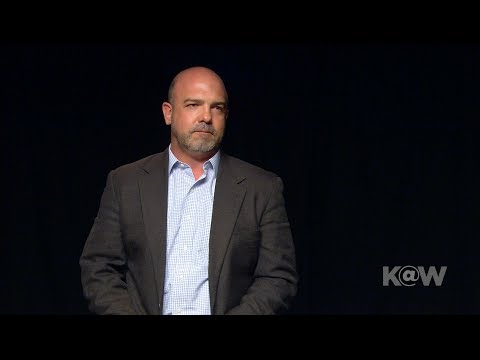
Doing good isn't just the domain of philanthropists, says Turner Impact Capital CEO Bobby Turner. Through impact investing, he notes, it is possible to turn a profit, satisfy stakeholders and raise up a community all at the same time. More: http://knlg.net/1SbSHCw 📂 ESG
Read the full transcriptHide the full transcript
- i'm katherine klein i'm the vice dean for social impact at Wharton and our guest today is Bobby Turner a leading
- light in impact investing the principal and CEO of Turner impact capital and an evolved capitalist welcome to our show
- Bob solving evolving always room for more evolvement that's good that's good um so let's start let's turn the clock
- back a little bit of um 25 years ago you were a co founding partner chairman CEO
- of Canyon capital Realty Advisors you stayed with a firm for many many years but about two years ago founded Turner
- impact capital so tell us what's different other than assets under management well definitely assets under management
- what's different is the opportunity to spend 100% of my time and energies focused on something that I'm
- passionately not passionate but fanatical about as I tell people for the vast majority of my career I was both a
- capitalist and I was a philanthropist and I struggled a both as a capitalist I was again a partner in one of the
- world's largest hedge funds for 25 years of my life I created great wealth but the sense of accomplishment wasn't
- paralleled the amount of wealth that I had created so I really I struggled at making my change meaningful as a
- philanthropist I struggled at making meaningful change I had given millions of dollars away of
- my time and my energy and my money only really to put band-aids on treating some
- of society's most daunting challenges I realized in many instances I was I was I
- was treating not curing and I was actually creating and funding a legacy of dependency it was only about 15 years
- ago with the help of my wife that I actually evolved I evolved from a capitalists whose sole metric of success
- was just making money to one that could also superimpose the impact on the larger stakeholder community at large to
- do what both good and do both well at the same time so so what changed what was your whites influence you know my
- wife is a very very good barometer on everything real and authentic you know many years ago she a she looked around
- the the community and said she wanted to purge a number of relationships we had and then I asked why and she said she
- didn't think that these families were actually rooting for our success and I think it takes that kind of wisdom
- that my wife has to help me oftentimes put my trajectory back on the right course it's not always about the
- destination in life it's also about the journey and my wife's a very good journey woman I'm a good destination guy
- but she balances me with the importance of the journey interesting so she got you thinking about more about
- philanthropy and particularly around impact investing well we were always interested in philanthropy she got me
- she recognized my frustration with philanthropy and it was her suggestion you know if you could take the the
- acumen and the prowess that you had as a as a capital investor and applied that you're a profit-driven admission to the
- purpose driven mission you probably could scale and create sustainable solutions to the issues that are so near
- and dear to you yeah and so you had as I understand it you had been a philanthropist giving to to grow charter
- schools yeah and then the light bulb went off and you thought I can invest in charter school facilities and I will
- have substantially greater impact through an investment practice yeah well you know most people you know tend to
- bask in their glorious I tend to dwell on my failures and you know over a seven-year period as a not-for-profit I
- was very actively involved in organization where with the help of Bill and Melinda Gates in Eli Broad we
- actually built 38 public charter schools and probably some of the most economically challenged neighborhoods of
- Los Angeles thirty-eight public charter schools thirty-five charter schools sounds like big impact 15,000 school
- seats and candidly the problem was is for each of those school seats there was three kids in the waitlist nearly 45,000
- kids were in that wait listen and I concluded you know once again that what I was doing with the Pacific charter
- school Development Corporation the not-for-profit is we were treating we were trying to address it we were being
- reactive and the reality was and I recognized years ago if you want to treat philanthropy and government are
- fine but if you want to cure you have to harness market forces to create a sustainable solution by the way
- Katherine that means making a profit and there's nothing wrong the fact is is that you can drive better risk adjusted
- returns by being purposeful because the realities are as we're not speculating on demand we're just fulfilling an
- existing demand where the traditional investor in the space has been the government or philanthropy so you you
- partnered with Andre Agassi did create the the Turner Agassi Charter Schools fund tell us a little bit about when the
- light bulb went off you know and the stepping stones - you know what there's a better way than
- philanthropy so for Andre it was interesting I made a cold call to Andre I like to think of it as a warm call but
- I had read his book and I realized that he and I shared the same passion and frustration for public charter schools
- he is a philanthropist had built his own K through 12 public charter school and again one of the most underserved
- economically challenged neighborhoods of Las Vegas Andre was an eighth grade dropout he always likes to say that his
- two most difficult years of high school were eighth grade but he felt that his responsible was to give back to those
- who well didn't have the athletic capabilities they had the capabilities to succeed if they had the opportunity
- to complete school so by the time I admit Andre he had built his K through 12 public charter school called the
- Andre Agassi college preparatory academy I hated to graduating classes a hundred
- percent of those kids had graduated and gone on to college his frustration was while he was educating a thousand kids
- in a school there was three thousand kids on the wait list so I called Andre and I floated him what he thought was a
- very novel idea let's take our mission driven organization let's make it for a profit so that we can scale it and
- create a sustainable solution his initial response was great skepticism he thought it would be hypocritical of him
- and I say for the landed us to make money off of his philanthropy but it was very easy to impress upon him the very
- simple fact that over the prior 15 years Andre actually raised a hundred and seventy five million dollars in
- philanthropy to build and operate his K through 12 public charter school what he
- had the day that I sat with him to show for that hundred seventy-five million dollars was one school a thousand kids
- in his school and no money in the bank and when I said to Andre if we were to take the same 175 million dollars and
- use my business model in 1/5 the time we could have built 50 schools 25,000 schools he's returned the capital to our
- investors with a return there and done it all over again I think that was the lightning rod that made Andre think he
- could continue treating the problem of the band-aid or basically evolve from philanthropists to social impact
- investor and join the interesting your turning point so when you turned from and the the the thinking that brought
- you from I'm getting frustrated with this philanthropy thing and and the the philanthropic approach to building
- charter schools is not gonna be as powerful as this for-profit investment how did how did that transition happen
- even before you called andre agassi i think at some point in my career my daughter and I had a conversation very
- interesting when when she asked me daddy would he want your epithets read I love
- that we're hearing about this women the important women in your life you know absolutely you know we men we were
- fundamentally insecure and nothing's stronger to make a man successful than a powerful and an intelligent woman she
- asked me what I wanted my epitaph read and I respond to her quite honestly sweetie daddy went to the
- Wharton School I have no idea what the word epitaph is so when she explained to me it's what did I want my gravestone to
- read I thought it was a fairly morbid question but I indulged her um and I said well you know when I graduated the
- Wharton School back in 84 with this black belt and how to create wealth it was very clear to me what I wanted to
- read mm-hmm daddy wanted to have the most change in his pocket when he died well you know 15 20 years later in my
- career I had created wealth I'd realized that I wasn't happy from the wealth I had also been a philanthropist and
- realized that I wasn't happy being a philanthropist um I really said what I really wanted my my epitaph to read was
- not that daddy had the most change in his pocket but rather daddy made the most change in the world and I realized
- that I couldn't do that as a philanthropist I had enough money to retire at that point in my life but I
- didn't want to retire to become a philanthropist because as a philanthropist what I probably would
- have done is just continued to treat problems and create and sister and support a legacy of dependency so
- probably about 15 years ago in my career I realized that if I really wanted to be
- happy as a human being and being balanced with my desire to be profitable and purposeful I had to be I note I
- don't call myself a pioneer but I was one of the first who had the courage to step back from making money for the sake
- of making money I like to joke that for many years as an investor I was making money off of other people's misfortunes
- at social impact I get to make money off of tackling other people's misfortunes and that just sits better with me as a
- human being yeah so you used your expertise your expertise in real estate development to put forward on a
- particular brand of impact investing and and you've had great success with the Turner Agassiz charter schools fund you
- have a new fund that you're raising money for now but we've raised a second fund its raises the Turner multi found
- the impact for them which is almost a sister fund yeah so tell us about this because now you're moving to the
- multifamily impact fund well one has to recognize the challenges we have in society are
- daunting be it health care beauty education be housing but also recognize that they're interdependent you know as
- an educator having built thirty four thousand school seats I recognize that we could do great
- things for a child's life between the hours of 8:00 and 5:00 but these kids went home to an unsafe own nurturing
- home environment everything we had accomplished had gone out the window so recognizing that you can't tackle one
- without catalyzing the you know tackle tackling all three issues of health care preventative health care not a huge
- health care but preventive health care access to great quality education and affordable workforce housing then we
- really weren't going to reinvent society as I said you know number of months ago
- I was at a dinner where I was sitting with Larry Summers Richard Branson Condoleezza Rice and chuck hagel and the
- conversation quickly went a very erudite crowd you know what were the what was the biggest challenge facing society and
- everyone concluded very quickly that it was the disparity in wealth that when 1%
- of society controls 99 percent of the wealth that's when you undermine the fabric of a healthy community um
- I actually don't believe that I refute that in fact the history in the backbone of America has been built on the
- disparity of wealth now it may be more extreme today than it's been in the past but we laugh today what we have a
- disparity in his hope the reality is the 99% which by the way I grew up as the 99% we always believed in the
- feasibility of the American Dream with hard work with education and a little luck if you could become the 1% then you
- were willing to play nicely in the sandbox when you take away the hope when you growing up in East Baltimore a
- single parent with two children and you know you don't work one job you work two
- or three jobs at minimum wage you spend 50% of your income on housing at the expense of food security and health
- security your kids are relegated to a public school district where the probably them graduating high schools
- below 50% graduating college less than 2% you have no hope so so the multiply family impact fund
- building building workforce housing how's this gonna affect people's lives so it's a great question number one is
- we're not building workforce housing we can't build workforce housing that's part of my frustration in life but just
- because I can't build doesn't mean I can't preserve and enrich and improve we have 43 million renter households in
- America 25% over 10 million families spent over 50% of their income on rent and again that comes to the expense of
- food security health care security requirements dirty and it's untenable it's almost
- it's it's almost criminal to realize that but you have this huge mismatch in between supply and demand you've got ten
- plus million families that can't afford rent you've got another four million families that'll come into the
- marketplace of the next seven years there will be low and moderate and families so you have an existing demand
- that a man is growing no one's building new workforce housing because economically you cannot build affordable
- workforce housing and drive or market rate returns and the worst thing the most criminal aspect of the housing
- market is the existing stock of workforce housing current market rate housing that's affordable or even
- subsidized housing it comes off its compliance period when it comes on the market it disappears it's getting sold
- to more opportunistic investors who have a very simple business model buy and improve to get a return on capital by
- increasing rents that comes the very expense of the very constituencies who were trying to preserve an enriched for
- so they're putting in granite countertops redoing those Caesarstone cabinet tops sub-zero refrigerators
- beautiful bathroom bathrooms and the way they get a return on capital is to increase rents displacing this very
- consumer I've again people that make too much money to afford subsidized housing
- to make too little money for luxury housing or homeownership because we have a different business model no it's not
- around it's not around granite countertops describe them how this model works our business model is similar to a
- more opportune fund in the following sense I can afford to pay the exact same purchase price but therein lies where we
- diverge the traditional opportunistic investor will buy improve and drive out the consumer what we do is we buy in and
- rich that we can drive the same profitability not by driving rents but rather by reducing expenses by
- understanding the stakeholders having been in the urban communities now for over 25 years in partnerships with Andre
- partnerships with Eva Longoria and Magic Johnson I understand the three most important issues and challenges of these
- families have that's access to great education it's access to great preventative health
- care and a safe secure nurturing home environment if we could create a pride and render ship by enriching these
- communities with those three services at no cost you'd actually change the trajectory of your revenue stream we
- could actually drive profitability not by increasing rents but by reducing expenses so what are the expenses that
- are reduced for you as a developer if you do those things that will about how you do them but how does it
- how does this again as an owner of workforce housing one would recognize the biggest cost of owning and operating
- workforce housing is vacancy there's no pride in render ship no one comes home after working there two or three
- minimum-wage jobs to their tenement style home and say that I really love living here so therefore there is no
- pride there is no affiliation there's no no loyalty to your landlord therefore what you see is every 24
- months in the workforce housing you see a hundred percent vacancy if you could enrich the community by providing free
- services pre-health free health care free education and tutoring a free law enforcement you could actually change
- the relationship that you have with that tenant and if they were to staying longer without paying more rent just the
- fact they stay longer you can drive profitability profit margins by 10 to 20 percent by eliminating the vacancy in
- turnover cost that's associated with rapid turnover we do that by partnering with our schools
- we'll build a great school in a neighborhood where there's affordable housing what we'll do is we'll subsidize
- housing for teachers in return for free housing which is great for the schools and the teachers the currency that the
- teachers will pay us is every school night of every school day we have some common area that we turn into a
- mentoring lounge that one of the five teachers for whom we've subsidized housing one of those teachers is staff
- rate is staffing that mentoring around for the benefit of our children so while our parents may be spending too much in
- rent already they could ill afford a tutor but yet by living in the Turner moth I found the impact fund property
- they get free tutoring we do that with health care we do that with law enforcement as well so you've bought two
- properties when in florida one property so far one in Prince George's County Maryland and one in Lauderdale Lakes
- Florida or in contacted by a third in Austin Texas right now so tell us about how you make the decision on where to
- locate what what made those two properties particularly good places to start so we like to focus on markets
- that are defined by the four DS of urban revitalization this goes for schools this goes for health care and just for
- housing number one it's got to be a densely populated community it's got to be a diversely popular community cuz
- that's where the mismatch is um there's got to be demand we're not interested in
- building charter schools and a high-performing public school district we're not interested in preserving
- affordable housing where there's no need for it so again density diversity and demand and also disruptive we're not
- investing in marketplaces where we can only invest a million dollars or ten million dollars we want to scale where
- we're building 10 schools we're buying 5,000 units of affordable housing so it's sustainable and it's scalable and
- more importantly the holistic approach so we can lift the and write the listing ship for tens and tens of thousands of
- families that can't lead on't have great options so tell us what the success indicators are that you'll be looking
- for beyond the financial indicators but the social indicators that tell you that
- this model is working well first and foremost I have to focus primarily on my financial indicators because again this
- is not you know social impact how I define it is not by what it is but rather by what it's not social impact is
- not philanthropy it's not government and is not a business model that believes one should sacrifice yields in return
- for a social metric for me to raise money to truly scale the impact I want to have I've got to generate consistent
- risk adjusted returns without sacrificing yields so number one every day I go to the battle line making sure
- I'm making money for my investors number two is I'm having an impact a meaningful
- impact on on the communities in which I'm investing and in many instances it's easy to define obviously if you're
- investing in a marketplace where the school districts are testing it well below state levels we're only one third
- of the kids are graduating high school proficient in math and science or only 50% of the kids are even graduating high
- school by bringing into that community a high-performing established both academic and financially performing and
- and track record school we know that our impact is the number of school seats that we build because the number of
- school seats that we build we filled with a child and that many kids were changing the trajectory for their lives
- when you build or not when we build but when we buy and preserve an enriched workforce housing and the kids that were
- teaching during a day in our in our schools as they go home to these communities and they get better sleep
- it's a safer environment we know that we're complementing and creating the intact in the whole solution during the
- day live work and play also by extending the duration of tenancy when we see that by enriching
- the communities with health care with education I'm with security when we see that the average duration of a lease
- goes from 24 months to 36 months we know for a fact that we've proven when we've
- seen incidences the number of incidences transgressions 9-1-1 calls when you see
- them drop from you know 75 to 80 month down to 75 a year that's when you know you're having an impact on the
- community and the culture of the community where again you're enriching and providing hope and Riaan stilling
- hope into the community so you've talked about the risks as one gets into this space of arrogance and skepticism
- arrogance on the part of the investors who think they know the solution skepticism I'm part of the community
- have you avoided that in when it goes to work when it comes to workforce housing
- so a great question I like to say that it's you know the biggest risk of being successful social impact is not
- recognizing the huge gap between arrogance and distrust arrogance by shareholders the money who believe
- because we have the money we know what's right for the community and distress from the stakeholders who live and
- breathe these problems every day who assume were there just to make money the only way to truly conquer that and
- bridge that gap is number one by making sure your shareholders are also stakeholders between you look at the
- company we're building not only we are 100 percent fanatical about what we're doing we're also 70 percent diverse and
- when I say diverse is not only gender and ethnicity and religion is also vacation it's when our school fund we
- have recovering Teach for America professors we have recovering public school superintendents so we are of the
- committee we understand the risks and when we sit across the table from those stakeholders they recognize that the
- shareholders are also the stakeholders I also can help bridge the gap by partner
- with someone like an Andre Agassi or an even Longoria who are ambassadors a great well that can raise the awareness
- they are truly philanthropists at heart and by having their Good Housekeeping Seal of Approval that can helps you know
- mitigate the concern or the distrust from the community because Eva and Andre would never partner with a for-profit
- capital provider who's so Mexican success was a financial return it has to be and we're held accountable for the
- societal driven return as well so you've been extremely successful on this journey in finding the social problem
- and the for-profit solution that go very very effectively hand-in-hand and with a
- focus on real estate giving your own expertise as you look out in the world at the you know incredible number of
- social issues we face in this country are there other social issues where you are looking at them and saying beyond
- Health Care's because I know you're thinking about health care facilities and preventive health care facilities or
- there are other issues in the world that you look at in your where you're saying I think there's a
- for-profit solution here whether for you or for another person it's a great question and any note for profit you
- know one can drive profits in two ways one can drive profits by by increasing revenues one can also drive profits by
- reducing expenses what's interesting to me is the opportunity to figure out how we can tackle some of the most daunting
- challenges they don't have revenue streams so there's no way to increase revenues or profits but if we could
- reduce expenses society as a tax as a tax payer I'm always very concerned about the government's lack of
- accountability on the programs that they have issues like teenage pregnancy childhood obesity recidivism where
- there's no necessarily a revenue stream but we all know that if we invest the capital to keep kids out of prison we
- spend three times as much to incarcerate than we do to educate as a taxpayer I want to reward any organization that's
- keeping kids from falling out of prison back into prison we also know that most of these organizations spends an
- extraordinary amount of the time raising capital every year there's no defined revenue stream philanthropy is not
- reliable it's not sustainable and depending upon the socio-economic or the economic variables it may be difficult
- to raise money for any number one of these mission driven organizations I'd like to see the social impact bond
- initiative I'd like to see it flourish but right now a lot of the challenges in that space is those organizations or
- those ideas are being run by mission driven organizations and while their heart and their passion is actually
- spot-on to addressing the issue they've got to recognize that the only way to scale sustainable solutions is also be
- held accountable to the shareholders and that means making money so until such time as we are going to flourish or
- populate the social impact bond market with those who are recovering capitalists as opposed to recovering
- mission driven organizations I think we're going to find some some problems in the space either in recidivism and or
- you know preschool education I think we're getting there but I think that people have got to recognize that you've
- got to bridge the gap between profits and purpose to truly drive the the best and most superior risk-adjusted returns
- okay so there's a final question let's take it back to your company it turned our impact capital what's it like to
- work there what's the culture like it's awesome surrounded by again a group of people
- that are 70% diverse so I learn everyday but most importantly we're a hundred and seventy percent
- diverse means they're not white guys it means they're not guys it means they're not Americans it means they're not one
- religion not one gender not one sexual orientation not one of everything so that when we sit around a table we
- understand the nuances of every stakeholder in America so I learn every day but more importantly I'm surrounded
- by a bunch of people who have the courage that reality is as most people dream while they're asleep it's easy for
- people to dream others sleep whether to sleep it's those that have the courage to dream while they're awake that will
- change the world and we have populated turn our impact with a group of people recovering professionals from all
- aspects of life who have a shared courage to dream while they're awake and not take no for an answer
- so I don't go to work any longer I go to play every day of my life thank you so much for being with us thanks for having
- me you
Brief Summary
Bobby Turner discusses his transition to impact investing and the importance of sustainable solutions in education and housing.
Key points
- The Light Bulb Moment. Bobby discusses the pivotal moment he realized the potential of impact investing.
- Bobby Turner's Evolution. Bobby Turner shares his journey from traditional capitalism to impact investing.
- Addressing Housing Challenges. Bobby highlights the urgent need for affordable housing solutions.
- Impact on Communities. Building school seats changes kids' trajectories and enriches communities.
- Bridging Profits and Purpose. To drive sustainable solutions, we must bridge the gap between profits and purpose.
- Diversity in the Workplace. Our team is 70% diverse, bringing unique perspectives to every discussion.
Episode highlights
- The Light Bulb MomentBobby discusses the pivotal moment he realized the potential of impact investing.“If we were to take the same 175 million dollars... we could have built 50 schools.”6:02Jan 28, 2016
- Bobby Turner's EvolutionBobby Turner shares his journey from traditional capitalism to impact investing.“I realized that if I really wanted to be happy... I had to be purposeful.”8:00Jan 28, 2016
- Addressing Housing ChallengesBobby highlights the urgent need for affordable housing solutions.“We have 43 million renter households in America... it's almost criminal to realize that.”10:55Jan 28, 2016
- Impact on CommunitiesBuilding school seats changes kids' trajectories and enriches communities.16:54Jan 28, 2016
- Bridging Profits and PurposeTo drive sustainable solutions, we must bridge the gap between profits and purpose.21:45Jan 28, 2016
- Diversity in the WorkplaceOur team is 70% diverse, bringing unique perspectives to every discussion.22:01Jan 28, 2016
Tension
40/ 100Low tension