Ideas 4 Action
Ask about Knowledge at Wharton
Episode Description
📂 ESG
Read the full transcriptHide the full transcript
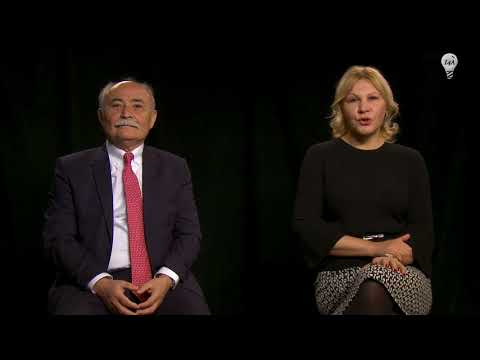
- our guests today are Mahmood Mohideen of the senior vice president at the World Bank Group in charge of partnerships and
- also Georgia Petrowski who is a senior fellow at the zipline Center member Georgia thank you so much for joining us
- today on knowledge at Wharton thank you so much thank you very much but maybe to begin with you when we met
- in Washington DC last year we were talking about the sustainable development goals and I was wondering if
- we could begin by talking about where are things today where do things stand in terms of deemed of implementation of
- those goals right there are many ways in looking at the progress on the SDGs one
- of them in the official way of handling the progress so if you measure it by the
- number of presentations and submissions to the UN system through ministers of finance and development it is going to
- be on the increase because many more countries have committed to present their plans for the 2030 agenda and they
- are all going to be doing that in July this year at the UN headquarters in New York so you can really see that there is
- some sort of official commitment demonstrated by the number of ministers and governments participating this year
- that will bring the total of submissions and presentations to more than 110 countries so this is more than half of
- the membership of the UN which is 193 countries then you take it into the more practical level at the national level
- how many countries have done better in terms of designing their own national plans design their own budgets to deal
- with the SDGs I would say that not all of those who submitted have done that there is always a difference between
- what's happening a reality the official presentations and the measure of that is basically how many
- countries that you can logo and their websites and see the SDGs in their budgets and you'll will be surprised to
- see that there are only very small number of countries which have done that so far
- the justification could be that still the third years and the launching of the SDGs that some of the lines of business
- are continuing but without really naming or renaming them under the new s disease
- but coming from a finance institution we take matters more seriously when you see
- the government plans are reflected in their budget priorities the third level which is more important than the two is
- basically the local level to what extent you have seen improvements in people's lives or the policies and institutions
- addressing their issues of concern since the launching of these disease in 2015 as we know the SDGs or the sustainable
- development goals are about more inclusive growth better social development and better consideration for
- environment and climate change issues again not all countries have done that at the local level there are some good
- bright cases I was in Colombia recently I've seen some good progress I I know that there are other Latin American
- countries including Mexico and others who are taken this issue seriously there are countries in the East like China and
- Vietnam and Korea and Japan who have the good investments in in the connection between the central level and the local
- level India have done well in that front as well in Africa I think there are many
- issues that are constraining governments but again you can really see countries like Rwanda doing very well in this
- front this doesn't mean that others are not doing but basically I'm trying to give examples of
- exceptional progress in terms of the commitment of the leadership and translating this commitment into some
- sort of localized solutions so you happy with the progress so far or using things
- that are running a little bit later than you'd like yeah well it's very much related to the performance at the
- country level so it it's not my happiness of the people's happiness that matter here if you are seeing this kind
- of improvement at the local level and people are more engaged and seeing some sort of better impact on reduction of
- poverty improvement and on health and education services and the rest of the 17 goals you can see every Development
- Agency and it stopped like me happy with the progress Georgia turning to you one
- of the initiatives that you in the cyclin Center have been collaborating on with the World Bank Group and other
- partners is the ideas for action which is a way to inspire young people to get involved in coming up with ideas to make
- the sustainable development goals a reality how is that program coming along based on what Mahmood just said in terms
- of countries that are not perhaps doing as much as they could be doing as quickly as they should be so I mean this
- year we are really surprised I mean last year we were surprised because we double
- the proposals but this year we triple the proposals which clearly demonstrate tremendous interest from young people to
- be part of this process to own the process and at the same time to come with actionable actionable ideas of
- implementation so what mood was referring that the government is signaling commitment to these issues now
- the question is because the implementation at the end of the day will not happen just because the
- government engage you have to engage the private sector you have to engage young
- entrepreneurs and this is something where we would like to interfere I mean engage with and the fact that we
- in addition to students we have young entrepreneurs and young professionals that means that they are also making
- kite of not just pressure but making the CEOs of the companies more comfortable that they have already young people
- working for who can commit innovative ideas so basically if we travel the triple the
- proposals we have over 2100 the number of teams was four times higher than that we have examples of business association
- like the German Brazilian Chamber of Commerce which utilized the network of companies to engage them in young
- profession to generate ideas in Eastern Europe a pharmaceutical company Hema far
- use this as a platform not only to generate ideas to make their company more sustainable or engagement in
- sustainability but at the same time really to communicate to the government that corporations can get engaged with
- additional and critical knowledge of how to deal with these issues so that's really very encouraging to know that the
- amount of participation has increased so much what are some of the reasons that drove this increase I think the
- philosophy of this program that is not just about competition but is a platform for learning platform for exchanging
- knowledge and critical critically local partnership I mean we made some major breakthroughs for example in Egypt and
- that was driven by idea for action Egypt club major breakthrough in Nigeria but idea for action African club I already
- mentioned there Hema Fonda the company in Eastern Europe I measure the Chamber of Commerce so basically I think the
- collaboration between the signaling center and the World Bank is more or creating that platform and facilitating
- so that the local initiatives are better designed and also supported so that they
- can generate better ideas coming back to you how does the idea for ideas for action programme fit in more broadly
- with what you and the World Bank are trying to achieve with the sustainable development goals one of the main things
- that came out from the UN discussions of this disease and one of the that we are pushing at the bank is the
- issue of partnerships it's one of the goals of the sustainable development agenda and in our case it's basically
- about how to rely on on our own comparative advantage when it comes to finance or knowledge but realizing as
- well that others would have their own comparative advantages in some particular fields the advantage of doing
- this kind of partnership with the Wharton has a place of excellence when it comes to knowledge and academia the
- partnerships with the business sector and the partnership with young minds and young people with their own ideas and
- their own ways of challenging the status quo and and actually the whole thing came out from here I was invited by
- Georgia four years ago to one of his classes and based on an exchange and of ideas and discussion and my way back to
- Washington DC I called him from the Train I said well why don't we start having all of these ideas
- institutionalized rather than having them coming out from a seminar or a lecture so let's have that and let not
- limit not limited to Wharton and make it a kind of a big platform and the idea developed and this is the fourth year we
- have thousands of participants from around the world from more than 120 countries coming with their own
- proposals of tough competition because and actually the difficulty now is not for those who wrote the proposals and
- finishing them the difficulty as it happened last year and the year before for those who are going to be assessing
- such high quality of good ideas mixing very good understanding in a positive way good understanding of the problems
- in their neighborhoods and their villages in their townships and their urban areas as well with whatever they
- learned in school and university with their exposure of different ideas coming through the open space of ideas around
- the world and getting there all in a way to convince very tough assessors of what could be
- really a good workable scalable proposal on finance for for development you mentioned 120 countries involved in
- this exercise is it your sense that it is primarily the developing countries that should be focusing on the SDGs or
- is this also something for the developed countries to focus on for example our STG is also important for the u.s. it is
- the main thing about the SDG is in comparison to its predecessor the MDGs nor the Millennium Development Goals in
- the past which ended in 2015 that the previous goals were basically focusing on developing countries and human
- development and with particular areas of work only eight goals the new and more challenging aspect of the his disease
- its universal universality it is addressing the challenges in the poorest of the countries in the world and the
- challenges as well of progress and maintaining what what you have and improving on it in the most advanced of
- the economies and if we measure it again by the submissions you will be happy to
- see that there is this enthusiasm by developing countries but again many of the OECD countries the Nordics some of
- the richest countries in the world we're in the forefront including the g20 and the g7 countries have been submitting
- earlier than others just to challenge themselves and their communities about what's going to be happening in the
- future would referred to the tremendous difficulty of taking all these thousands
- of wonderful ideas and trying to cherry-pick some of the most impactful ideas how do you do that well what's how
- do you select which are the best ideas that should be focused on and prioritized okay let me first mention
- that those who are making the selection are also very motivated to do that because for them that's exposing
- themselves to the reality or the ground so it's a mutually learning process when we have people from IFC or
- the World Bank selecting these projects in a particular country for example they
- will get pretty clear idea what from young people perspectives are priorities for these countries and there are very
- different layers of selection so that in each layer they get more feedback on how
- to improve their proposals and of course the final proposals will end up in the book which is published by the World
- Bank which goes through very elaborate editing so the bottom line basically is yes it takes time but if you don't look
- at that as a mechanical process of selection but there's a process of learning and providing feedback for
- those who are participating is very fulfilling I'm sure it is coming back to you these days there is a tremendous
- focus on science and technology and innovation as game changers in how how the world of business is evolving and a
- world of economic development is evolving how do you see the role of innovation and science and technology in
- the implementation of the SDGs overall but also in the kind of ideas that are proposed through initiatives like ideas
- for action there's a very good question the SDI or science technology and innovation were included in the
- documents of Addis which are basically the documents related to the implementation of the sustainable
- development goals there is a full chapter on that but and as you know it has happened in July 2015 but because of
- the fast changes that are happening in the areas of science and innovation and technology and this big discussion about
- the implications of the fourth Industrial Revolution if you write this chapter today despite the fact there's
- only three years old you it would be a completely different chapter in terms of the ways of handling
- the matter in terms of the kind of partnerships you feel that and the address again that was more of the
- responsibility of the government I want to do that and perhaps to partner with the Centers of Excellence and the
- private sector now in reality you can't really see who are driving the the changes in this area
- yes government is involved in different aspects it can incubate and support and give a good platform for the flourishing
- of new ideas and better technological solutions but the private sector business and academia that are basically
- behind all of these new ideas so I think the emphasis will be different and the kind of achievable outcomes from a focus
- on science technology and innovation rather than dealing with it as a kind of a separate sector it should be
- mainstreamed and integrated in every aspect of work including how to get better data by using Big Data solutions
- and other means to get better evidence of what works and what doesn't work when we talk about financed what extent the
- use of technology mobile money clouding finance the new technologies including blockchain and some of its good and
- controversial outcomes as well how can we consider them when we talk about implementation how technology can enable
- a hospital or a clinic in a remote village to get the best ideas coming out say from the United States of America
- when it comes to good solutions to to medical problems and diseases so all of all of these kinds of new ideas
- associated with STI needs to get us into a more dynamic version of considering it
- rather than just say well getting more from the government and ignoring the private sector and academic centers when
- it comes to the partnerships one of the most interesting things that you just mentioned Georgia is the role of
- academia in helping to come up with these ideas how do you see in from your perspective
- of the ideas for action program the rule of academic institutions and in making these kinds of initiatives successful I
- mean let me just step back before directly answering that question over the weekend the singly center organized
- an event related to blockchain and there was an interesting presentation from Macaulay from MIT who basically said
- most of the disruptive innovations in that space come from people between 24 and 28 years old so I asked the question
- what kind of education they got before they got there so I think from academic perspective we have at least two
- challenges one is to go beyond the traditional boundaries because in this space of blockchains you see people from
- technology side and lawyers to make sure that they don't get in trouble but they
- are development experts business people are not there so I would argue that they
- still a disconnect between what are the most exciting technological solutions and what are the real needs on the
- ground that needs to be addressed to this and I think that that hit Silicon Valley is already feeling there is no
- major new ideas coming from there because it's more kind of kind of a linear improvement on the technology
- side but not a major change of identifying the real problems that can be handled and make money by the way
- it's not just an absurd philanthropy or development issues now of course on the academia side one big benefit of this
- whole initiative is that we from one side we captured the reality on the ground but we also get understanding of
- what are the gaps in terms of knowledge and skills the dis young people are coming and cannot utilize them because
- they are facing a little bit different reality than what is sometimes presented in the regular education and for
- academies I think identifying these gaps is a good reminder that in addition of publishing papers
- they also need to be a little bit more focused and careful how to that process we are preparing the next generation of
- leaders or at the preneur so that they really deal with these the fundamental issues looking to the future a little
- bit one of the biggest issues that the world faces today is that of gender imbalance and how even the resources
- that exist are distributed so unequally between men and women if you think about
- the use of innovation and science and technology in not just empowering women but but bringing about greater gender
- parity around the world what are some of the new ideas that can be implemented to
- drive that sort of change you know maybe I wonder if you have any thoughts on new
- initiatives that could point in that direction yeah just over the horizon confirm what you said the problems
- related to inequality discrepancy and unfairness against women are all over not just in the developing countries but
- in many of the advanced economies as well when it comes to pay opportunities furnace in in dealing but when it comes
- to developing countries women would be suffering from the same problems like like what men would suffer from but they
- have their own problems as well and one of the new initiatives that we are trying to develop and to launch during
- the spring meetings of the World Bank and the IMF in April this year is an initiative that would link the SDGs
- to women entrepreneurs recognizing that if you happen to be a woman in a rural area under the age of 25 so each one of
- what I said now being a woman in a rural area under 25 brings different aspects of these advantages and discrimination
- when it comes to Financial Inclusion access to market and access to opportunities we can really see that
- technology and innovation especially in IT field could really bring many good solutions to these problems but you need
- to have the investments some of these investments could be related to the digital world but many of them could be
- analog investments who shouldn't really be undermining the importance of good education good access on the road better
- investment in nutrition and health for for women as well having said that we are the in partnership again with the
- second Center and Wharton Business School and with the UN system through the participation of the United Nation
- the Development Programme with the UN women with variety of economic Commission's of the UN system and the
- business sector we are having an initiative we are calling it s disease an error so it's sustainable development
- goals and women in all ages but we are focusing on the role of women as entrepreneurs and through their own
- micro enterprises and whatever they are investing of their time and their efforts and their talents in order to
- bring some solutions to their poverty and the poverty of their families and the poverty of their neighborhood sounds
- like a very interesting initiative from the cycling centers point of view what is your perspective how would this fit
- in with the work that you are already doing for ideas for action and where would you like to see this initiative go
- well from one side there is a tremendous complementarity in this because many proposal we receive are coming from
- young girls and women so the connections is already there and also we would like
- through this engagement to utilize this not as a competition for good ideas or recognizing a woman who've been
- successful so far but also utilizing the resources that Wharton and other academic institutions have to provide a
- platform where they can better equip themselves to take a leadership role because it's not a matter whether we
- cannot just separate the fact that they are not equally paid we first to have another class at least in peril we have
- to address are they are equally equipped do they have opportunity to really get access to that knowledge that will make
- them more creative more productive and through that and what Matt would mention I think the critical question is their
- role as a heads of the families so it's not just about a woman it's about their family about encouraging their own
- daughters to get in this in this space so I think from our perspective definitely this is something where we
- would like to go you know stronger to sort of wrap this up with one final question for each of you if I were to
- ask you to gaze into the crystal ball and and look at the future next you know 12 to 24 months where would you want to
- see ideas for action and this SDGs and her initiative go and and what contribution would you like to see it
- make to the sustainable development goals around the world men would start with you perhaps well three things for
- the ideas for action next year is going to be the fifth year so we hope for more
- progress and progress is measured by two things by the quantity and we are happy
- with the enormous progress and we hope to reach not just the 120 plus countries but the whole membership of the World
- Bank and the UN system in terms of quality we were very much impressed by the the quality we need more in terms of
- having ideas that could be workable solutions and scalable and the third is related to the SDGs on her while it is
- following the good footsteps of the ideas for action but we need really to see a big start for this one initiative
- given the importance of the role of women especially young women and micro enterprises in the society and the
- economy and to have the impact shirt wonderful George I think you had the final word what would you be pressure I
- would say if first to go beyond what usually is a topic of conversation of heroic entrepreneurs people who will
- change the world solved all these global we would like to see more progress at the local level more progress of
- initiatives which are driven at the local level solving the local problems because that
- will be a key contribution to solving these more broader current programs and that's what we've been particularly this
- year achieving so we also want to see more recognitions of these ideas at the local level because they solve specific
- problems and we will see in the coming months in fact that that is happening in Democratic Republic of Congo which is
- country with not that strong institutions at King Nigeria Colombia in the Balkans and that's what I'm really
- after more in terms of implementation but through that implementation shaping the the ecosystem inside the country and
- even sub law a local level so that more ideas which are not necessarily generate
- with right years for action will have a chance to succeed Georgia thank you so much for speaking today with knowledge
- at Wharton thank you very much for more insight from knowledge at Wharton please visit knowledge Wharton
- UPenn edu [Music]
Brief Summary
Mahmood Mohideen and Georgia Petrowski discuss SDG implementation, youth engagement through Ideas for Action, and the role of innovation in sustainable development.
Key points
- Global Participation in SDGs. Over 110 countries are committed to presenting their plans for the 2030 agenda at the UN.
- Local Level Impact of SDGs. The discussion emphasizes the importance of local-level improvements in people's lives.
- Engaging Young Minds for SDGs. The Ideas for Action program inspires youth to contribute actionable solutions for sustainable development.
- Gender Imbalance in Development. Addressing gender inequality is crucial for achieving SDGs, particularly in developing countries.
- Empowering Women Entrepreneurs. Focusing on women as entrepreneurs can help solve poverty in their communities.
- Future of Ideas for Action. Looking ahead, the initiative aims for broader impact and local recognition.
Episode highlights
- Global Participation in SDGsOver 110 countries are committed to presenting their plans for the 2030 agenda at the UN.“You can really see that there is some sort of official commitment.”1:18Mar 21, 2018
- Local Level Impact of SDGsThe discussion emphasizes the importance of local-level improvements in people's lives.“You can see every Development Agency happy with the progress.”5:01Mar 21, 2018
- Engaging Young Minds for SDGsThe Ideas for Action program inspires youth to contribute actionable solutions for sustainable development.“This year we tripled the proposals, demonstrating tremendous interest from young people.”5:43Mar 21, 2018
- Gender Imbalance in DevelopmentAddressing gender inequality is crucial for achieving SDGs, particularly in developing countries.“Women suffer from the same problems as men but have their own unique challenges.”20:53Mar 21, 2018
- Empowering Women EntrepreneursFocusing on women as entrepreneurs can help solve poverty in their communities.“It's about encouraging their own daughters to get in this space.”24:16Mar 21, 2018
- Future of Ideas for ActionLooking ahead, the initiative aims for broader impact and local recognition.“We hope for more progress and workable solutions.”24:58Mar 21, 2018
Tension
40/ 100Low tension