Is It Better to Rent or Buy A House?
Ask about Knowledge at Wharton
Episode Description
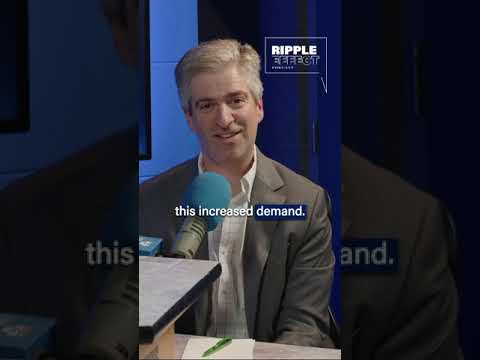
EPISODE OVERVIEW Wharton’s Benjamin Keys explains the opposing market forces that are driving the difficult decision between buying and renting a house. This episode is part of a series on real estate with Wharton professors analyzing the current state of the housing market.
PODCAST OVERVIEW Every day, business scholars answer pressing questions in their research - but what do their insights mean for you? In this podcast, Wharton faculty dive into what inspired their studies and how their findings resonate with the world today. Learn how research insights translate into knowledge you can use, with host Dan Loney.
Learn more at http://whr.tn/rippleeffect.
#homeownership #realestate #housingmarket ----- The Wharton School of the University of Pennsylvania is committed to sharing its intellectual capital through Knowledge at Wharton, the school’s online business analysis journal.
Launched in 1999, Knowledge at Wharton offers free access to:
- Articles, podcasts, and videos highlighting Wharton faculty research and analysis of current business trends - Interviews with book authors from Wharton School Press - In-depth series of curated content like Wharton Executive Education’s Nano Tools for Leaders - A searchable database of more than 10,000 articles covering all aspects of business - A weekly newsletter that delivers Knowledge at Wharton insights directly to your inbox
Visit the Knowledge at Wharton homepage: https://whr.tn/3qUpSBE Subscribe to the Knowledge at Wharton YouTube channel: https://whr.tn/3DEAgAU
Read the full transcriptHide the full transcript
- Ben Keys: Well, we're in the midst of an affordability crisis in the United States when it comes to homeownership. Between
- high interest rates and high house prices, it's a very challenging time to enter the housing market. So I think we're
- seeing, especially from the millennial generation that is reaching those peak home buying years, feeling that they're priced out of
- a lot of the neighborhoods and even a lot of the cities that they'd like to be homeowners in. And so I think this is raising,
- as you said, up to the level of one of the most important issues on people's minds is the unaffordability of housing.
- Dan Loney: Welcometo The Ripple Effect, the podcast that takes you on a journey through the minds of Wharton faculty. I'm your host,
- Dan Loney. And in each episode, we'll be diving deep into the inspiration behind the groundbreaking research that
- Wharton professors have conducted, and exploring how their findings resonate with the world today. Loney: Well, certainly
- there are a lot of questions around the real estate market right now, one of which is the decision of whether to buy or
- rent. Pleasure to be joined here in studio by Ben Keys, Wharton Real Estate Professor. Good to see you, Ben. How are you?
- - I'm doing great. Thanks. - I guess I never thought that this was going to be such an
- important question. But it seems like it's becoming top of mind for a lot of consumers trying to make that decision of which type
- of property they can afford, and they want to live in right now. - Well, we're in the midst of an affordability crisis in the
- United States when it comes to homeownership. Between high interest rates, and high house prices, it's a very challenging
- time to enter the housing market. So I think we're seeing, especially from the millennial generation that is reaching
- those peak home buying years, feeling that they're priced out of a lot of the neighborhoods and even a lot of the cities that they'd
- like to be homeowners in. And so I think this is raising, as you said, up to the level of one of the most important issues on
- people's minds, is the unaffordability of housing. - And so I think for a lot of people when they're younger, and
- they're thinking about where they want to live, they probably make the decision, okay, I'm going to rent first. So maybe I
- can build up some equity and be ready to have the downpayment. But with some of the dynamics of the economy right now, that's a
- challenge to do that, especially when rents have kind of risen the way they have the last few years. - Yeah, that's
- right. If you think about the challenges that this generation has faced, at first, it's the sort of uncertainty in the labor
- market coming out of the financial crisis. So a lot of this generation was hitting the labor market in exactly those
- weak economic years. Those are difficult years to build up a downpayment. They're also difficult years to have a job
- that has that predictable income that's going to support making a long term commitment to a mortgage. And so it's only after
- you sort of have had the chance to save up for a down payment, and then you also have that type of income stability, that
- you begin to have the confidence to become a homeowner. And what we're seeing is a significant delay for this younger
- generation, that at the same point, previous generations had substantially higher homeownership rates. - So then there
- are obviously significant components that are playing out in the potential of buying a property that are having an
- impact on the rental side as well. - Yeah, that's right. So it mostly comes down to supply and
- demand. And what you have is a shift, really, since the financial crisis, after this enormous wave of foreclosures.
- We had millions of foreclosures in the US, and we had a swing in terms of the availability of mortgage credit. And so mortgage
- credit has become more difficult to access. Most homeowners need a very high credit score in order to obtain a mortgage. And
- what that means is that there's a pool of people who historically may have been homeowners who are now pushed
- into the rental market. And that has driven up demand for rental units and has driven up the rents that renters are expected to pay.
- - And I guess there's also the component of the baby boomer generation when you think about the potential of renting. People who
- owned a home for 30, 40 years, that don't want to be in that property anymore. And one of their probably best options is,
- okay, I'm gonna rent, I'm gonna move into a city because that's where I want to be, around all the excitement, and renting
- becomes the best option for them right now. - Yeah, there is interesting sort of demographic trends. And I
- think the tensions in the housing and rental markets are where those demographic groups overlap. So where there's kind
- of competing demand from multiple generations, who might also want the same type of location, the same type of
- amenities. And so we're certainly seeing that trend as well, of people moving out of their homes and into the cities
- as they reach those ages where they'd like to access some of those city amenities. At the same time, there's still a lot
- of people who are looking to age in place, who like the sense of community that they've built up maybe out in the
- suburbs, and are a bit reluctant to give that up. And so that sort of comes back to not just the choice between owning
- and renting, but then where do you want to own, and where would you rather rent.
- - So I guess it's probably not a surprise that much that we've seen this. This just unbelievable wave, it seems like,
- of multi-family properties that have been built over the last, what, decade or two decades.
- - A big response in terms of multi-family construction, especially in the last just couple of years. And so this is coming out of this
- recognition of growing demand for renters who can't access the mortgage market. And then some of its the demographics, the
- size of the millennial generation and the potential to create housing where the jobs are. And I think this is one of
- the key tensions in the housing market and the market for rental units as well, is are these units being built where
- the jobs are, and where do people want to locate. And some of that has been a reaction to some of the constraints that
- have been put in place, making it difficult to build in some of those areas. - If they're not building them where the jobs are, they're at
- least building them where there's access to get to those jobs. And in the suburbs, where I live in Philadelphia,
- apartment complex went up right next to the train station in my suburb where I live. So it's easy access for people to be
- able to get in and out of the city. - Yeah, so transit oriented development has been a very popular buzzword
- for quite some time. But I do think you see a shifting reallocation not just within cities, and sort of where
- development happens within those, but also across the country. And so we've seen much more construction happening in the
- Sunbelt, and in places where it's easier to build. There's more space, potentially cheaper labor, less union barriers. The
- building tends to happen where it's easy to build. And sometimes you have the jobs actually moving there rather
- than vice versa. And so when we think about the appeal of Austin, Texas, relative to the Bay Area, and why are tech
- companies relocating elsewhere, some of that is related to housing costs. - So I guess we shouldn't expect to see a slowdown on the
- multi-family side any time in relative near future. - Well, it's interesting that you say that. I think we are seeing a
- bit of a slowdown in multi-family over this last year. Some of that is that the high interest rates are really driving home
- just how difficult it is to build. And so a lot of what we see is a lot of work in the multi-family pipeline. So we see
- a lot of new construction that started a year ago or two years ago when interest rates were low and builders locked in those low
- rates. But now coming through this kind of bulge in the multi-family pipeline, we are seeing a bit of a slowdown as
- the building shifts maybe a bit back towards single family. And we also see just the impact of high rates on development.
- - Not that it's probably exactly the same, but it feels a little bit to a degree at times like what we've heard about over in
- China and Japan in terms of the numbers of properties that are built in some of these big cities, because that's seemingly
- the best option for a lot of people. - Yeah, I mean, there's a few different nuances to that, but making that
- comparison. So one of the things that's distinguished Tokyo, for instance, over the last few decades has been the relative
- affordability of rental housing in that country. And that's been really a function of how willing they've been to build. To
- redevelop even neighborhoods that have a ton of historical significance. Rather than preserving them in amber with
- preservation laws, they've recognized the need to build evermore upwards. And that's actually kept housing costs
- down. We certainly don't have that ethos in this country, of building to that level of density. And seeking to maintain
- housing affordability has not been a priority of policymakers in previous decades. I think this growing pressure from
- younger generations is going to get there eventually. But it might take some time. I think the parallels with China are
- a bit more of a stretch, because that has been more of a credit bubble than anything else, and sort of very generous government
- support for construction, combined with encouraging people to invest heavily in real estate. So encouraging people to
- buy multiple properties as part of their portfolio in a country that saves a heck of a lot more of their money than we do
- in the US. And so we're a nation of spenders. They're a nation of savers, and a lot of that savings has been funneled into real
- estate development. It really comes down to a policy choice about whether we want to encourage more development and
- bring affordability back into some sort of reasonable range, or whether we're going to continue to rely on some of these market
- forces that are pushing the jobs and pushing the development into parts of the country that, you know, have historically not had
- the same level of density. - So what's that policy discussion like right now here
- in the US? And I assume that probably a lot of it is happening either at the state or local level right now.
- - That's right. It's a complicated network of policy choices. So much of the decision about what gets built occurs at the very
- local level in terms of the local zoning. What's the local review process? Does something have to go through a local city
- council person or some other type of regulatory review? So a lot of these decisions are being made at a very local level. And
- then you have state level regulation that, in many cases, is trying to overturn some of that local resistance to more
- development. So this is the NIMBY movement, or the Not In My BackYard movement. And we've seen states like California
- trying to push back very hard against that type of of hyper local control to block new development. And then at the
- federal level, I think there's a variety of tools that the Biden White House has been putting forward as kind of a mix of
- carrots and sticks to try to encourage development along the lines that you were describing with transit. And so you can tie
- the funding of new support for transit lines and for redeveloping public transportation and linking that
- to housing development or relaxing zoning rules. And that's just one potential direction. But I think it is
- really a combined local state and federal effort that's going to be required for us to get from point A to point B.
- - So do you think that this run that we're in around housing, buy versus rent, is it a cyclical run that we're kind
- of in right now, or is this more towards kind of a permanent shift that we're looking at?
- - If we lay out a few of the elements that are kind of determining where we are at the moment, one of those things
- is COVID. And I think we have to recognize that the interest rate environment during COVID was especially unusual. It was
- really a reflection of the incredible effort of both fiscal and monetary policy working hand in hand to avoid the worst
- possible outcomes. One of the implications of that was driving mortgage interest rates to record lows. And so we have a
- large share of the mortgages in this country outstanding that have interest rates below 4%. For households, that's an
- incredibly valuable asset, that they have a below market price mortgage. So mortgages are above 6% right now. To have a
- mortgage locked in below 4% means that every month, you're effectively saving a substantial amount of money, and
- there's going to be a lot of resistance to giving that up. And so what you have is a phenomenon known as mortgage
- lock-in, where you have a lot of households who are quite content to sit in the homes where they're in. That freezes up the
- property ladder. It means that there's not a lot of inventory out there. It means that there are very few homes on the
- market. And that keeps prices very high, when there is a very limited supply of homes for sale. And so the drivers around
- that mortgage lock-in are something that are going to persist for years. This is not a short term problem. This is
- something where, when people locked in a 30 year rate in 2021, or 2020, that can last for a very, very long time. And
- so this is not something that's going to work its way through the system in the short run. And that means that we're going to
- need to look for other alternatives in terms of driving down some of the affordability, and encouraging some of those
- people who are locked in, or incentivizing some of those people who are locked in to look elsewhere and to continue to
- move up the property ladder, which sort of lubricating that property ladder is the thing that allows first time
- homebuyers to get into those starter homes. - Ben, great to talk to you as always. Thanks very much.
- - Thanks so much for having me. - You got it. Ben Keys. Real Estate Professor here at the Wharton School.
- - Thank you for listening to The Ripple Effect. We hope you found this episode informative and engaging. Don't
- forget to subscribe and leave us a review so that we can continue to bring you the best insight from the Wharton School.
Brief Summary
Ben Keys discusses the U.S. housing affordability crisis, millennials' challenges, and the rental market dynamics.
Key points
- Affordability Crisis. Ben Keys highlights the challenges millennials face in homeownership due to high prices and interest rates.
- The Ripple Effect Podcast. Dan Loney introduces the podcast exploring Wharton faculty insights on real estate.
- Mortgage Lock-In Phenomenon. Ben Keys explains how low mortgage rates from previous years are causing a freeze in the housing market.
Episode highlights
- The Ripple Effect PodcastDan Loney introduces the podcast exploring Wharton faculty insights on real estate.“Welcome to The Ripple Effect, the podcast that takes you on a journey.”0:31May 21, 2024
- Mortgage Lock-In PhenomenonBen Keys explains how low mortgage rates from previous years are causing a freeze in the housing market.“This is not a short term problem.”12:02May 21, 2024