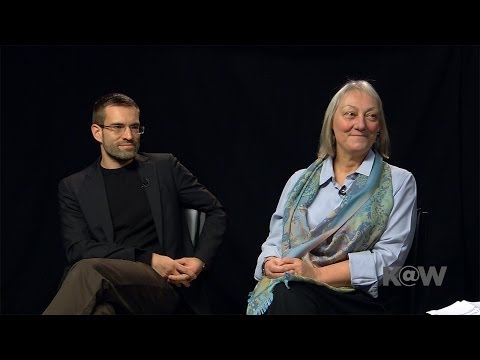
Is It Okay to Have a Cheat Day? Goal-Setting Advice from Wharton's Marissa Sharif — Ripple Effect
Ask about Knowledge at Wharton
Episode Description
EPISODE OVERVIEW Before you make any New Year’s resolutions, you’ll want to hear this science-based advice from Wharton’s Marissa Sharif. She explains why goal-setting is easier when you build in some cheat days, which she calls "emergency reserves." This episode is part of a series on getting a “Fresh Start" this new year.
Topics and questions covered: 00:00 - Introductions 01:00 - Emergency Reserves in Goal Setting 04:46 - Psychology and Research Behind Emergency Reserves 07:51 - Self-control 09:00 - The Role of People Around You 10:00 - How Emergency Reserves Affect Stress 11:03 - Expanded Applications of Emergency Reserves 13:47 - How to Use Emergency Reserves in Your Own Life
PODCAST OVERVIEW Every day, business scholars answer pressing questions in their research - but what do their insights mean for you? In this podcast, Wharton faculty dive into what inspired their studies and how their findings resonate with the world today. Learn how research insights translate into knowledge you can use, with host Dan Loney.
Learn more at http://whr.tn/rippleeffect.
#newyearsresolution #goalsetting #productivity #timemanagement ----- The Wharton School of the University of Pennsylvania is committed to sharing its intellectual capital through Knowledge at Wharton, the school’s online business analysis journal.
Launched in 1999, Knowledge at Wharton offers free access to:
- Articles, podcasts, and videos highlighting Wharton faculty research and analysis of current business trends - Interviews with book authors from Wharton School Press - In-depth series of curated content like Wharton Executive Education’s Nano Tools for Leaders - A searchable database of more than 10,000 articles covering all aspects of business - A weekly newsletter that delivers Knowledge at Wharton insights directly to your inbox
Visit the Knowledge at Wharton homepage: https://whr.tn/3qUpSBE Subscribe to the Knowledge at Wharton YouTube channel: https://whr.tn/3DEAgAU
Read the full transcriptHide the full transcript
- There's just going to be days. You can't make it to the gym. There's going to be weeks where, you know, you're just not going to be able
- to save amount that amount of money you wanted to. And the problem is, is that these small failures really derail people.
- Right. And they're so, so common over the course of the months or the years that we're trying to pursue these long term goals.
- And it's so common for them to. Do you realize that there's actually a phenomenon
- that's been termed to describe this called the what the hell effect that basically when we, you know, miss going to the gym one day or, you know,
- miss that weekly budget goal, we kind of completely abandon the goal. Welcome to The Ripple Effect,
- the podcast that takes you on a journey through the minds of Wharton faculty. I'm your host, Delany,
- and in each episode we'll be diving deep into the inspiration behind the groundbreaking research that Wharton professors have conducted
- and exploring how their findings resonate with the world today. Well As we come to the end of the year,
- people no doubt set goals for themselves in the New Year. Some of that may relate to their health,
- some of it may relate to their professional careers, and trying to keep on that path can also be a great challenge.
- But holding yourself to a high standard and not making mistakes or falling off the bandwagon as it may be referred to can even be a greater challenge.
- So that's why having an emergency reserve or a cheat day, as some refer to it, may be a great way
- to be able to work around the challenge but still be on a path to reach your goal.
- Pleasure to be joined here in studio by Marissa Sharif, who is an assistant professor of marketing
- here at the Wharton School. She's done research in this arena and she joins us with more.
- Marissa, great to meet you. Thanks for coming in. Yeah, thanks for having me. Let me start. Larger scale here.
- What was it that drew your attention to this idea in the first place? Yeah. So I study motivation.
- That's kind of my life, my passion, what I think about all the time. And I noticed a common problem
- that people are facing that you kind of alluded to, Right? That a lot of us have these big long term goals, right?
- A lot of us want to become healthier or save money. And one way we try to reach these goals is by having shorter term goals, right?
- So maybe I decide to go to the gym four or five days of the week or save a particular amount of money each week.
- And so that's great. But a common thing that happens is that we experience these small failures, right?
- There's just going to be days you can't make it to the gym. There's going to be weeks where, you know, you just not going to be able
- to save amount that amount of money you wanted to. And the problem is, is that these small failures really derail people.
- Right. And there's so, so common over the course of the months or the years that we're trying to pursue these long term goals.
- And it's so common for them to. Do you realize that there's actually a phenomenon
- that's been termed to describe this called the what, the halo effect that basically when we, you know, miss going to the gym one day or, you know,
- miss that weekly budget goal, we kind of completely abandon the goal. And the idea is, you know, I failed today.
- There's no way I'm going to be able to reach the goal this week. What the hell? Why would I continue?
- Right. It's no longer in sight. It's not attainable. And so how we started thinking
- about emergency reserves is kind of how do we solve this problem, right? Like, how do we help people persist
- after these small failures that are so, so, so common? And that's where we started thinking about emergency reserves,
- which is basically some type of slack, some type of flexibility within a goal that's available if you need it, but at some type of psychological cost.
- Right. So think about, for example, you know, we are often encouraged to take like 10,000 steps per day.
- Imagine you set a goal of taking 10,000 steps every day, but you give yourself to emergency skip days, right?
- Two days out. If something comes up, then you'll just skip those days and you're still achieving your goal.
- And so what we found is basically that these goals with emergency reserves are better than those without.
- So there is a definite path that that having that emergency reserve and people being able to at times rely on it
- still helps them towards the larger goal and be successful longer term. Yes. Yes.
- That's the idea that kind of it helps people keep going. It kind of takes away these negative feelings about goal failure
- and allows people to keep going week to week to reach these bigger goals. Does it become then part of almost one's life lifestyle
- that if they have that philosophy, that mindset, that it can carry over to either other parts of their lives
- or to other goals that they're trying to reach at other periods of time? Yeah. I mean, you can think about number one, like at a closer level,
- you can think about applying emergency reserves to a lot of domains, right? So you might start, for example, with maybe you're trying to get more fat,
- but then maybe you want to go into saving money and you have, you know, an emergency budget that you have available some extra dollars.
- But yeah, the idea of giving yourself some slack is good in terms of persisting after failures, but you don't want to give yourself
- too much slack and you don't want it to be something that you keep dipping into.
- Right. So one of the reasons why emergency reserves are effective is because it helps people keep going.
- But another part is the way that you think about emergency reserves is kind of this small bucket of them, Right?
- You only have two per week, for example. And so you're trying to hold on to those and you're
- thinking about each day, do I want to apply my emergency reserve? Reserve or do I want to wait for a more emergency
- or more immediate situation to use it? So having something that's limiting you from really,
- you know, taking too much advantage of that flexibility is also important. It's a balance.
- And I'm wondering also if there is also a benefit that if people say you have a situation where you may think about using a reserve
- and you don't use it. Yeah. And then you get a few more days down the line, you actually have the potential to, you know, succeed your goal
- in a quicker fashion because you haven't kind of dipped into the bucket totally.
- So that's one of the ideas. And we find that a lot actually. So we compare it to, for example,
- imagine you're trying to reach 10,000 stops and you do it seven days of the week,
- five days of the week or seven days of the week with two emergency skips. The emergency skip version does better than both seven and five.
- Right. And that's because people don't want to use their emergency scopes. Right.
- But it also helps them if they do have to use them. So it's kind of combining the benefits of both worlds.
- Do we know whether or not using the emergency reserve then ends up helping people exceed their goals?
- Yeah, down the road. So exceed is like doing even better than the with having them or what do you mean by well, like
- either in terms of the time that they reach the goal. Yeah. Shorter. Yeah. Or if it gives them motivation to expand
- that goal going from, say 10,000 steps to Yes, yes, yes. So it definitely helps them reach these short term goals
- more often. And so that will speed up the process of reaching these bigger long term
- goals, like, you know, getting fit faster or saving money quicker. So, yes, in that way, you've also talked about the element of self-control.
- Yeah. Being important in this process as well. How so? Yeah. So goal setting in general is is helpful for self-control problems, right?
- So when we're thinking about reaching these bigger long term goals, one of the reasons why we struggle with them is because
- we want to have kind of these immediate pleasures rather than delayed pleasures.
- And because of that, we kind of procrastinate a lot of times on doing these actions that delay pleasures but help us reach these long term goals.
- And so setting these short term goals in general, right? Like going planning to take 10,000 steps, four or five days of the week,
- help with those self-control problems because there's a plan each week, right? I'm not having to come up with that day to day.
- And emergency reserves on top of that can help because if you do fail, there's kind of this
- interplay iron in action to tell you what to do the next day. Right. Keep going.
- Compared to relying on your self-control to be like, mm, I failed. Maybe I'll give up.
- So if someone is able to be successful in reaching a goal, I'm wondering if there is also a component that could be transferable
- to a friend or a family member. And I asked that in part because we know that there are so many businesses
- these days that focus on this goal setting around health care because they're obviously concerned about the rise of health care costs.
- So is there a component that can help friends or family if another person in their life is successful?
- Yeah, totally. So a big one of the big reasons that people are motivated to start
- pursuing a goal or, you know, even persist while they have have it is how achievable or how attainable that goal feels.
- Right. And so if you see people around you achieving these goals, like with emergency reserves or with any tool, honestly,
- that's going to motivate you to also get going. Right. You see people, you know, that are potentially similar to you reaching out.
- So you think I can reach it too? And so that definitely motivates people. There is also the element of stress.
- I think any time somebody is trying to reach a goal, it's a challenge for them. And there are moments, as you said, that's why probably people use
- that emergency reserve, that maybe they reach a point where they need to take a break or they've reached that that stressful point.
- How does that component of stress factor in, do you think, to this entire process?
- Yeah. So I think the emergency reserve does a couple of things to the stress part.
- It's definitely reducing, you know, that stress or that negative feeling after you feel like exactly
- what you're suggesting. I also think knowing ahead of time you have it is a nice
- de-stressful thing, right? And I know that because we've also tested what type of goals
- people like and what programs people would want to sign up for. And people definitely prefer these programs
- that have emergency reserves or have flexibility, probably because they like the idea of having it just in case
- something happens that also reduces that stress level right at the start. Right.
- We've talked about this here about health care, health and money. But how broad do you think the use of this mindset of emergency reserves
- in terms of goal setting can be in their professional lives in other areas as well?
- Yeah. So I think from a company standpoint, right. So health care savings, like you said, big.
- I also think it's really common right now for people to try to use companies to help them reach their goals.
- Right. So think about the number of fitness apps that are available. Right. Or even just YouTube stations that are on helping you become more fat.
- Or think about the number of apps that are trying to help people budget or learn a new language.
- There's so many of those. So emergency reserves could be implemented in these in these apps or these programs too, to help people.
- And then beyond that, right from the consumer or personal level, people can think about using those.
- And in almost most domains, right, like I would say, domains that might have some type of like
- addictive components, like, you know, stopping smoking or something like that. It might not work to have the emergency reserve because if you do dip into it,
- it might really be hard to like, you know, go back to where you were before. But beyond that, like a lot of domains should work well.
- That's interesting you say that because obviously in our lives there are habits. Yes.
- Which are at times so addictive. Yeah. And can be so negative to our lives that using that that that cheat day.
- Yeah. Can end up having a longer term negative impact than a positive. Oh totally.
- And I've only studied this so far and goals that are trying to start a beneficial behavior.
- Right. Like take more steps or you know do more work tasks or something like this.
- I haven't looked at the side of reducing a negative behavior. Right. Like stopping smoking or, you know, stopping the number of desserts you eat.
- So it's possible in those domains, if you get a little bit of of a taste of it, maybe it's a negative component.
- I haven't searched that that side yet. So is is that kind of the next natural step in your research?
- Yeah. You go to to look at that area. Yeah. That's something I'm definitely interested in
- and looking at is kind of are there boundary conditions, right. Like are there domains where maybe it doesn't work as well or backfires?
- So far I haven't found them, but I haven't looked at kind of these especially addictive.
- I mean, I honestly don't think I could study those because it might be potentially harmful, but that is an area I'm interested in.
- What do you think then? Is it off of this research to the message that if you could deliver to the public,
- what do you think is is the message to think about people who are going through this process, who are going through these goals
- and thinking about this component of an emergency reserve? Yeah. What's the message you say?
- Yeah, I would say think about a challenging goal for yourself, right? So something that's difficult to achieve,
- have that and then give yourself a couple of emergency days. That's and you should be more effective at reaching your goals that way.
- That's fantastic. Marissa, pleasure to meet you. Thanks very much. Greatly appreciate it.
- Yeah, thanks for having me. Thank you. Great to have you with us. Marissa Sharif, who is assistant professor
- of marketing here at the Wharton School. Thank you for listening to the ripple effect.
- We hope you found this episode informative and engaging. Don't forget to subscribe and leave us a review
- so that we can continue to bring you the best insight from the Wharton School.
Brief Summary
Marissa Sharif discusses goal setting, the "what the hell effect," and how emergency reserves can improve goal achievement.
Key points
- The What the Hell Effect. Small failures can derail long-term goals, leading to abandonment of efforts. "What the hell?"
- Emergency Reserves for Goals. Introducing flexibility in goal setting can help maintain motivation and success. "Give yourself a couple of emergency days."
Episode highlights
- The What the Hell EffectSmall failures can derail long-term goals, leading to abandonment of efforts. "What the hell?"“What the hell? Why would I continue?”3:19Jan 3, 2024
- Emergency Reserves for GoalsIntroducing flexibility in goal setting can help maintain motivation and success. "Give yourself a couple of emergency days."“Think about a challenging goal for yourself.”14:08Jan 3, 2024