Is Medicare Broken? Inside CMS Reforms, Medicare Advantage, and Healthcare Costs
Ask about Knowledge at Wharton
Episode Description
ABOUT THE EPISODE Ezekiel “Zeke” Emanuel examines how the Centers for Medicare and Medicaid Services is attempting to modernize U.S. healthcare while overseeing $1.7 trillion in spending. He points to efforts to expand site-neutral payments and boost primary care reimbursement as meaningful steps to reduce costs and improve outcomes. Emanuel also argues that Medicare Advantage requires tougher oversight, citing outdated risk adjustment and persistent overbilling. Overall, he suggests CMS is moving in the right direction but still lacks a fully coherent long-term strategy.
ABOUT THE PODCAST This Week in Business features interviews with Wharton faculty about the latest news, fascinating trends, and issues impacting both consumers and the business world. Episodes are recorded at the Wharton School and published twice per week.
#Medicare #HealthPolicy #MedicalCosts #HealthcareReform #HealthcarePolicy #HealthInsurance ----- The Wharton School of the University of Pennsylvania is committed to sharing its intellectual capital through Knowledge at Wharton, the school’s online business analysis journal.
Launched in 1999, Knowledge at Wharton offers free access to:
- Articles, podcasts, and videos highlighting Wharton faculty research and analysis of current business trends - Interviews with book authors from Wharton School Press - In-depth series of curated content like Wharton Executive Education’s Nano Tools for Leaders - A searchable database of more than 10,000 articles covering all aspects of business - A weekly newsletter that delivers Knowledge at Wharton insights directly to your inbox
Visit the Knowledge at Wharton homepage: https://whr.tn/3qUpSBE Subscribe to the Knowledge at Wharton YouTube channel: https://whr.tn/3DEAgAU
Read the full transcriptHide the full transcript
- Healthcare continues to be one of the most important topics you think about in the United States economy. And apparently, one of the
- areas that is focused on even more so right now is the Center for Medicare and Medicaid Services. The agency oversees
- $1.7 trillion in outlays in healthcare services. To tell us what's going on there right now, a pleasure to be joined by Ezekiel
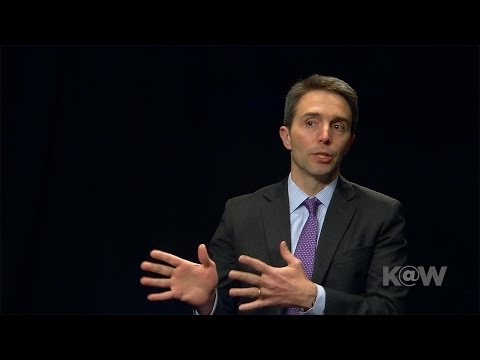
- Emmanuel, who's Vice Provost for Global Initiatives here at the Wharton School. You recently penned an opinion piece in the
- medical journal <i>Stat</i> about the agency. Zeke, great to catch up with you again. How are you, sir?
- Besides being hoarse, I'm great. Well, I'll try to make this painless, if I can. It is
- obviously an interesting time for healthcare. There's so much discussion. There's even, to a level, so much concern. But you
- say that this is an agency, CMS, that really is standing out right now with some of the things that they are doing.
- Well, you know, when Trump won, it was the FDA that was a standout under Scott Gottlieb. And I think Mehmet Oz has been doing a
- great job. He has a lot of independence. He's very focused on bringing modern technology. And they've launched some new
- initiatives, you know, to get rid of some waste, like WISeR. And they're sort of giving primary care a boost. And
- they're also trying to rein in Medicare Advantage, which MedPAC at least suggests has almost $90 billion per year of
- over billing in various ways, whether through upcoding or selection of patients. So those are important initiatives. Not
- every— I don't agree with everything, of course. - Right. But that's the nature of policy. You can— you can admire a group without
- necessarily agreeing, and everything gets done. And I think the most important thing one gets is sort of the
- intention to really try to improve the system. Right. And because I think a lot of people still believe that where
- we are right now and where we need to be, there's still a fairly long pathway to try and get to where this healthcare
- system needs to be in the years ahead. I would say there's unanimity on that point. - Yeah.
- Which is, the system is failing. I think everyone agrees the system is failing. What we don't have now— you know, sorry to go off, but
- political scientists say three things are needed for major legislation and change. You need a recognition of the problem.
- You need a clear policy. And you need a policy window to open from an election or, you know, some tragedy or something like
- that. We don't have a path forward. We have lots of steps, but they're not a coherent strategy. And I think that's
- what, over the next few years, we're really going to need to focus on. All right. So a couple of things that you mentioned, and you
- mentioned in the article. One being the potential financial benefit of doing procedures in facilities outside of hospitals.
- - Right. - Take us into that. So it's called "site-neutral payment." Basically, when the
- government, as well as private insurance, they pay for the facility where you do the procedure, the surgeon, the
- anesthesiologist, whatever else. The problem is that when you do the procedure in an operating room of a hospital, a facility
- fee— which is the biggest portion of it, way more expensive than the doctors— is way higher in hospital than at,
- say, an ambulatory surgery center or even a physician's office. And that price differential can be, you know,
- thousands, and potentially more than ten, $20,000 depending upon the procedure. Many of us have been advocating for, I would say,
- years, if not decades, that we should have what's called site- neutral payment. Wherever you're doing the procedure, you get the
- same amount of money so that you incentivize it, to do it in the lowest-cost facility. Look, many years ago, hips were only done—
- many years ago, a decade ago— hips were only done in hospital. Then they made advances, and you could do it in an ambulatory
- surgery center and spend 24 hours. Why are we paying the extra payment to a hospital? It also incentivizes hospitals
- to get those costs down. - Right. One of the things you also talked about in terms of pay was
- what primary care physicians get in comparison to specialists, and— explain why that stands out.
- Well, look, we know that primary care doctors, there's good evidence that more primary care doctors actually reduce
- mortality in a region and increase health. In America, we've had— compared to every other country, we have too many
- specialists compared to doctors. There's a long history. It really probably goes back to World War Two, when the military
- wanted specialists to treat wounded soldiers and gave them higher rank in the military and pay them more. And that carried
- over after a war into insurance. The problem is primary care doctors make, you know, a half, a third, a quarter of what
- surgeons and specialists make. You're not going to attract that many people into primary care. And yet they're critical for
- improving the health, especially where the primary need is to treat chronic illness and manage chronic illness and keep those
- people out of the hospital. So increasing the pay of primary care doctors has long been, again, something lots of people
- have urged, and this administration is actually doing something in that direction.
- You also noted that the Innovation Center at CMS is doing some good things, and I guess I should say it's
- continuing to do good things. And you know, having been around business as long as I have as a journalist, we know how
- important innovation is to all businesses. Absolutely. And we put in the Affordable Care Act, a billion dollars a
- year to the Innovation Center to develop new payment policies and other innovations that would increase quality or lower cost.
- Now, the person heading what's called CMMI, which is the Innovation Center, we should champion. He's a Penn grad. He's
- a former secretary of mine. I will say he got an A, and he's putting all the good stuff we instilled in him to work.
- They've come out with several really new models, and we're anticipating another model to drop this month, maybe on
- Medicare Advantage. And so one of the things they've done is they've seen a lot of abuses, and they've said, listen,
- Medicare traditionally has not had prior authorization. But areas where we've had abuses, like skin substitutes, that have
- gone up 40 fold in less than five years in terms of billings into the billions— we're going to have prior authorization.
- And, you know, I think that's actually really important to get rid of. A lot of— this is clear— some of it's clear fraud, some
- of it's clear abuse, and all of it's waste. How, then, do these potential changes being made, and the
- advancements being made, potentially impact the insurance industry? Because that's the other side of this equation that
- seemingly is drawing more and more attention these days. Well, one of the positive things is they have this new access
- model, which is trying to get more AI and apps, and use more virtual care in. Again, I think one of the really positive
- steps. And they've collected not just lots of tech companies, health tech companies, but they've also collected a lot of
- private insurers to say that they're going to participate with the model, too, and adopt a lot of that innovation, which I
- think— again, very, very smart move. Something, frankly, the Biden administration did not do enough of. I've been urging, look,
- you've got to put a lot of money behind every innovation you want adopted, because doctors get paid from lots of different
- sources. Unless they're hearing a coherent message, it's hard for them to change their practice, just for Medicare or
- just for one insurer. You also noted that there— while, you know, we've touched on the
- things that seemingly are going very well and obviously will help CMS and help health care, that there are some things that
- maybe they still need to address that maybe are not going in the— in the path that they should.
- Well, I think, you know, the obvious elephant in the room is Medicare Advantage. More than half of seniors are now on
- Medicare Advantage. It's hundreds of billions of dollars, and we know that its risk adjustment methodology is
- antiquated. It's inaccurate. Everyone agrees to that. It's abused. There's a lot of gaming going on. Everyone agrees to
- that. And yet, Medicare has been— glacial is maybe the best word, in revising that. And, you know, when they developed the current
- risk adjustment methodology, almost 30 years ago, they had— they recognized they didn't have the technical skill, and they
- brought in people to help them. I don't see that happening. You know, we at Penn have developed a risk adjustment methodology
- which is three times more accurate than what they use. And I have to say, getting a hearing there has been hard.
- Overall, how are you feeling, then, about CMS right now? Well, look. One is an absolute statement. One is a comparative
- statement. The comparative statement. Compared to all other agencies working for the government, it's the best. I
- think I can say that pretty clearly. Compared to absolute scale, I think it's going in the right direction. I think there's
- many other things that could be done that we have urged them to do. Nonetheless, I think, you know, if I were to be objective
- about it, I think compared to the four years under Biden, it's better. Zeke, great to catch up with you again. Thanks for your time and
- your insight. - Take care. Thank you. Ezekiel Emanuel, who is Vice Provost for Global Initiatives at the Wharton School.
Brief Summary
Ezekiel Emanuel discusses CMS initiatives, healthcare system failures, and the need for policy changes to improve care and reduce costs.
Key points
- Healthcare Agency Insights. Ezekiel Emanuel discusses the current state and future of the CMS.
- The Importance of Primary Care. Emanuel emphasizes the need for better pay for primary care physicians.
- Innovation in Healthcare. The Innovation Center at CMS is making strides in new payment policies.
- Challenges with Medicare Advantage. Emanuel highlights issues with Medicare Advantage's risk adjustment methodology.
- Comparative Assessment of CMS. Emanuel rates CMS as the best among government agencies but notes room for improvement.
Episode highlights
- Healthcare Agency InsightsEzekiel Emanuel discusses the current state and future of the CMS.“This is an agency, CMS, that really is standing out right now.”0:48Mar 13, 2026
- The Importance of Primary CareEmanuel emphasizes the need for better pay for primary care physicians.“Increasing the pay of primary care doctors has long been urged.”5:49Mar 13, 2026
- Innovation in HealthcareThe Innovation Center at CMS is making strides in new payment policies.“They’ve come out with several really new models.”6:52Mar 13, 2026
- Challenges with Medicare AdvantageEmanuel highlights issues with Medicare Advantage's risk adjustment methodology.“Everyone agrees its risk adjustment methodology is antiquated.”9:13Mar 13, 2026
- Comparative Assessment of CMSEmanuel rates CMS as the best among government agencies but notes room for improvement.“Compared to all other agencies, it’s the best.”10:08Mar 13, 2026