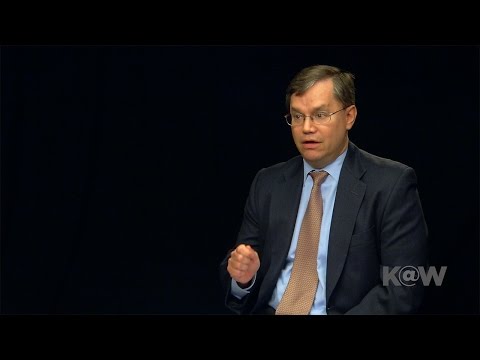
Is the Real Estate Market Going to Crash? with Wharton Prof. Benjamin Keys — Ripple Effect Podcast
Ask about Knowledge at Wharton
Episode Description
EPISODE OVERVIEW Wharton Real Estate Professor Benjamin Keys evaluates the U.S. real estate market, which he says is in a deep freeze right now. This episode is part of a series on “The Economy & You.”
Topics and questions covered 00:00 - Introductions 0:41 - Zillow’s 1% down payment offer 0:43 - How important is innovation? 3:57 - Examples of past innovation 5:56 - Approaches to rebuilding the housing market 7:31 - Are single family homes the secret to increasing inventory? 9:22 - The impact of online entities on housing 11:42 - Is fluctuation beneficial? 13:32 - Do down payment offers help buyers with later purchases? 15:38 - Evaluating the current deep freeze
PODCAST OVERVIEW Every day, business scholars answer pressing questions in their research — but what do their insights mean for you? In this podcast, Wharton faculty dive into what inspired their studies and how their findings resonate with the world today. Learn how research insights translate into knowledge you can use, with host Dan Loney.
Learn more at http://whr.tn/rippleeffect.
#realestate #housingmarket #mortgagerates ----- The Wharton School of the University of Pennsylvania is committed to sharing its intellectual capital through Knowledge at Wharton, the school’s online business analysis journal.
Launched in 1999, Knowledge at Wharton offers free access to:
- Articles, podcasts, and videos highlighting Wharton faculty research and analysis of current business trends - Interviews with book authors from Wharton School Press - In-depth series of curated content like Wharton Executive Education’s Nano Tools for Leaders - A searchable database of more than 10,000 articles covering all aspects of business - A weekly newsletter that delivers Knowledge at Wharton insights directly to your inbox
Visit the Knowledge at Wharton homepage: https://whr.tn/3qUpSBE Subscribe to the Knowledge at Wharton YouTube channel: https://whr.tn/3DEAgAU
Read the full transcriptHide the full transcript
- rents of outpaced inflation basically every year uh for almost 15 years now and so you know with the growth of rents
- we have many more households that are constrained in terms of their monthly income going towards rent and the
- benefit of buying even at a high interest rate right now is that it fixes your housing costs uh in terms of the
- principal and the interest components that you're paying in a given year welcome to the ripple effect the podcast
- that takes you on a journey through the minds of work and faculty I'm your host Dan Loney and in each episode we'll be
- diving deep into the inspiration behind the groundbreaking research that Wharton
- professors have conducted and exploring how their findings resonate with the world today pleasure to be joined by Ben
- Keys professor of real estate here at the Wharton School hi Ben great to talk to you again yeah thanks for having me
- Dan so let me start with the Zillow announcement and should we be surprised at what kind of impact might we see from
- this type of a program it is interesting because it's the potential of one percent down but also Zillow potentially
- contributing to the down payment as well yeah it's an interesting business idea for for Zillow to wade into this area
- and offer this type of subsidy for borrowers I think this is reflecting a number of challenges in the housing
- market right now but maybe the biggest one from zillow's perspective is that it's a volume based business and you
- know zillow's mortgage revenue is down about 17 year over year and the visits to zillow's apps and websites have are
- also down about eight percent year over year and so as we think about what's what these rate hikes are the effect
- that the rate hikes are having on the housing market the most obvious and dramatic one is on volume the number of
- transactions that are occurring and Zillow is fundamentally a volume based business and so they're looking for
- innovative solutions uh to increase some of that volume and I think of this down
- payment program is one potential direction for for them to innovate so I I guess the other question I have is you
- know we're not that far out I mean a little bit more in a decade from the housing crisis
- which the marker of that was all of the zero percent down mortgages that occurred I mean we're talking about
- going from zero to one potentially with this program so is the sector is kind of
- the housing base strong enough at this point from where we were back in 2008 to handle this type of a program
- yeah I think it's natural to feel some of the same Echoes of the the risky loans that we saw in the mid-2000s that
- were encouraging people to take on large amounts of debt that they couldn't ultimately manage and those kind of
- loans had a number of characteristics in addition to just low down payments they
- often had teaser rates where the interest rate would jump after a couple of years or negatively amortizing loans
- where the loan balance would actually increase uh over time this is just one margin uh along which we're seeing this
- Innovation to this point I think it'll be interesting to see if we see Innovations on the other constraints on
- households if you look at the overall market right now you know the sort of 20 down payment for a house is actually a
- myth and and actually the the median down payment is about seven percent right now in the housing market so low
- into value ratio of about 93 is is the median and this is because the FHA offers a 3 three and a half percent down
- program already and Feeney and Freddie in trying to compete um although these are again sort of
- federal entities all competing with each other they're offering a five percent down program uh for for Fannie and
- Freddie loans and so you know moving the needle from five percent to three and a
- half percent to one percent certainly reduces that down payment constraint for households but it doesn't relax some of
- the other constraints that might be more biting for households at the moment so you mentioned the word Innovation and
- obviously I think that becomes important in the scope of a lot of different business sectors how then does
- innovation potentially factor in and and what kind of level of importance does it have do you think for
- housing as it tries to kind of build a lot of these elements back up build up the supply kind of loosen up the refi
- market and and and and try and spur the level of growth even with these high home prices we still see
- well I think we're going to see a lot of scrambling on the part of mortgage lenders Brokers Realtors to try to find
- some ways to juice volume from its incredible low point and this is the challenge the housing market is in a
- deep freeze because interest rates have risen so quickly and that the rising rates have reduced demand uh as buyers
- are going to be facing much larger monthly payments and it's sharply reduced inventory so few people want to
- sell their homes they're happy to stay put where they are right now with their interest rates locked in at three
- percent or even lower and so we're going to see a lot of interesting uh efforts I
- think uh and the question is whether any of those efforts are going to really move the needle on the deep freeze or
- not we also have a housing market which I don't think people fully appreciate you know we nationalize the mortgage
- Market between Fannie Mae Freddie Mac and the FHA those three entities dominate the the types of mortgages that
- are issued the flavor of the mortgages that are issued there they're almost all 30-year fixed rate mortgages and they
- dominate the underwriting standards and so credit scores are much higher than they were in the in the early 2000s for
- the average home borrower at the moment and so I think when we're thinking about
- this question of innovation we're thinking about you know sort of chiseling away at a giant Iceberg uh
- that is the the housing market right now and and right now these feel like a very
- small chisel to me and it'll be interesting to see whether there's more ambition coming forward but when you
- think of the term Innovation is the housing sector one that has been Innovative in general I mean when you
- think about the process it's been fairly similar decade after decade after decade
- it seems like yeah the the The Innovation process in the housing market is extremely slow and if you think about
- the different margins along which you could innovate you know mortgage contract design is one where there's
- been a lot of discussion and I think in the aftermath of the Foreclosure crisis in particular there was a lot of concern
- among policy makers and academics could we design a better mortgage contract that helped people on the downside and
- avoided those kinds of costly foreclosure sales and I think we're seeing sort of the effects of of better
- policy and this is one of the consequences of that better policy so we didn't have a foreclosure crisis during
- covet and that was very much because of policy choices made by state federal state and federal entities we gave
- people forbearance we allowed people to stay in their homes we prevented evictions from occurring and we
- supported people with a lot of fiscal support and all those things prevented that big disruption to the housing
- market and the consequence of doing so is that now a lot of people are are staying in place
- um and so I think there was kind of a trade-off there so you know I would actually say that the the way in which
- we helped people during covid was the big policy innovation in the housing market and now we have a new set of
- problems and and we'll need to think of new ways to innovate so what are some of
- the ideas that potentially are out there right now when you think about taking the housing sector from where it is at
- the moment to building it out over the next maybe decade or two well I think first we have to diagnose
- what the problem is and this program by Zillow is is really about increasing demand it's about increasing a home
- buyer demand home buyers who struggle to save up uh you know for a large enough down payment this program is going to
- help them out the the problem in the housing market right now isn't just demand it's not a simple story of you
- know no one wants to buy that's clearly not the story because inventory is so staggeringly low and let me give you
- just a couple of numbers on the state of inventory in the housing market in the New York metro area at this time in 2016
- there were about 70 000 active listening listings this month there are only 32 000.
- um in Baltimore there were 13 000 listings this month only 3 500. so the number of homes for sale is far far
- suppressed relative to where it was and what we're learning is that interest rate hikes seem to be affecting
- inventories even more than they're affecting demand and that's partly a function of demographics partly a
- function of the kinds of options that different folks have and so going forward kind of tying back around to
- your question you know going forward and thinking about uh what are we going to see in the way of innovation uh in the
- coming years first we need to understand the problem and if the problem is inventory then it's one about how do we
- encourage more construction how do we get more units built and made available for sale and then on top of that it's
- how do we get people to re-optimize to shift out of a house that they may feel locked in with these low interest rates
- that they've locked in and how do we get them to move and that's a much trickier
- not to untie so when you talk about the factor of of the home builders uh don't you also have to factor in not only the
- numbers of houses that are being built but the types of properties that are being built I mean we see a lot of
- properties that are the four and five bedroom house that are built for you know 500 600 700 thousand dollars and
- you see a lot of multi-family properties the town homes the apartments Etc but have we kind of placed out of the
- market the single family two hundred thousand dollar or 250 000 three bedroom one and a half bath house in this
- marketplace right now oh for sure the starter homes that we've seen uh built in the past are just not
- being built and the way that they used to be built and so you know we are in the midst of a bit of a construction
- boom and I'm I'm cautiously optimistic in in hearing from the home builders especially this quarter
- um the home builders have uh in their uh in their commentary um said that they are looking to acquire
- more land and to to build more units but I think you're right that it's it's very
- uneven and the housing market has never been one size fits all but it feels that
- much more idiosyncratic at the moment you have certain parts of the country um like I was referring to um to the
- east coast markets of New York and Baltimore where inventory is extremely low in some other markets you're seeing
- a boom in inventory New Orleans for example has inventory levels that have skyrocketed back up to their 2016 levels
- and we're seeing price softening occurring there and so I think you know one of the challenges is is sort of for
- policy makers is thinking about you know what are some of the policies where we can uh relax the constraints in the
- places that need it and I think the challenge there is you say okay well we're gonna you know subsidize the home
- builders where will they go They're going to go to some open track in Texas where it's easy to acquire land it's
- easy to Zone the land um and and it's easy to throw up housing and they're not going to go
- um you know into into some of these cities in the Northeast that are much more dense there's not a lot of land
- available uh where the zoning is is much tighter and so I think that's one of the
- tensions that the housing market is facing right now is that if you have a sort of oversimplified solution to our
- housing Supply crisis it's going to be applied to the wrong Market how do you think also that the dynamic
- of the online entity like Zillow and and other entities out there have the opportunity to really kind of
- shape what the the the industry is going to look like over the next couple of decades
- yeah well the the industry has certainly shifted to having a much stronger online
- presence as we've said before you know housing markets move slowly um they're extremely durable assets
- um and they use a lot of antiquated systems uh in uh in the way in which transactions occur I think the way in
- which we're seeing a rise of fintech uh mortgage lenders so we're seeing more Innovation on the mortgage underwriting
- through through some of the fintech tools we're seeing more certainly in terms of the way people shop for houses
- shopping online or in some cases during covid not even visiting the property before making an offer so I think we're
- definitely seeing some action there I I think again it comes back to the size and scale of the U.S housing market the
- market is enormous and thinking about a lot of these fintech players right now they're carving off relatively small
- slices of a giant market it's extremely profitable to do that you can run a great business doing so but it doesn't
- shift the the overall tenor of the market and I think one of the myths that we're hearing going around right now
- about you know the role of um you know a few large institutional buyers uh sort of steering the the
- overall U.S housing market in One Direction or another they're just not big enough players to have that kind of
- imp and so you know they may have an impact on on a subset of neighborhoods certainly you know the suburbs around
- Phoenix or the suburbs around Atlanta may have had some pretty big effects from uh you know the push towards
- single-family rentals for instance but I think at a national scale they're just not there at the moment and they might
- never get to that scale because of how big the market is well and that component of the rental house market
- which uh you know has kind of I think has kind of fluctuated in terms of the want by the consumer over the course of
- time obviously in in the last couple of years it's it has grown because of the Dynamics we've seen at play
- is it beneficial longer term to see that fluctuation on the rental component of a
- single family home in terms of being an available component there if somebody needs it but also allowing them with
- these programs like Zillow and others with the load down payment option to have them have the ability to be able
- to get in and own that property and have that equity in their in their kind of their Hip Pocket yeah I think this was
- exactly what people expected to happen coming out of the financial crisis uh of 2008 after the wave of foreclosures that
- we saw a lot of these properties were scooped up uh to become single family rentals and there was an expectation
- that that just wouldn't last that that eventually those portfolios would be wound down by selling those homes to
- owner occupied residents so you'd see a rebound of homeownership and we haven't gotten back to those levels of home
- ownership rates where we were at the peak in 2005 or 2006 we're still well below that point so many more renters
- than homeowners at the moment and a lot of those folks are in these single family rental units I think it's an open
- question whether that's a function of preferences or or constraints I think it does add some flexibility and it it does
- lower some of the costs for for households that don't need need to worry about some of the associated risks of
- home ownership but at the same time it doesn't give them a potential tool for for wealth building or an asset to
- borrow against or potentially uh you know another sort of way in which they can um build a deeper sense of community
- as a homeowner so I think all of those things point to some of the trade-offs as we see is certain communities
- becoming much more renter oriented rather than owner organ so by having these types of programs that we've kind
- of mentioned here with the lower down payment element uh you're obviously shortening up that window uh that the
- potenti that the buyer is thinking about in terms of getting that down payment for them does it also potentially have
- an impact down the road in terms of that person for that second house like that next step they've they they do this on
- the first house but it the benefit financially helps them down the road as well that's a great question it depends
- on what the path of house price appreciation looks like and how quickly they're able to build up equity in the
- home so if they're getting in at the right time and this is a time where prices are going to you know continue to
- rise then they're going to see their Equity build much faster than if they had to wait a few years to get into the
- market so it becomes really a market timing story for that next asset you know right now Zillow has only rolled
- out this program in in parts of Arizona so it's still small potatoes at a national scale and I think you know
- that's a market where you know you wouldn't necessarily expect prices to be on on a sharper upward trajectory in
- coming years because there is a lot of new Supply coming online so houses are still being built in those areas and you
- know I wouldn't expect that this would be a sort of a path to to Great uh you know great dynastic wealth over getting
- in you know a couple a couple years earlier than you otherwise would but for some households that could make quite a
- difference well and it also made me wonder as you were saying that whether or not at least right now with them try
- trying this in Arizona if whether or not this may end up being somewhat of a market specific idea that would work in
- lower home priced marketplaces rather than as you said the New York's uh the DC area here in Philadelphia uh up in
- New England in in Boston as well yeah I mean we think of those as the high priced markets where there are more
- people constrained but in every Market in the country there are renters who would love to buy right now and one of
- the themes that we haven't brought up is you know just how much more expensive it's become to be a renter in the United
- States since 2010. rents have outpaced inflation basically every year uh for almost 15 years now and so you know with
- the growth of rents we have many more households that are constrained in terms of their monthly income going towards
- rent and the benefit of buying even at a high interest rate right now is that it
- fixes your housing costs uh in terms of the principal and the interest components that you're paying in a given
- year so there's still a pool of renters that are out there who would love to own
- and I think in those markets the sort of um lower priced uh markets we we may still see a group of people who would
- really benefit from relaxing this down payment constraint I think they will still face challenges related to their
- credit scores and their debt to income ratios whether they can make the monthly payments each month but realistically
- we're still looking like a process that's going to take a few years for a lot of this to play out partly because
- just on the purchase side of it we've got mortgage rates that are above seven percent I think the expectation is
- they're not going to come down significantly uh in the next year or two uh and then you have that Dynamic of
- Supply that obviously is it you can't fix that overnight as well that's exactly right I still think we're in the
- early phase of a deep freeze of the housing market there's so many homeowners who are sitting on three
- percent mortgages or below and that's a big Financial friction if you want to give up that mortgage and move somewhere
- else so I think that's going to have a big impact mortgage applications are down uh basically cut in half since 2021
- due to the effect of of rate hikes and so I think the market is going to struggle along for some time as it
- gradually Works its way through these large Financial frictions that we haven't seen in the housing market in a
- long long time Ben always great to get your Insight on all of this thanks very much yeah thanks
- so much for having me benkey's real estate Professor here at the Wharton School thank you for
- listening to the ripple effect we hope you found this episode informative and engaging don't forget to subscribe and
- leave us a review so that we can continue to bring you the best Insight from the Wharton School
Brief Summary
Zillow's new down payment program aims to boost homebuying amid rising interest rates and low inventory challenges.
Key points
- Rising Rents. Rents have consistently outpaced inflation for nearly 15 years, straining household budgets.
- Housing Market Innovation. The housing market's innovation process is notably slow, raising concerns about its adaptability.
- COVID Policy Impact. Innovative policies during COVID helped stabilize the housing market and prevent a foreclosure crisis.
- Desire for Homeownership. Despite high prices, many renters still aspire to own homes, highlighting a significant market need.
- Zillow's Down Payment Program. Zillow's new program aims to ease down payment constraints for potential homebuyers.
- Deep Freeze in Housing Market. Experts predict a prolonged downturn in the housing market due to high mortgage rates.
Episode highlights
- Housing Market InnovationThe housing market's innovation process is notably slow, raising concerns about its adaptability.“The innovation process in the housing market is extremely slow.”6:12Oct 3, 2023
- COVID Policy ImpactInnovative policies during COVID helped stabilize the housing market and prevent a foreclosure crisis.“The way in which we helped people during COVID was the big policy innovation in housing.”7:25Oct 3, 2023
- Desire for HomeownershipDespite high prices, many renters still aspire to own homes, highlighting a significant market need.“There are renters who would love to buy right now.”17:36Oct 3, 2023
- Zillow's Down Payment ProgramZillow's new program aims to ease down payment constraints for potential homebuyers.“The benefit of buying even at a high interest rate is that it fixes your housing costs.”18:01Oct 3, 2023
- Deep Freeze in Housing MarketExperts predict a prolonged downturn in the housing market due to high mortgage rates.“We're in the early phase of a deep freeze of the housing market.”18:56Oct 3, 2023