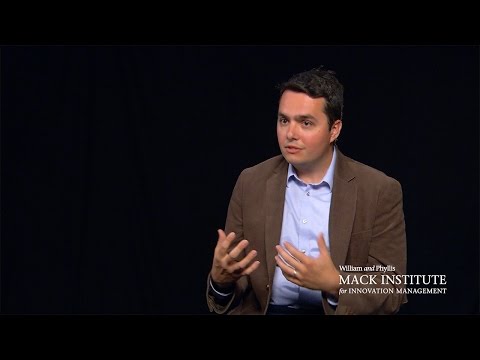
Partnerships for Healthcare Innovation in Africa
Ask about Knowledge at Wharton
Episode Description
📂 ESG;Health Care Management
Read the full transcriptHide the full transcript
- good morning I'm alen gattino I'm here with Luke Disney who's the executive director of the Northstar Alliance
- working out of utest in the Netherlands and doing fantastic work uh setting up and managing health clinics to address
- uh uh mobile populations who are at risk of HIV and AIDS across Africa morning Luke hi elen nice to be here how are you
- doing very well thanks thanks can you tell us a little bit more about the work that Northstar is doing sure so
- Northstar Alliance was set up in 2006 by the United Nations world food program uh
- with support from TNT Express a express delivery Transport company and the issue really um they
- focused on was the fact that HIV at that point so we're talking sort of the middle beginning 2000s middle 2000s was
- having a devastating impact on Supply chains in Africa subsaharan Africa so from the h from the world food programs
- perspective this was really about their humanitarian supply chain so were they were trying to get food from ports out
- to Hungry communities and in particular in sort of 2003 2004 they were responding to a
- crisis in Southeastern Africa and they noticed that they couldn't find enough trucks to move the
- food from the ports out to the communities and this was strange to them because normally they're pretty well
- prepared for crisis situations in these vulnerable areas and so they've got a list of all the transport companies
- they've made estimates on the capacity but what they hadn't calculated into their model was the impact of HIV which
- was you know on the Rampage at that point um in this part of the world so they were losing truck drivers or the
- local companies who they rely on were losing truck drivers at an enormous rate and that as a result was affecting their
- ability to deliver food at the same time so the flip side of the coin was when they did analysis
- into the situation um they also discovered that the very Supply chains they were setting up and you've got to
- think of sort of long Supply chains hundreds of trucks in some cases going into into areas for periods that can be
- up to two years in the case of a protracted relief and Recovery operation we're also a factor in spreading HIV so
- you have these communities isolated relatively isolated communities which all of a sudden have this huge influx of
- truck drivers coming in and at that point they started they got very concerned not only because of
- their own supply chain risk but of of course the ethical implications of doing trying to do good and at the same time
- inadvertently uh bringing harm to some of these communities so they um I I remember the
- first time that I was in Africa um in an isolated Community when I actually met somebody who had full-blown HIV um it
- was a truck driver uh named Edward and he was lying in on his back in a Hut in the middle of nowhere literally and you
- you were just thinking to yourself how in God's name did HIV get to this place and and the fact that he was a truck
- driver is probably how he contracted it and sadly brought it back to his village
- where infected other people so that was wfp's part of the story TNT Express at that point um was busy expanding in
- subsaharan Africa and of course as an express delivery company also very reliant on the transport sector as a
- backbone to move packages this case commercial Goods around so together they got they were they had already started
- working together on on proving Logistics of food delivery and they then turned their attention to this issue and really
- um coming at it from Logistics perspective as opposed to from a traditional Public Health perspective
- they started to say right well where what's the problem here and the problem is in subsaharan Africa and other places
- that you get truck drivers spend enormous amount of time away from home um in Africa they're on the road uh
- long-distance truck drivers can be away easily for up to 22 26 days a month you know on these long areas spending
- enormous amount of time at truck stops which are isolated uh parked on the side of the ro road where they interact with
- um women who have been forced into sex work because of the lack of other economic opportunities and really just a
- lot of the time women who have no other way of making their their living and feeding their families so you get these
- hotpots growing up what we call disease hotpots growing around these truck stops
- border crossings ports and this is where you get high-risk groups like sex workers interacting with what we call
- Bridge groups truck drivers who then take the disease HIV in this case back to their their families so and it's not
- just diseases like HIV we also see for example in the recent Ebola crisis in West Africa that mobile populations
- again play an enormous role in spreading the disease from one place to the next so that's that's how the whole thing got
- started and and the philosophy was well if it's happening at these hot spots then the traditional Health
- infrastructure of hospitals and high Den highly dense uh populations in cities and towns is not going to work we need
- to get the facilities or the services out to the people in these areas to prevent uh the disease from being
- transferred in the first place so we started by setting up small container-based clinics we used shipping
- containers because they're cheap and easy to manufacture to move around and also to control the quality uh and if
- you're inside one it looks like a doctor's office that you and I would see here you know we Ki them all out they've
- got air Co they've got water uh lights electricity of course and we started putting down these containers with nurse
- uh run teams of with Outreach workers at the uh different hotspots and then building networks them along the
- transport Corridor so as drivers move from one place to the next and sex workers who are also mobile we could
- start to build a continuity of care and and get into these hot spots uh where the actual transmission was happening so
- we started that in 2006 2007 Northstar Alliance was created as an independent organization to take this forward
- because obviously TNT and wfb had other things to do with their time and and since then norstar has grown now almost
- 10 years later into an organization we've got 35 clinics uh in 13 different countries at the moment we've served
- over a million people uh we've actually helped establish uh 50 different clinics
- in Africa and transferred some of those to governments others to other local um partners and the networks continue to
- grow and expand so that's in a short perhaps not so short explanation of who we are and what
- we've done so I remember um back last May I was visiting one of your clinics in South Africa and I actually um met a
- commercial sex worker who was at the clinics uh her name was Michelle and she was saying that you know she was telling
- me about the huge difference that the clinic had made in her life and uh she was saying that she wanted to become her
- ambition was to become kind of the the president of the sex workers and so you this really made me think that you're
- you're basically giving a voice to populations who don't have one in these areas and um so I was wondering if you
- could maybe tell me a little bit more about how the work that you're doing is moving from a sort of top- down approach
- towards Healthcare to maybe a more bottoms uh up approach where you're really involving these local populations
- in finding solutions to their to to these kinds of issues sure and I I think that's that's a lesson a really
- important lesson that we learned in the process I mean when we started trying to
- figure out how to do this we went in with I guess you could describe as the typical supply side mentality of an
- orthodox healthare system we will put a service in place and then expect people come to us and take up the service that
- we have put there and in order to improve and become more effective and particularly to get the people like the
- sex workers coming into our Clinic we realize very cck quickly that you can't just go and say this is what we
- think is the problem in your area you need to actually address what they experience as the problems because
- preventing disease is not something that you do by just putting in a one-off solution you need to build long-term
- relations with your key Target groups and in order to do that you need to be talking to them about what they think is
- important to them and what their health considerations are so very quickly because of that bottomup influx of of
- data or of information we were getting from the communities they were saying you know HIV is fine but I've got uh a
- child that needs to be inoculated uh I've got uh a problem with uh empyema or I've got a problem with uh skin rash and
- so a more Primary Health Care uh approach was definitely very quickly what they were looking for so we very
- quickly I think almost in the first uh half year realized that okay we've got to position ourselves differently
- because you know you need to be working with what their concerns are and I think
- you see that tendency spreading across uh not only in our sector of the healthcare industry or the healthcare uh
- field you see it other places where we've gained a lot of knowledge about what health is and are we're in the
- middle of a paradigm shift in my opinion that we're moving away from this traditional or Orthodox focus on top
- down Supply supply side Health Care Services which say okay we've got hospitals here doctors the healthcare
- establishment including the pharmaceutical industry identifying problems and trying to plug gaps which
- is moving towards working with the communities and uh people in trying to figure out from their perspectives okay
- we know they're going to be go through life as a cycle of Health feeling better at one point and less uh healthy at
- another Point that's just how we all work we're all in constant flux when it comes to states of health and if you
- start to work with these people and help them to navigate those changes in their
- pattern by leveraging the assets that are closer to them as opposed to moving into uh something you're trying to guess
- from a top down perspective as to what's going to be the remedy at a given point
- in time I think that's that's really changing how people are are focusing on health and what we're learning you see a
- very big movement now in health as an asset so trying to build people's capacity to leverage what's in their
- their local communities based on the knowledge that the things that impact your health are not just contagious
- disease there's been an enormous shift in disease patterns over the last hundred years where you see in the past
- what was killing people and and reducing their quality of life for diseases like
- tuberculosis here in the US and uh contagious disease towards what we call the non-communicable diseases such as uh
- type 2 diabetes heart disease cancers things like that which are influenced by a different set of factors and the
- vectors of transmission are not just people passing uh pathogens between each other they're people are being impacted
- by their Lifestyles and where they're living and as a result the way to deal with that of course needs to change as
- well so the hospitals the idea of bringing everybody together in one place to treat them is is really something
- that's changed in people's thinking well if we're trying to deal with diseases that are caused by people's local
- circumstances and living patterns hospital is not really best way to approach that is it so one thing
- that's really interesting about the way that you've actually organized to address this kind of issue and and
- create this bottomup kind of healthcare solution is you've got a model that is essentially the same for all of the
- countries you work in but you work in a number of very different countries and these blue boxes still manage to create
- this local embeddedness with the communities and so what's kind of the what's the secret to actually managing
- um that mix of uh somewhat stand ardized system that has clear processes and routines and uh ways of measuring
- outcomes but at the same time having that that local embeddedness I think I think it relates
- back to your previous question and turning of of turning your perspective upside down instead of looking at it
- from we're coming in to solve the health problem to a realization that there are
- so many different factors that influence Health that you can only provide one piece of that puzzle as a healthcare
- provider today it's very difficult for everybody to be good at everything of course in terms of healthcare provision
- the person who's going to help you prevent getting HIV is not necessarily the person that's going to help you quit
- smoking so in order to if you take that mentality as I'm a piece of the puzzle I'm part of a larger system which
- impacts these individuals health and you focus on being as good as you can at the one piece of the puzzle
- so in our case running a Primary Healthcare Clinic in an isolated area that's the starting point but the
- more important aspect I think after that is opening yourself up to engaging the other pieces of the puzzle to connecting
- with the governments who are able to provide additional you know second tier services for example or on the other end
- to the community organizations such as youth groups or church groups who are working with the communities and by
- having a very reliable solid Anchor Point for different groups to work with um you can really find that you can fit
- into many places places because the basic ideas of health services and and Primary Health Care Services are pretty
- standard you know how you treat uh a disease like HIV is is fairly standard uh there are some variations in in
- treatment protocols but that's really to do with the pharmaceutical side but how
- you do that basic element is pretty good the mentality of how to work with other
- people is different depending of obviously at the at the superficial level with what their requirements are
- but the underlying mentality also is fairly uniform in you have to be open to it and that's
- where it starts that idea that we are one piece of the puzzle we're going to connect with these other people and help
- them and we're all in this together and what's I think uh especially interesting
- is the fact that you're connecting a bunch of very different puzzle pieces I mean you have partners that go from uh
- usaid or Global uh you know Partners to to help fund uh healthc care and development all the way down to the
- local dance troop that's doing you know referrals and advocacy for your clinic how do you actually manage to you know
- first of all establish such a diverse group of partnership set of Partnerships and then how do you actually manage to
- leverage them in ways that are going to improve your Healthcare outcomes so I I I think the I mean the
- funny thing people ask often I mean how do you get a big multinational company uh like Chevron or heinan to work with a
- local dance you know group from the community is is the short the flippant short answer I suppose is they don't
- have to work together you know we can be there as that linking pin because they both are reliant on
- highquality affordable Clinical Services to be able to do what they want in the case of a multinational it could be
- keeping their local Workforce uh healthy in the case of the local community organization it's the same thing their
- their constituents need to be be healthy but because we're able to leverage because we we we have that Central
- linking role they're both able to come together and in a way that they probs on their own would not dealing with each
- other directly um we just sort of fit a gap that's between there and again how do you do it um I think one of the key
- things that we've done and and it starts with that mentality of wanting to do it
- but after that giving your local teams enough agency in the field that they are empowered they understand the local
- circumstances they know which local community groups are going to be worth working with and which ones are perhaps
- not going to be as effective or or more difficult they know the local government
- uh Partners they have to work with them on a daily basis that's not something you can manage centrally from
- particularly not from from the Netherlands where our head office is based or our regional office in Nairobi
- for East Africa or or Durban for southern Africa they can't do that so what we've realized over the time and we
- were actually caught I by surprise at the extent to which our local teams and and we've been working with you guys to
- try and map this out and get a handle on it but when you prevented presented your
- first findings to us you know I think all of us were shocked at the vast size of the networks that we had and I
- experience it when I go and visit the clinics but truly to see to to map that all out then
- you realize all of a sudden that you're the impact you're having as an organization is much larger than you
- perhaps initially anticipated so I think a lot of times organizations see a tension between
- decentralization in the sense of giving people agency at the local level to execute and build those Partnerships but
- at the same time wanting to very be very tight in terms of their control on key things like quality for example and
- maybe even your branding in case of commercial companies as well but I don't see there as much inherent intention as
- people necessarily think there sometimes if people know what they're supposed to
- be doing and I think this is where your culture as an organization is very important I think it's where your your
- the clarity in your mission and your vision as what to what you want to achieve are very important if those
- things are clear and we train people on that we work very intensely with our our
- teams particularly at the lower management levels the people running the clinics to make sure that they not only
- that we're giving it to them and saying this is what you should be thinking but we've involved them in actually creating
- and defining those cultural keystones our our core values so it really is coming from them and then we've what
- we've done is just taken that codify it and repeat it and make people aware of it and constantly remind them and if
- they know that and they share that Vision it's much easier then to give them the agency to operate at a local
- level because you can rest assure that they are linking that in their own minds to what you want to achieve as a group
- anyways and they're they're a fairly exceptional group of people for having LED workshops with them uh last year um
- they're they're really extraordinary um one of the things they have to be really
- good at doing is kind of wearing different hats and adapting to very different kinds of Partners right
- they're developing these ecosystems but that means means they have to work with public private nonprofit sector
- organizations um and and bring these pieces of the puzzle together what are the kinds of implications of having to
- bring together organizations Partners from different sectors um you're talking about or organizational culture
- obviously that's going to be very different um in terms of the way you're going to partner and approach with a
- public or nonprofit or private sector uh company MH I I think um it starts with uh a
- natural that that natural um building on the natural culture of the company is a
- starting point but it's not sufficient in itself I think you have to go beyond and what we try and work on in groups
- and our training programs is helping people to understand and identify pitfalls that they can get
- themselves trapped into sometimes by some people who don't and particularly in certain cultural circumstances at
- local levels there may be enormous moral pressure or community pressure to go in
- a certain direction and to try and give them uh the tools and uh awareness to try and
- protect themselves from getting into those positions and if they do get into those positions how do you get yourself
- out for example if you're working with uh a local communities in in some parts of Africa you may have to deal with uh
- the village Chief headman uh who has certain ideas of how his community should be run which may be very much at
- odds with how the local uh government authorities think that you should be delivering your health care
- services so how does the local clinical officer balance those two things because
- those are very competing uh edges now he or she and most we have a lot of females
- running our our um clinics will know what we want to achieve but still sitting between those
- two fires is pretty intense and and can get very uncomfortable very quickly so what we've tried to do is build in
- escalation mechanisms as well where they feel that they're under so much pressure
- we try and give them as I said techniques are saying right well don't commit yourself in this when you enter
- into a conversation be conscious of the fact that you can't go beyond this line and if you feel yourself pressured to do
- that and you're in a tight situation and we've tried to build escalation measures
- so they can always kick it up the management line and then we can bring in somebody who doesn't have that local
- pressure and that's really effective sometimes it's just you know I'd love to help you but my hands are tied oh so
- you've uh nicely exploited that bottom up uh uh concept into the the organization itself as well I think you
- know every every individual um is used to wearing different hats I mean all of us um you know whether it's be your
- professional hats or your personal life your your friends compared to your family there's we're all used to wearing
- different things and I think instinctively a lot of us can figure out that we're going to get into trouble
- sometimes and there are conflicts we face on a daily basis you know do I go to my daughter's dance recital or do I
- go to that meeting um I think recognizing that is a natural healthy part of any management progam process is
- important and building in enough flexibility into your system that helps people to navigate that in a way that
- they're going to feel comfortable with and spending time talking about those conflicts so one of the things at the
- workshop you were with uh us in South Africa recently we did spend time going through role playing situations with our
- teams how do you deal with this sort of thing getting them to share and and a lot of it's not us going in and teaching
- them what to do a lot of it's letting them share their experiences and talking about how they solved it because again
- their local knowledge of those situations is far superior to anything that we're going to
- be able to put in in many cases uh from an external perspective so just by acknowledging and running them through
- it giv the opportunity to practice exchange ideas can be you know it's not something that's rocket science but it's
- something you have to consciously recognize as being important MH so these tensions are they something you
- experienced yourself you you started out in the private sector and then moved into the nonprofit sector um you know
- bridging those two worlds what are the kinds of tensions that you've experienced personally in in from a
- career perspective moving from from one sector to the other yeah not perhaps as many as people
- would think um I I think sometimes people have an artificial um division in their mind
- between and it particularly revolves around the issue of discipline that that corporations and the private sector is
- by nature very disciplined and NOS are by Nature not very disciplined and that is complete fallacy I mean obviously I
- think if you look at the vast number of uh private sector companies that U go under on a given year uh or don't make
- it past their third birthday um or if you've walked into and had an interesting customer support uh issue
- which many of us have whether it's on a variety of services then you start to uh
- poke through that that veneer quite quickly on the other hand working with um a lot of um nonprofits I've seen a a
- level of professionality and discipline that is equal if not surpassing uh a lot
- of the NOS the difference of course at the end of the day is financial reward in a lot of cases you and that attracts
- perhaps different sorts of people into it um you're not going to become extremely rich in most cases working in
- the nonprofit sector but increasingly a lot of people are making other choices in their lives and that's maybe not
- their biggest motivation as long as you can pay your bills but it's you know so I haven't noticed a
- huge difference in in in in that respect what has surprise me is the amount of competition that you see in the
- nonprofit sector I you know coming out of the commercial world I thought oh we're now all going to work together and
- it's going to be a better world but again there is you know competition for scarce resources and that's something I
- think where Northstar has tried to to do things differently and and positioning ourselves at somebody who we try and
- work with anybody we say in principle um and to try and really fit into that that piece of the puzzle
- mentality um but it doesn't completely eliminate that drive for competition at the end of the day unfortunately Luke
- thanks a lot for sharing your experience and the great work that your organization is doing my pleasure thanks
- very much for having me
Brief Summary
Luke Disney discusses Northstar Alliance's work combating HIV in Africa through community-based healthcare solutions.
Key points
- Northstar Alliance's Mission. Founded in 2006, Northstar Alliance addresses HIV and AIDS among mobile populations in Africa.
- Innovative Healthcare Solutions. Northstar Alliance uses container-based clinics to provide healthcare where it's needed most.
- Empowering Local Communities. The organization shifts from a top-down to a bottom-up approach in healthcare delivery.
- Bridging Sectors. Exploring the complexities of partnering across public, private, and nonprofit sectors.
- Navigating Tensions. Understanding the pressures faced by individuals in conflicting cultural circumstances.
- Competition in Nonprofits. The unexpected competition within the nonprofit sector challenges assumptions of collaboration.
Episode highlights
- Northstar Alliance's MissionFounded in 2006, Northstar Alliance addresses HIV and AIDS among mobile populations in Africa.“They were losing truck drivers at an enormous rate.”1:44Aug 19, 2016
- Innovative Healthcare SolutionsNorthstar Alliance uses container-based clinics to provide healthcare where it's needed most.“We started by setting up small container-based clinics.”5:02Aug 19, 2016
- Empowering Local CommunitiesThe organization shifts from a top-down to a bottom-up approach in healthcare delivery.“You need to build long-term relations with your key target groups.”7:50Aug 19, 2016
- Bridging SectorsExploring the complexities of partnering across public, private, and nonprofit sectors.“How does the local clinical officer balance those two things?”19:30Aug 19, 2016
- Navigating TensionsUnderstanding the pressures faced by individuals in conflicting cultural circumstances.“Sitting between those two fires is pretty intense.”19:34Aug 19, 2016
- Competition in NonprofitsThe unexpected competition within the nonprofit sector challenges assumptions of collaboration.“I thought we’re now all going to work together.”23:41Aug 19, 2016
Tension
45/ 100Some tension