Unpacking the Complex Role of AI in Business
Ask about Knowledge at Wharton
Episode Description
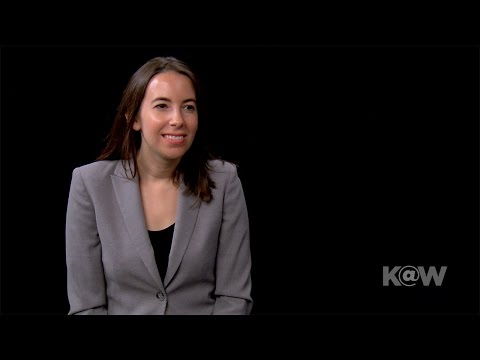
ABOUT THE EPISODE Cait Lamberton, Alberto I. Duran President's Distinguished Professor, Vice Dean and Director of the Wharton Undergraduate Division, and Professor of Marketing at the Wharton School, examines the nuances of AI and emerging technologies in business and their impact on the evolution of future business models.
ABOUT THE PODCAST This Week in Business features interviews with Wharton faculty about the latest news, fascinating trends, and issues impacting both consumers and the business world. Episodes are recorded at the Wharton School and published twice per week.
#aifuture #ai #businesspodcast ----- The Wharton School of the University of Pennsylvania is committed to sharing its intellectual capital through Knowledge at Wharton, the school’s online business analysis journal.
Launched in 1999, Knowledge at Wharton offers free access to:
- Articles, podcasts, and videos highlighting Wharton faculty research and analysis of current business trends - Interviews with book authors from Wharton School Press - In-depth series of curated content like Wharton Executive Education’s Nano Tools for Leaders - A searchable database of more than 10,000 articles covering all aspects of business - A weekly newsletter that delivers Knowledge at Wharton insights directly to your inbox
Visit the Knowledge at Wharton homepage: https://whr.tn/3qUpSBE Subscribe to the Knowledge at Wharton YouTube channel: https://whr.tn/3DEAgAU
Read the full transcriptHide the full transcript
- Everything around AI right now is expecting great change and also great success. But there maybe should be also
- some concerns thrown out as well. Is it an absolute lock that all of this will succeed in the way we expect it to?
- There may be a need for a touch of skepticism as we move forward here at least right now. pleasure to be joined
- to discuss this by with Kate Lambertton who's vice dean and professor of marketing here at the Wharton School.
- She wrote about this in a LinkedIn post recently and she joins me right now. Kate, always great to talk with you and
- chat. Thanks very much for your time. >> Thanks so much for having me. I >> I I guess it probably is a trap that we
- could potentially fall into that when you see something new and it's expected to be so good that we expect it to run
- perfectly right from the get-go. It's it's quite interesting. You know, people have studied this in the context
- of even individual relationships. You know, people have great first dates. They leave a first date thinking they
- found this unicorn who's exactly like them. It's only as you get to know humans that you see the dissimilarities
- between you. It takes time and it takes experience. So, it is a it is a very common human pattern to see something we
- think is wonderful and to want it to be as good as it can be for us. So there's nothing nothing unreasonable or
- unexpected in the fact that we do this. At the same time though, one does begin to wonder, especially with regard to
- business, whether we could think about a process for thinking about innovation that doesn't perhaps lead to as many
- disappointments and and wasted opportunities as we sometimes see. So when you have situations like this, is
- it the positive mindset of the people that are using the product or is it the marketing tool or maybe it's a
- combination of both that's kind of pushing this forward and kind of driving this narrative?
- >> Yeah, it is absolutely both. So on one hand, new technology is incredibly exciting. There's a lot to talk about.
- So you get a lot of buzz. You get you get earned and unearned media. Everyone's talking about it. You also
- attract a set of early adopters who love the novelty and who are willing to look
- past possible bumps in the road because they find the technology so exciting. And those early doctors of course are
- critical because they often are operating as beta testers for technology. Um but their reviews may be
- slightly more positive than would be given by somebody who comes to the technology later who didn't have as a
- cue a need for it or who was less comfortable with the technology to begin with and for whom those snags and you
- know discontinuities are going to be more disturbing. So how then do we kind of navigate our path here
- so that we can look for the success maybe expect it to a degree but also have a little bit you know keeping the
- reinss pulled in maybe just a touch as we move forward here. Yeah, I think if we if we stop for a minute and we learn
- from history, it helps. You know, some of us are old enough to have lived through the dotcom boom. And this is
- both similar to that context and different, right? It's similar in that for a few years, everything that had do
- on the end got massive investment. And it was it was people said things like the old business models are out the
- window. They don't matter anymore. It's different universe. Everything is changing. When somebody tells you
- everything is changing, you should probably slow down. Um because humans remain humans, the market has some
- stable components and new technologies are always challenging and right now because they are developing so quickly
- even to say everything is changing because of this technology is something you should question because this
- technology is not the same thing next week. So so we can look back but what we can also recognize is that the present
- situation is also a little bit different. um which is to say that you have major players that have really
- diversified portfolios. I mean, if you're Google, first of all, you know, some of those types of firms out lived
- through the dotcom bubble. They lost a lot of value, but they came back because they were diversified. And in this case,
- you have these companies that have lots of different ways to weather the ups and
- downs that are going to come with new technology development. And that I think we have a a higher uh proportion of
- those working in AI right now. And so that may allow us to have a little bit more confidence um that as a whole the
- technology will continue to develop in positive ways. But those firms, it's just a business fundamental. Those firms
- that don't have any diversification that are putting all their eggs in the basket
- of a single type of AI or a single use of AI, the likelihood is a lot of those are going to get shaken out because
- those uses and those forms are going to keep changing faster than they can keep reinventing their business. It's it's
- the larger companies that are more diversified that can ride that wave. >> Yeah. Because if you're a startup a and
- your path to success is reliant on AI right now, you I I I think you can't really make that allin investment
- because you're putting your faith in a technology that we're still learning so much about right now.
- >> Yeah. And it's going to change in two weeks. I mean I have I have worked with
- some firms who >> a year and a half ago decided to spend millions of dollars developing an AI
- tool of their own and now you could develop that AI tool in a week and so it's a that is a very tricky kind of
- investment to make unless you're so confident that you are going to stay ahead of that technology and again that
- the larger more diversified firms can weather that kind of change more quickly and I think can find more sustained use
- cases for the technology. You know, I also think of of things like it's a more analog example, but I think
- of things like we work, right? Um, some of us lived through that too. That was a
- time when people said everything about real estate is going to change. Um, and were there new models emerging? Sure,
- there always, you know, real estate like any industry has innovation and it it looks for ways to increase efficiency
- and provide more value. It's absolutely true. Um, but if you at that point went all in on a single business model
- without thinking about the value that might actually still exist in the older ways of doing work, you set yourself up
- for for a big a big risk and possibly a big loss. >> So, is this a little bit like the old
- line, the more things change, the more they stay the same? >> Well, you know, again, I think there are
- a lot of new things being introduced right now. There are things that are going to change but there are still
- business fundamentals and I you know we are at a business school so I think I can say this what a business school does
- it observes changes in technology changes in all the solutions that humans create over time
- and business school scholarship is about being able to to generalize across innovation cases and find predictable
- uh indicators of value creation and delivery over time, right? So, for example, you know, a business school
- professor might write a research paper that says, you know, innovations in this context that have these general traits
- tend to do well in these certain types of markets. But that takes time. You have to observe a lot of cases to come
- to those kinds of conclusions. But what we hope is that our students learn those
- meth methods of of taking perspective that they learn the ways to analyze cases of innovation and different
- contexts so that they can better identify the technological innovations that are going to have sustained value
- over time. To do that they also need to understand the market. You know markets have fairly perennial needs as well. So
- they need to understand what other substitutes in the market might meet this and why this technology might be
- better. So those those fundamental perspectives and models I think can be applied
- to lots of cases of technological innovation. When we find cases where they can't be applied, well that's
- interesting too. That tells us more that we need to that we need to start observing to develop empirical
- generalizations about. >> Kate, great conversation. Thanks very much for your insight today. All the
- best. >> Thank you. Have a good one. >> You got it. Kate Lambertton, vice dean and professor of marketing here at the
- Wharton School.
Brief Summary
Kate Lambertton discusses AI's potential and the need for skepticism in its adoption and investment.
Key points
- The Need for Skepticism in AI. As excitement builds around AI, it's crucial to maintain a skeptical perspective.
- Navigating Innovation and Change. Understanding the balance between optimism and caution in technology investment is key.
- Lessons from the Dotcom Boom. History teaches us to be cautious about rapid technological changes.
- The Risks for Startups. Startups relying solely on AI face significant risks due to rapid technological changes.
- Business Fundamentals Remain. Despite innovation, core business principles still apply in changing markets.
Episode highlights
- The Need for Skepticism in AIAs excitement builds around AI, it's crucial to maintain a skeptical perspective.“There may be a need for a touch of skepticism as we move forward here.”0:19Sep 24, 2025
- Navigating Innovation and ChangeUnderstanding the balance between optimism and caution in technology investment is key.“How then do we kind of navigate our path here?”2:47Sep 24, 2025
- Lessons from the Dotcom BoomHistory teaches us to be cautious about rapid technological changes.“When somebody tells you everything is changing, you should probably slow down.”3:30Sep 24, 2025
- The Risks for StartupsStartups relying solely on AI face significant risks due to rapid technological changes.“If you're a startup and your path to success is reliant on AI right now...”4:59Sep 24, 2025
- Business Fundamentals RemainDespite innovation, core business principles still apply in changing markets.“There are still business fundamentals...”6:40Sep 24, 2025