Why Undermining the Federal Reserve's Indepedence Could Hurt the Economy
Ask about Knowledge at Wharton
Episode Description
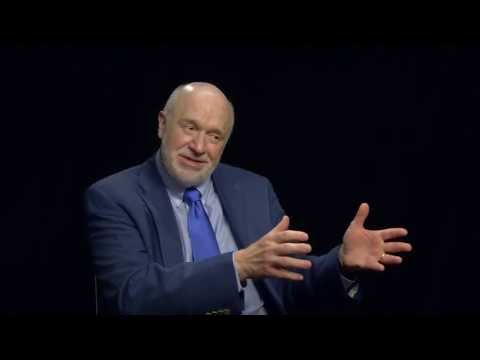
Wharton Professor Peter Conti-Brown discusses the critical importance of maintaining the Federal Reserve's independence amid growing political pressure, particularly from former President Trump. Drawing from his upcoming book Private Finance Public Power, Conti-Brown highlights how political attacks risk damaging the Fed’s ability to manage dynamic economic challenges.
#FederalReserve #JeromePowell #Fed #InterestRates #MonetaryPolicy #EconomicPolicy ----- The Wharton School of the University of Pennsylvania is committed to sharing its intellectual capital through Knowledge at Wharton, the school’s online business analysis journal.
Launched in 1999, Knowledge at Wharton offers free access to:
- Articles, podcasts, and videos highlighting Wharton faculty research and analysis of current business trends - Interviews with book authors from Wharton School Press - In-depth series of curated content like Wharton Executive Education’s Nano Tools for Leaders - A searchable database of more than 10,000 articles covering all aspects of business - A weekly newsletter that delivers Knowledge at Wharton insights directly to your inbox
Visit the Knowledge at Wharton homepage: https://whr.tn/3qUpSBE Subscribe to the Knowledge at Wharton YouTube channel: https://whr.tn/3DEAgAU
Read the full transcriptHide the full transcript
- Well, the comments recently by the White House about Fed Chair Jerome Powell bring us back to a concern over Fed
- independence that we saw pop up in the first Trump administration. Now, the importance of independence of the
- Federal Reserve is vital on the path to fiscal policy. Yet, it's seemingly challenged by the beliefs of both the
- president and some of his adviserss. But how much concern should there be right now? Peter Kiy Brown is an associate
- professor of financial regulation as well as legal studies and business ethics here at the Wharton School. He's
- also author of the upcoming book Private Finance, Public Power: The History of Bank Supervision in America, which comes
- out June 24th. And he also wrote The Power and Independence of the Federal Reserve back in 2016. Hi Peter, great to
- talk to you again. Glad to be here again. So, as this has all played out, especially in the last couple of weeks,
- uh give us your thoughts on this again, this kind of having to focus on the topic of independence of the Federal
- Reserve. You know, uh we never stopped focusing on it, I think. Um and and for good reason. The Federal Reserve has
- been endowed with extraordinary powers over our economy and through the economy, uh our society. And it's right
- for us as citizens and for the politicians we elect to hold the Fed to account and to be uh curious and even uh
- sometimes skeptical of the Fed's powers. That's called democratic accountability.
- But what we don't want to do is destroy it. We don't want to destroy what makes the Federal Reserve so important. and
- it's insulation from the day-to-day of the 24-hour press cycle or the whims of of
- any president, Republican or Democrat. That's the stuff that we want to guard against. Not because we think that the
- Federal Reserve is some, you know, delphic oracle uh that knows things that can't be discerned from anyone else by
- anyone else in any other way. But it's because we think that turning monetary policy and economic policy over to a
- loyalty test to any one individual uh will create bad policy. And so we never stop focusing on it because we're always
- trying to get that line right between democratic accountability which is good uh uh without eroding technocratic
- expertise which is also good. And so that balance is what we're trying to strike. So talk a little bit about the
- kind of as the Federal Reserve was developed many many years ago, the importance of independence as a concept
- in its abilities over time to be able to put forth the policy that has kind of helped drive our our economy in general.
- You're right. I it's a great question and history has given us lots of examples, good and bad, about how this
- has worked. At the beginning in 1913, what we now call that independence, it wasn't called that at the time. uh it
- was more about letting bankers be bankers. So the idea is that bankers know best and so uh they'll know how to
- manage the economy in the interests of essentially profit maximization and loss minimization to the banks themselves.
- And the banks that I'm talking about are the Federal Reserve banks. But that kind
- of independence quote unquote uh led to the Great Depression. That's overstating
- it just a little bit, but uh Federal Reserve bankers acting in the interests of their shareholders are what made the
- Great Depression great. They just did too little uh of the kind of central banking that we'd want to see. Today,
- central bankers don't think of themselves as bankers per se. They think of themselves as technocrats, as
- experts. And uh over time what we have learned over many decades of experience is that when we let those experts keep
- their eye on the medium term uh then they're going to create policy that's better for all of us. Not perfect. We've
- seen some errors coming out of central banks uh in and not just the last decades but in the last few years. Uh so
- no one's claiming that central bankers are going to be perfect at their jobs. What we're saying is that they're going
- to be better uh than the alternative. And the alternative is setting interest rate policy from the Oval Office
- according to, you know, the whims of whatever the president wants to see that day. And that's the that's the main
- alternative to central banking. And that's what's under threat today. Well, you gave the the one example from from
- the past, but how frequently have we seen the independence of the Federal Reserve kind of tested by elements of
- the federal government over time? Oh, it's it's happened many many times uh uh to to lesser and greater extents,
- but there's been no no president in US history quite so enthusiastic about uh about pulling down uh uh institutions
- like Donald Trump. And that was true in his first administration. It's true now,
- too. What the Federal Reserve represents to President Trump is just sort of a separate power center. It's something
- that he's not controlling. We've seen his reactions to other kinds of separate power centers in the media, in the
- judiciary, in the military, certainly in Congress, in universities. Uh, and we see it in
- central banks, too. So, I'll say that uh there is bipartisan enthusiasm from presidents going back uh to Woodro
- Wilson with almost a a steady throughine uh until Donald Trump of uh being extremely impatient with the Fed. That's
- a part of the job when you take your oath of office there's like an asterisk that says also always be wondering what
- if the Fed is going to be in your interests the difference is what you do about it and there President Trump has
- shown himself uh to really vent his spleen on social media uh against the Federal Reserve and I think the the key
- point here Dan is that there are consequences to this and those are the consequences that that worry me the most
- because so much about Fed independence is about norms and conventions these kind of tweets, they undermine
- that independence in exactly that way. Well, and I guess even as we sit here today, there's a conversation about
- upcoming Federal Reserve meetings and whether or not we will see another rate cut by the Federal Reserve. And to a
- degree, it does make you wonder whether or not some of this commentary is having
- some sort of impact. And obviously Fed Chair Pal has talked a lot about the data, but still there is that question
- of when we see that next rate cut, is it somewhat influenced by what we've seen play out here? I think it's such an
- important question. And you know, Chair Powell would say absolutely not. We never let that kind of thing influence
- our thinking. And I think he's both right and wrong about this. He's definitely right in the sense that uh it
- is not in Jay Powell's DNA to capitulate like this. Um, and so I don't think he's
- scared of Donald Trump. I think he's ready to fight this out. Uh, uh, for sure. Um, but the narratives, the
- headlines after a cut that the, you know, Chair Pal and his his colleagues will say is justified on uh, on the data
- will always include every single one these articles will include this fight in it. And that shapes the narrative
- about the Fed and it shapes the narrative about the Fed's legitimacy. And it gives people uh questions to
- explore and think about uh that the Fed uh should not and does not want to want them to be thinking about which is
- exactly this question. Did the Fed cut in reaction to Donald Trump? Now, there's a bigger problem too with this
- and that is uh right now we're seeing the Fed have to make some calls and decisions about uh uh some hard hard
- challenges. Um but what we're what we're also seeing is we have a dynamic economy. Some very strange things are
- happening in it. And the great glory of the Federal Reserve is it is a dynamic policymaking body. So it can't just do
- what has always been done in the face of changing circumstances. It's going to need to do new things. And in order to
- do new things like we saw in 2008 after CO 19, many other instances requires political cover. You can't have
- experimental central bankers who are simultaneously managing a battle with the sitting president. And so when
- President Trump tries to demean the Federal Reserve in this way, uh he is he's limiting their power of
- maneuverability and that's extremely unfortunate. Peter, appreciate the time today. Thanks very much. All the best.
- All the best to you. Thank you. Thank you. Wharton's Peter Kiy Brown as we mentioned author of the upcoming book
- private finance public power due out on June the 24th
Brief Summary
Peter Kiy Brown discusses the importance of Federal Reserve independence amid political pressures from the White House.
Key points
- The Importance of Fed Independence. Peter Kiy Brown discusses the vital role of Federal Reserve independence in fiscal policy.
- Historical Tests of Independence. The independence of the Federal Reserve has faced challenges throughout history, especially under Trump.
- Political Influence on Monetary Policy. The conversation raises questions about whether political commentary affects Federal Reserve decisions.
Episode highlights
- The Importance of Fed IndependencePeter Kiy Brown discusses the vital role of Federal Reserve independence in fiscal policy.“We don’t want to destroy what makes the Federal Reserve so important.”1:27Apr 28, 2025
- Historical Tests of IndependenceThe independence of the Federal Reserve has faced challenges throughout history, especially under Trump.“The independence of the Federal Reserve has been tested many times.”4:26Apr 28, 2025
- Political Influence on Monetary PolicyThe conversation raises questions about whether political commentary affects Federal Reserve decisions.“Did the Fed cut in reaction to Donald Trump?”7:22Apr 28, 2025