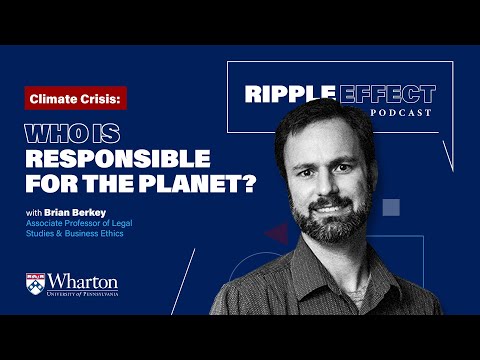
How Morality and Obligation Intertwine.
Ask about Knowledge at Wharton
Episode Description
There's more that should go into decision-making than personal benefit, particularly when injustice is in play, says Wharton’s Brian Berkey. More: http://knlg.net/1LXsSO5 📂 Leadership 🏷️ Research
Read the full transcriptHide the full transcript
- I work on various uh related issues having to do with our individual obligations of justice uh in particular
- in non ideal conditions in unjust conditions. So uh examples of issues that I've written about include our
- obligations to um redirect a portion of our income to people who are victims of injustice. uh obligations to take
- considerations of justice into account when we're making decisions like uh what career we're going to go into or um how
- we're going to operate our businesses, uh things like this. One sort of key theme of my research is
- that our obligations uh in particular in non- ideal conditions are quite a bit more extensive than most people tend to
- think. So I think for example that we can be obligated to take considerations of justice into account when we're
- deciding for example what career we're going to pursue. So that uh it's not necessarily morally permissible to
- choose whatever career would most benefit you or you know the one that's your most preferred of the available
- options. unjust conditions in particular can make it the case that uh if one is overall a beneficiary of injustice that
- they can have obligations to um make choices that are not for example legally required within the system. Um but that
- um would better advance the aims of justice if they were to choose one way rather than another. And this applies I
- think across a broad range of domains. So for example, how we spend our money uh again what careers we pursue, how we
- operate our businesses um and um and other areas as well. The applications uh in most cases are a
- little bit indirect, right? So what I suggest is that um people in their private lives, in their roles within
- companies uh and elsewhere uh are obligated to take considerations of justice into account in deciding uh what
- they're going to do with their resources with you know the uh you know the business that they're running. if they
- have sort of multiple options in terms of um you know what kinds of practices to adopt or what areas to sort of enter
- into or things like this. Um but uh my research is abstract enough that um there are no kind of direct takeaways.
- So I don't say things like you know um actual person X is obligated to do this particular thing, right? I sort of try
- to argue that certain kinds of considerations are relevant and have to be taken into account by people who are
- making decisions um that many people think are um not the kinds of things that individuals are obligated to um
- consider when making decisions like what career to pursue or uh or something along these lines.
- One thing that I've been thinking about is um the conditions in which uh private group actions within the
- economic sphere that are aimed at promoting justice are permissible or impermissible. So consumer boycott is
- sort of one example of this. Um so if we think that we can pursue some important
- justice related aim through uh organizing some kind of collective boycott effort um what conditions do we
- have to meet in order uh for that sort of effort to be permissible in a say liberal democratic society. Um I'm also
- working on several papers um about issues related to climate change. So, um, one issue that I've been thinking
- about is, uh, whether historical emissions make a difference, uh, with regard to what we're obligated to do
- now, who's obligated to do what to, um, for example, mitigate the negative effects of climate change in the future.
- Um, and I'm also hoping to think about uh think more about the the obligations of businesses to contribute to the
- effort to mitigate climate change. [Music]
Brief Summary
The episode covers justice obligations in career choices, business practices, and climate change responsibilities.
Key points
- Obligations of Justice. Exploring our moral responsibilities in unjust conditions and how they influence our choices.
- Justice in Career Choices. Discussing the moral implications of career decisions in the context of justice.
- Consumer Boycotts and Justice. Examining the conditions under which collective actions like boycotts are permissible.
Episode highlights
- Obligations of JusticeExploring our moral responsibilities in unjust conditions and how they influence our choices.“Our obligations in unjust conditions are more extensive than most people think.”0:54Oct 9, 2015
- Justice in Career ChoicesDiscussing the moral implications of career decisions in the context of justice.“It's not morally permissible to choose whatever career benefits you most.”1:09Oct 9, 2015
- Consumer Boycotts and JusticeExamining the conditions under which collective actions like boycotts are permissible.“What conditions do we have to meet for boycott efforts to be permissible?”3:37Oct 9, 2015