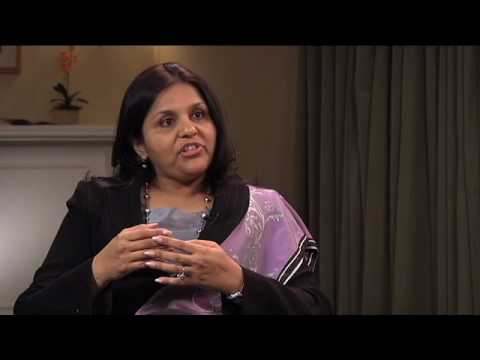
India's Health Care Industry & Medical Tourism: Lawton R. Burns on Innovation and the Three "P's"
Ask about Knowledge at Wharton
Episode Description
KNOWLEDGE AT WHARTON ARCHIVES: Wharton health care management professor Lawton R. Burns has been analyzing physician-hospital integration for more than 25 years. He has just completed a new book, India’s Healthcare Industry: Innovation in Delivery, Financing and Manufacturing, and plans to follow it with a book focused on Chinese health care. Burns says the trends in China are remarkably similar to what has happened to the sector in India.
In this interview with Knowledge at Wharton, Burns, who is also director of the Wharton Center for Health Management & Economics, notes that India will face the same health care issues that the U.S has been struggling with over the past 20-30 years.
More on this interview: https://knowledge.wharton.upenn.edu/article/indias-health-care-industry/
#indiahealthcare #healthcareindia #medicaltourism #medicaltourismindia 📂 Innovation;Health Care Management 🏷️ Research
Read the full transcriptHide the full transcript
- This research is actually a book that we just published uh this year through Cambridge University press it's a guide
- to the entire Health Care system of India uh designed for the people who provide Health Care the designed for the
- people who make products that they sell to the health care providers in India designed for the people who want to
- basically do business with any of the stakeholders in India's healthcare industry books organized around three
- topics the what we call the three PS of healthcare the providers of Health Care the payers for healthare and the
- producers of health care products and we've you know we Loosely tie all that together as the healthc care value chain
- of India payers producers and providers let me drill down a little bit on the 3ps so with regard to the providers
- there is a small but growing Private Hospital syst set of Hospital Systems in India mimicking like what we have here
- in the United States the vast majority of their Hospital industry however are public government-owned
- hospitals uh in terms of the medical profession there's a group of allopathic trained Physicians like what you find
- here in the United States and other Western countries but supplementing that as a group of traditional medicine
- practitioners and totally untrained practitioners which people even over there call Quacks uh then you have an
- insurance industry a private insurance industry which is just getting off the ground but then you have some local and
- community health insurance schemes to try to supplement that and then for the manufacturing you know India's become
- famous for its generic pharmaceutical manufacturers it's trying to get a biotechnology industry off the ground a
- medical device industry off the ground and so the book goes through all these things that are developing largely
- centered on the private sector in India well you know India and the US have a number of parallels which are
- actually quite interesting and that make it makes it easier easier for people to
- understand India's healthcare industry if they understand a system like their own such as ours so for example they
- have very similar structures for the financing and delivery of healthc care that we do they also have the same
- issues and concerns that we do so I can elaborate a little bit on this so in terms of financing their financing of
- healthcare is fragmented across several different stakeholders you have the a week central government lots of States
- who do a lot of provision of Healthcare in fact it's their constitutional responsibility to provide and finance
- healthc care you have individuals and now you have a growing number of private sector firms providing health coverage
- for their employees so Health Care financing is fragmented across all of those just like in the United States at
- the same time you have both a public and a private sector of Health Care Providers it used to be primarily a
- government public sector but now we have the rise of Private Hospital chains and
- you have this enormous number of private physicians and that's really what the public prefers is the private sector of
- providers over the public sector of providers very similar here to the United States so in terms of financing
- and the provision of healthc care you have these two systems that are increasingly private sector very
- fragmented in terms of financing but also very fragmented in terms of the structure of the Delivery Systems so you
- have lots of small hospitals lots of small doctors and small clinics scattered over an enormous geographic
- area with very little consolidation or concentration of activity so there's lots of room to grow and consolidate
- these industries so that's on the structure and the financing side then India has the same set of concerns that
- we have when it comes to healthcare we call it here the Iron Triangle of healthc care the three the three angles
- of that iron Triangle are cost quality and access India is concerned about all three at the same time they see a rising
- cost to healthcare as Healthcare moves from the public to the private sector and more technology begins to filter in
- and as you have more of a private sector providing Healthcare uh you also have access problems because there's a low
- level of insurance coverage in that country and people have to pay an enormous amount of the health care bill
- out of pocket and then quality is the you know the frontier for India because there's basically no regulation of
- India's Health Care System you know one of the things that really surprised us was the composition
- of the medical profession in India it's fascinating there about 700,000 what we call allopathic
- physicians in India people with normal medical school training that we're accustomed to and a lot of those
- Physicians who are allopathic trained and then trained at some point in the US or the UK but complimenting those
- 700,000 allopathic Physicians are 700,000 traditional practitioners of medicine and in India that's called IOU
- which is a acronym for ayuvedic unani Sida and homeopathic and there's 700,000 of those practitioners as well they each
- have their own sets of medical colleges and training institutions and uh they're
- called registered medical practitioners and then on top of all that you have anywhere from 1 million to 2 million
- totally untrained unsupervised practitioners largely found out found out in the rural areas which people
- normally refer to as quacks but they're basically the the primary care delivery system for India which is still roughly
- a you know a rural Society so that was one major uh set of findings that it surprised us the other set of findings
- that surprised us had to do with India's hospitals particularly in the private sector turns out that a lot of their
- private hospitals are mimicking the same strategies that us hospitals and Hospital Systems have been following for
- the last 15 to 20 years and three of those Trends are horal Al integration forming you know Hospital chains
- vertical integration employing doctors like we're doing here in the United States and the third is what we call
- diversification where they're getting into quazi and unrelated businesses to try to grow their footprint and and
- they're doing that not not just in India but across southeast Asia so they're doing all three things at the same time
- and that's very similar to what we see here in the United States well I think one of the more
- practical things has to do with the medical tourism business there's been an awful lot of speculation over the last
- 10 years that as India develops its Private Hospital systems that those systems will increasingly attract Us and
- other Western patients to fly over to India to these private hospitals for elective surgeries uh and perhaps also
- combine that with vacations and so there are these huge expectations that the private hospitals over in India will
- flourish with this influx of Western and US patients uh which will not only boost
- their revenues but also boost the India tourism business and perhaps take away business from the medical providers here
- in the United States so that's been on on the uh the discussion table for about 10 years what we found out is that those
- expectations are way overblown and that the medical tourism business going from the West to the east is is really a lot
- of hype uh what we found instead is that the there are several barriers to us patients going over to get treatment
- from India providers not least of which is the the fact that most health insurance schemes here in the US don't
- cover medical tourism travel over to India the Medicare system which pays for you know 45 to 50% of all healthare not
- about 40% of All healthc Care expenditures here in the United States will never cut
- treatment over in India uh it the American medical profession has you know loot has only uh embraced medical
- tourism in a lukewarm way and basically Advocates against it saying you know they no malpractice or liability
- safeguards for you if you go over there labor unions aren't crazy about their um
- their members going over to India employers aren't crazy about trying to coerce or strongly encourage their
- employees to go over there so there are a whole number of things impeding that flow of traffic I think what we're going
- to see instead is what we call domestic medical tourism where patients in one part of the us will go to another part
- of the us for Health Care rather than go to India and just the most recent illustration of that are the
- Partnerships that the Cleveland Clinic has has formed with various big box retailers for cardiac surgery so those
- big big box retailer employees when they need heart surgery or H heart bypasses they're not going to fly over to India
- they're going to fly to Cleveland well there a number of strategic opportunities for Western
- firms over in India one of the more interesting things we found is that uh in contrast to the west and other uh and
- other countries in Europe um the bulk of spending in in on Healthcare in India is
- on retail Pharmaceuticals it's not on hospitals and doctors so maybe 50% 60% of all Health Care spending over there
- is on retail drugs and when you go over to India you find that there's very little in the way of an organized retail
- pharmacy sector so maybe 10% of the pharmacies over there are in Chains of any organized fashion that means 90% are
- n are basically mom and pop operations and so there's an opportunity to develop you know more advanced Retail Pharmacy
- operations over there and a number of Wharton students who are Indian after they get their mbas they go back to
- India to set up these Retail Pharmacy chains City by City because they recognize there's such an opportunity
- the other thing they have to think about however is even though retail drugs over
- in India constitute let's say 50% of all Health Care spending that's in the aggregate but at an individual level per
- person uh the amount spent on drugs is pretty small India still has 3004 400 people 400 million people who are really
- poor making maybe1 to2 dollar a day so they don't have a whole lot to spend on Pharmaceuticals so if we want to go over
- there and set up Retail Pharmacy operations you have to keep in mind that the average consumer over there isn't
- spending much money but there's a lot of collective Monies to be gained in terms
- of market share by developing these operations well you know it's interesting uh ever since I taught the
- global modular course on India's Health Care system I developed a second Global modular course on China's healthc care
- system and so the last two years I've gone over to the guanga School of Management at peeking University to
- basically teach another 4-day course but this time on China's Health Care system
- and its Health Care reforms and the number of similarities between India and China are remarkable uh but first both
- are very large countries geographically huge populations over a billion population in each country they're very
- spread out you have lots of markets you have to serve the the infrastructure for
- getting to all these markets as uh challenging to say the least and then you have uh basically very small private
- sectors in healthc care uh you have uh much much of healthc care is organized in in India at the state level in China
- at the Province level and so you have these layers of government that you have to deal with and and then you have very
- small portions of the provider industry are are Western trained and they have very similar Medical School structures
- and one one thing that's really remarkable when you go into these two countries is the fact that the vast
- majority of Physicians have maybe maybe three to five years of training After High School and so they're going to have
- issues with quality of Health Care access to health care and China right now is engaged in rolling out health
- insurance to almost the entire population and what China is going to experience is the rising cost of Health
- Care paid for by the government through the expansion of this health insurance scheme and so they're going to be
- worried about the same iron Triangle issue that India is worried about and that we've been struggling with here in
- the US for the last 20 or 30 years well actually what's really interesting is what's happening to some
- of the hos Private Hospital Systems over in India uh when I was over there last in the fall of 2012 I gave my India
- School of Business students a final exam where they had to read the annual report
- for Fortis Healthcare which is the second largest for Private Hospital chain over there and if you read through
- forse's annual report for 2011 2012 they talk about how they're into the integration of healthcare which is a
- very Western idea and so foris head was building out its horizontal Hospital chain it was getting into the physician
- employment and attracting star physician business and building up the value chain
- of healthc care you know the people who will refer to the foris hospitals diagnostic clinics things like that and
- then they were also diversifying both geographically across southeast Asia as well as into different product markets
- in healthcare for example uh acquiring dental clinics in other countries so I asked my students at the ISB and their
- final exam to critique those strategies because those are those are the same strategies that us hospitals have been
- following for the last 15 to 20 years with mixed if any success and so really I was asking them to figure out are you
- going to have the same outcomes as we are having or you going to have different outcomes well what's happened
- in the last two years since I was there and this is what's been in the news is that Fortis Health Care has been D
- diversifying and de-integration basically realizing that all those businesses and geographies they were
- occupying weren't helping them they went into massive debt to acquire these things and now they're getting back to
- focusing on their core Hospital Market in their core Geographic Market of India and so that's an illustration of you
- know hospitals in India mimicking what hospitals here in the United States have done coming up with the same results and
- then having basically to go back to the roots and that's one of the things we we
- discovered when we developed this chapter on India's Hospital Systems I can think of at least two one
- we've already mentioned that's Global tourism Global medical tourism there's more hype there than reality and what
- what even makes us more interesting is that people thought that as India entrepreneurs build Health cities in
- Bangalore and other and other you know major metropolitan areas in India that more and more Western patients would go
- over there to get health care through these Health cities that hasn't happen what's H what's even more interesting is
- that one of the entrepreneurs who developed the first Health City in India which is Dr deie Shetty who is Mother
- Teresa's cardiac surgeon very well known written up in you know Harvard Business
- School case studies what he's done is instead of trying to attract us patients over there he's now building a health
- City in the Cayman Islands and so you will no longer have to fly over to India for health care with Dr Debbie shett and
- his health C you can just go down to the Cayman Islands and have it done there so
- that was one of the uh things that we thought uh some of the the uh hype that needed to be dispelled I think
- the other thing has to do with whether or not those Health cities can be replicated by other players around the
- world and particularly here in the US because deie shed's model has gotten a lot of attention here what we found
- though in doing the research is that there are a number of you know advantages that Dr Shetty had in
- developing his health cities back in India which other people won't enjoy so for example a lot of the financing came
- within his his family from his father-in-law a lot of the land for the health systems was donated or at low
- cost from the government and those are those are advantages that allow you to run a lowcost operation and deliver care
- you know and subsidize it for the poor and the non-paying patients in India but other Hospital Systems who don't have
- those advantages won't have that low cost structure and won't be able to duplicate what deie shett has
- done I say there are a lot of books on India's Health Care system and I do not pretend to be the expert on everything
- going on in Health Care system in India particularly with regard to rural Health
- Care delivery traditional medicine and things like that what we have done though is described the totality of
- India's Health Care System the payers the providers The Producers what we call the value chain of healthcare and and
- put that all together systemically with the research evidence that exists I think the other thing that sets our book
- apart is just how thick it is because it's 600 pages long and it's easily triple the size of any other
- book well I'm doing it right now uh based on the global modular course that I taught in Beijing I'm now writing a
- companion volume on China's Health Care system in reform pretty much based on the course that I taught over there
- using the input of the guest speakers who came to that course and my teach ing assistants who helped me who are Chinese
- who are in my MBA program to help put that book together and I'm being given the opportunity to go over to the uh
- Wharton global forum in Beijing next month uh I think it's on June 13th to present some of the results from
- [Music] that
Brief Summary
India's healthcare system is fragmented, with challenges in financing, medical tourism, and a mix of providers including quacks.
Key points
- Understanding India's Healthcare System. A comprehensive guide to India's healthcare, focusing on providers, payers, and producers.
- The Reality of Medical Tourism. Expectations for medical tourism from the West to India are largely exaggerated.
- Fortis Healthcare's Strategic Shift. Fortis Healthcare's experience shows the pitfalls of aggressive expansion and diversification.
Episode highlights
- The Reality of Medical TourismExpectations for medical tourism from the West to India are largely exaggerated.“Those expectations are way overblown.”7:25Jul 11, 2014
- Fortis Healthcare's Strategic ShiftFortis Healthcare's experience shows the pitfalls of aggressive expansion and diversification.“They went into massive debt to acquire these things.”14:25Jul 11, 2014