Is a Recession Coming? Insights from Former Fed President Loretta Mester
Ask about Knowledge at Wharton
Episode Description
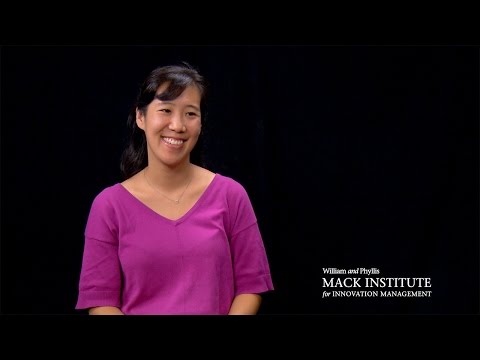
Former Cleveland Fed President Loretta Mester discusses the current economic outlook, highlighting business sentiment, inflation, and recession risks. She examines how uncertainty and tariffs are affecting decision-making and forecasts potential Fed rate cut scenarios. Mester also explains the Federal Reserve’s delicate balancing act between price stability and maximum employment.
ABOUT THE PODCAST The Wharton Business Daily podcast features interviews with top business leaders, innovators, and renowned Wharton faculty about the latest news, fascinating trends, and issues impacting both consumers and the business world. Episodes are recorded at the Wharton School.
----- The Wharton School of the University of Pennsylvania is committed to sharing its intellectual capital through Knowledge at Wharton, the school’s online business analysis journal.
Launched in 1999, Knowledge at Wharton offers free access to:
- Articles, podcasts, and videos highlighting Wharton faculty research and analysis of current business trends - Interviews with book authors from Wharton School Press - In-depth series of curated content like Wharton Executive Education’s Nano Tools for Leaders - A searchable database of more than 10,000 articles covering all aspects of business - A weekly newsletter that delivers Knowledge at Wharton insights directly to your inbox
Visit the Knowledge at Wharton homepage: https://whr.tn/3qUpSBE Subscribe to the Knowledge at Wharton YouTube channel: https://whr.tn/3DEAgAU
Read the full transcriptHide the full transcript
- Dan Loney: Well, if you go back over the last 15 to 20 years, there certainly have been a heightened focus on the area of finance,
- with obviously a lot of the coverage that is now out there in the media world, but also the focus on the decisions being
- made that can have an impact on our economy. But what does that mean for us right now, especially in a timeframe where
- we've been coming out of the pandemic, and now we're also dealing with inflation? Pleasure to be joined right now by
- Loretta Mester, who is the former President of the Cleveland Federal Reserve Bank. She is now an Adjunct Professor
- of Finance here at the Wharton School. Loretta, great to have you with us today. Thanks for your time. Loretta Mester: Thanks for having me
- on. - Thank you. I guess let's start with your view of where this economy kind of stands at the moment. - Yeah.
- Well, you know, what's interesting about the economy is that, if you think back to the beginning of the year, the
- economy really started on a really strong note. You know, businesses were very optimistic. They were really looking forward
- to do regulation, because they viewed that as being a way that they'd be able to innovate more and really engage in M&A
- activity and, you know, expand more easily than they've been able to do in the recent past. And then they were also
- expecting this extension of tax cuts, which they were going to expire at the end of this year, and even further cuts. But
- then things have really changed in recent months. So if you think about what's happening now, you know,
- sentiment among businesses and consumers has really plummeted. And it's interesting, because if you look at the hard data on
- growth and employment, they're still holding up pretty well, but people have just become much more fearful about how the
- economy is going to fare later in the year. And as you and your listeners know, the source of that concern are the uncertainty
- caused by the tariffs, and you know, the fact that they were on again, off again, and everyone's waiting for this week, later this
- week on Wednesday, to find out more definitive information. The prospects of a global trade war. Because it's not only what we do
- on tariffs, it's what other countries do in response to those tariffs. And another thing that adds to that is
- what's happening with Doge and the cuts in the federal government. And I think it may not be about the cuts, per se,
- but the way they're being implemented has given some people some constant -- you know, getting nervous about things.
- - So I think it's interesting, because, you know, in the process of talking about the markets that we have done on our
- shows here, the common theme is the markets don't like uncertainty. Well, from the Federal Reserve perspective, I
- think it's safe to say that the Fed probably does not like uncertainty with a lot of these policy decisions as well.
- - Well, I mean, nobody really likes uncertainty. We all would like to know what's coming. And you know, you talk to businesses
- today and talk to them about the last time we had tariffs in 2018 and 2019, and they would tell me, "Look, just
- tell me what the rules of the game are. I'm confident I can handle whatever the policy is, but if I don't know what the
- rules of the game are, it's hard to play the game." And I hear the same thing now when I talk to business people. They're all
- like, you know, "I'm pretty confident in my business, and I'm pretty confident and I can navigate, but I don't know what
- I have to navigate." And I think that's part of the problem, is that, you know, we all have to make decisions under
- uncertainty, but this has been particularly uncertain because it hasn't been stable, right? One day, it's one thing, it
- seems like the next day, it's something else. And that makes it really hard for businesses to plan. However, I do think that
- this uncertainty is not going to be resolved. You know, Wednesday is going to come, but there's still going to be uncertainty
- around things. And I think businesses and policy makers at the Fed and, you know, other policy makers are going to
- really just going to have to navigate uncertainty and be able to deal with it. And personally, my own view is that some of the
- businesses are going to basically conclude, "Well, I have to make some decisions here. I can't just wait forever." And I
- think they will end up making some investments, but they'll be shorter term investments. They won't want to go long, given
- that things could change, you know, where they think one thing and then it turns out that something else is
- happening. So I think we'll see it affecting the economy, no doubt. We're already starting to see that uncertainty affect
- decision making. But we'll have to wait a little bit longer to see how it actually impacts hiring decisions, investment
- decisions. It's a downside risk to the economy, no doubt. - Does this start then to bring back the potential, or at least it's
- being thrown out there maybe a little bit more, around the idea of a potential recession at some point down the road? - Well,
- certainly the risk of recession has gone up. I mean, if you look at all these private sector forecasts, they've all put a
- higher weight on the possibility of recession. It's not the base case. You know, nobody's really projecting that there'll
- be a recession. I don't think it's the base case. But remember, at the beginning of the year, that wasn't even in
- anybody's vocabulary, even though, at any point in time, it's like a quarter percent chance. You know, a quarter, 25 percent
- chance you'll have a recession just because the economy runs in cycles. Now, those percentages are up to like, you know,
- depending on which one you're looking at, 30 percent, 40 percent, even 50, little under 50 percent in most forecasts. So it's on
- people's minds now. And it's even worse than just recession recession, it's like a recession caused by uncertainty. And then,
- coupled with that, there's upside risk to inflation. So you get this bad situation, especially from the Fed's point
- of view, where you could have growth slowing, you know, labor market weakening, and at the same time, inflation not coming
- down and maybe even going up. So that's a bad situation for the Federal Reserve, because, of course, it has a dual mandate of
- maximum employment and price stability, and you'd have sort of those working against one another. - So
- then that brings into the question, once again, about the potential of rate cuts at some point this year. I think a lot
- of the expectation has been maybe two, maybe one around June and one later in the year. Where is your thinking on that
- potential right now? And maybe to a degree that's still a little bit up in the air, depending on what happens here.
- - Well, obviously the policy is going to depend on not only what happens, but also the outlook for the economy, because, as you
- know, the Fed policy doesn't affect the economy right away, it has some lag in it. So they're going to have to be
- looking out and sort of making their best estimates about, you know, where the economy is going. But look, there's two
- scenarios that would call for further reductions in the interest rate this year, right? So the first one is what I call
- benign scenario, which is the, you know, sort of stubborn inflation numbers we've seen at the beginning of the year turn
- out to be sort of either seasonal or just, you know, not really lasting, and we get inflation moving back down
- again, and it turns out the tariffs are like one-off changes in the price level, and they don't become inflationary. And
- so the Fed could, in that scenario, return to its policy that it was doing in the middle of last year, which was
- beginning to bring the rate down from restrictive levels to more normal levels. But the other way that the Fed will be, you know,
- putting rate cuts back on would be a less happy scenario, which is basically the economy is beginning to slow quite a bit.
- And, you know, they have to sort of make that balance between inflation and maximum employment, and they see that
- the economy is weakening enough that it begins to have to do those rate cuts to really support the economy. And that
- one is becoming more likely in forecasts, that the Fed is going to have to take some action, because we're going to see the
- unemployment rate go up, labor markets weaken, growth slow down, and so they're going to be cutting. Now, whether they -- I
- doubt -- I don't see that things could change so quickly that they would want to start that in June, but it could
- happen. And, you know, they're going to be forward looking, and they're going to want to look at the balance. I think a better
- strategy would actually be, given that we've seen inflation readings being elevated, and we've even seen increases in
- inflation expectations, which are not welcome at all, would be to be on hold at the current level for long enough that you
- could actually make sure that those inflation expectations really are well anchored. And then if you do see the economy
- and evidence that the labor market is weakening, then being more willing to cut at a faster pace than they typically are
- willing to do. Because that way you're sort of doing the balance between inflation, which, you know, they've made all this
- progress on inflation, bringing it down. It's not back to two percent where they need it to be. You wouldn't want to give that up. At
- the same time, they have to take into account that there's a dual mandate, and the, you know, employment side of the
- economy is very important. So it's a hard balancing act. And you know, not everyone on that committee is going to have the
- same view of how to balance those two goals. And so that's what's going to be, you know, what the chair, Chair
- Powell, is going to have to do, is really gather all the information he can from around the country, and that's what the
- Fed presidents do, they bring that to the meeting, and then come up with the best path forward that tries to balance
- those risks, hearing different views on different sides of the table. And that'll be, I think, the challenge for the Fed and
- for the chair. - Loretta, great to have you with us today. Thanks very much for your time
- and your insight. All the best. - Thanks, you too. - Thank you, Loretta Mester, former Cleveland Federal Reserve
- President and now an Adjunct Professor of finance here at the Wharton School.
Brief Summary
Loretta Mester discusses economic uncertainty, inflation risks, and potential Federal Reserve rate cuts in this episode.
Key points
- Uncertainty in the Economy. Loretta Mester discusses the impact of uncertainty on business decisions and the economy.
- Potential Recession Risks. Mester highlights the increasing forecasts for a potential recession due to economic factors.
Episode highlights
- Uncertainty in the EconomyLoretta Mester discusses the impact of uncertainty on business decisions and the economy.“The markets don’t like uncertainty.”2:36Apr 19, 2025
- Potential Recession RisksMester highlights the increasing forecasts for a potential recession due to economic factors.“The risk of recession has gone up.”4:52Apr 19, 2025