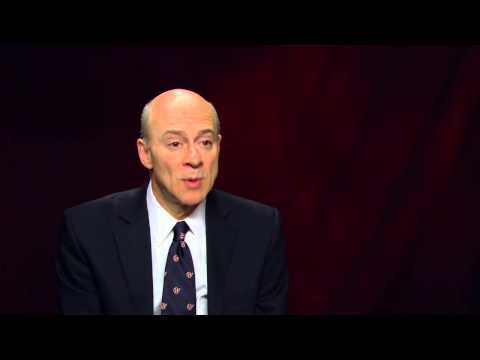
Jeremy Siegel on Politicians, Prices and a Potential 'Buying
Ask about Knowledge at Wharton
Episode Description
What lies ahead for the U.S. and world economies? What is the right strategy for investors in this environment? Knowledge@Wharton discussed these questions and more with finance professor Jeremy Siegel, author of The Future for Investors.
Read the full transcriptHide the full transcript
- [Music] this podcast is brought to you by knowledge at Warton please visit knowledge. won. up.edu for more
- information the US presidential race has reached a critical point the Republicans
- have a confirmed nominee in John McCain as for the Democrats Hillary Clinton has
- bounced back while Barack Obama retains a marginal lead in terms of delegates how the presidential race evolves will
- be sh shaped in part by the increasingly worrisome state of the US economy though
- it has not yet gone through two consecutive quarters of negative growth the common definition of a recession
- signs of a Slowdown are evident everywhere meanwhile consumer prices are rising oil is crossed $13 a barrel and
- gold is nudging $1,000 an ounce suggesting that the economy could be entering a phase of 1970 style
- stagflation fed chairman Ben banki however told Congress last week that he doesn't anticipate stagflation and he
- continues to indicate his willingness to keep cutting interest rates what lies ahead for the US and World economy and
- stock markets what is the right strategy for investors in this environment knowled of Wharton discussed these
- questions and more with Finance Professor Jeremy seagull author of the future for investors Professor seagull
- thanks very much for joining us today happy to be here given all that's going on in the primary elections what do you
- think uh a president uh Clinton or Obama or or McCain would mean for uh the US economy right uh well certainly had some
- exciting uh primaries uh last night Hillary came back and uh you know could be a factor uh if Democrats beat
- themselves up that might improve the chances of the Republicans a bit um a lot of people talk about what kind of
- policies and um uh I I think that uh whoever is uh president or whatever party that uh the question of tax is
- going to necessarily come up first and the reason for this is under current law uh all the Bush tax cuts will expire in
- 2011 um and uh that means that if nothing's done we go back to the Clinton uh way of of of Taxation which is a
- major uh factor and of course what is also very important is the fact that no matter whether McCain or a Democrat wins
- uh as long as Congress remains democratic and that is considered over uh uh 90% now on the odds makers uh uh
- they will draft the legislation and uh even if McCain uh vetos that says and I don't want these rates to increase it
- will automatically go up anyway so they're going to be wrestling about taxes a First Health Care which everyone
- talks about probably will have to take uh you know second fiddle to that anything about homeowners I think that's
- going to be done during this year the last last year the Bush Administration although all the presidential candidates
- are are really talking about that issue now I think that uh really any legislation that might come out of it
- will come out of it this year but I think the first priority really is going to be uh taxes and uh uh the the battle
- will be uh fought on that front Okay many have been saying that we're entering this period of 1970s style
- stagflation do you agree with that assessment no not not at all uh uh 1970s uh we got inflation up to
- 14% uh interest rates up to uh uh uh almost 20% I mean these uh we are certainly moving to slightly higher
- inflation rates but nothing like the 1970s so we want to call it a tiny little touch of stagflation I I I would
- tend to agree with that because we have a soft economy with some Rising prices but we have to realize we're not going
- to be in that situation there I mean I I look for inflation you know topping out at most uh maybe
- five five and a half and that's with oil uh prices there uh on the core rate of inflation I think we won't go above 3%
- on that okay uh fed chairman Ben banki has indicated that he's willing to keep on cutting interest rates do you agree
- with that that t well you know I I've been a big fan of of Bernan uh through his two years uh I am I I'm a little bit
- disturbed recently because I don't think he is acknowledging the inflationary threats
- now I just said I don't think inflation is going to get as bad as the 1970s but but and I and I agree there but we have
- had a tremendous rise in kamay prices we've had a tremendous fall in the dollar imported costs are going up uh
- there's even a possibility of revaluation of Chinese currency as as a result of this so raise import prices I
- think uh I I I worry about the International Community losing faith in bernanke's anti-inflation
- credentials and um that is not good so I I I think uh we're we're going to get a
- 50 basis point reduction in rates on March 18th the next fomc meeting but I would like him to say at that point
- we're signaling an end of the cuts to see how much they're going to work because otherwise an open-ended Cuts all
- going down I think could uh revive inflationary expectations and just make it harder for Bernan uh down the road uh
- to stabilize the economy you mentioned the rising commodity prices what impact will those have on the US and World
- Markets well I I you know the uh if the dollar continues to sink downward and that of course is is partly the
- confidence uh in beran's policy that will raise these imported prices particularly for energy uh uh and Al all
- sorts of other materials I'm I'm particularly concerned uh that that China may do a a revaluation of the Yuan
- because their inflation because they've pegged their currency or or sliding their currency slowly against the dollar
- has has reached a nine-year high there's pressure in China to to to revalue to lower uh prices and that would just jump
- up prices of everything we import from China uh so the the falling dollar does have uh potentially uh inflationary
- consequences uh here in the US although it will you know it will improve our trade balance uh on uh when we take all
- the positives and negatives uh we don't want the dollar to keep on going down that will not be good and how does the
- falling dollar affect uh sort of the European business Market well I mean that makes it a little harder for the
- Europeans to compete because the the US manufacturers now become more competitive and they are a little bit
- comp uh complaining now the Euro has gone over a150 uh you know can we compete the interesting thing is that
- Europe has been able to compete even with a strong Euro on average their trade balance is is pretty uh near
- balance why ours is still very much uh in deficit although improving um uh the world out there is very very competitive
- a falling dollar does help our competitiveness but I think the downside of higher import prices uh is something
- very seriously to be considered okay well meanwhile the manufacturing um sector seems to be contracting what does
- this mean for the economy in general well the manufacturing sector has been contracting for uh 30 years now we've
- lost uh 50 to 55% of manufacturing jobs over the last three decades so this is something that is continuing uh it is
- happening in all the developed countries of the world uh you know as well as the
- United States uh and it's irreversible it has to do with the patterns of global trade and wages and if it isn't China
- it's going to be India if it's not India it's going to be Indonesia it's going to
- be Vietnam and then maybe even Africa so so uh we have to learn how to be a service economy we have to learn about
- uh using intellectual capital and and and using our our strengths and and and and and that is not going to be except
- for some specialty items which we will manufacture require High technical expertise in general manufacturing uh
- jobs will will continue to be lost okay well the the employment report should be
- out this Friday yeah that's a very very important report report uh we just got uh this morning something called the ADP
- report automatic data processing report which gives you a little preview and that showed a loss of jobs um the
- expectation of Wall Street is for a gain of maybe 20,000 that's very low but we did have a surprise loss last month um
- with the it could very well be a loss this is an important one if we're going to have a recession uh you got to have a
- loss of payroll jobs and by the way 20,000 30,000 is usually not enough to bring a recession you need 100 to
- 200,000 you need it for several months we haven't had that yet we are still skirting the recession just just barely
- at this particular uh juncture um but I would the employment report coming out on Friday is very important uh I also
- look at jobless claims which come out every Thursday they have been ratcheting upward again not quite into recession
- levels but close to recession levels um uh you know you know we going to have a recession as
- people know I I think we're going to skirt it but just barely but we're certainly having a Slowdown um whether
- it's technically a recession or not uh you know is is perhaps secondary what about the threat of prolonged inflation
- is that is that well that is you know that is a a threat if we have a continually falling dollar and commodity
- prices um uh and continue to rise I mean I have been concerned that despite the tremendous slowdown in the US economy
- which is usually uh coupled with a Slowdown of commodity prices we have not seen it now it is true that Emerging
- Markets have still been strong Europe has been slow down not a lot but nonetheless the fact that oil and all
- these commodity prices are so strong in face of declining economy is is even more evidence that the fed and Bernan
- must uh you know take that into cognizance we're going to have fiscal stimulus uh with the uh uh the rebates
- starting at the end of the second quarter and end of the third quarter this is going to boost spending um uh
- you know that is another boost to commodity prices if we if we don't get some sign that the FED is going to stop
- keep on lowering rates I'm afraid that will move into inflationary expectations and the FED even the FED claims we don't
- want inflationary expectations to get out of hand that's one of the hardest things to solve in the economy so you
- know we're not going back to the stagflation of the 70s that was mist Stakes that were made way worse than
- anything that we face today but the fact that we have to nip inflation in the bud
- we can not let those inflationary expectations get anchored I think that that's a top priority of uh of the banki
- FED okay well um banki also spoke yesterday about um providing relief to homeowners who are facing just uh
- foreclosure uh do you agree with his approach of having Banks write down loans well I I I I prefer we're already
- seeing all sorts of accommodations um I I rather the private Market do it I mean if if if the
- government or the FED wants to provide a few blueprints that might be suggested that's fine but we're getting the
- service uh mortgage service industry move in and and making deals everyone has a a particular thing some are the
- interest rates some might be forgiveness of of of a certain amount of principle remember a lot of these mortgages are
- selling in the open market at 50 cents on the dollar so uh you know if we if you if if a bank could actually say 10
- or 20% we'll forgive and they actually then get the uh the the loan they're going to be making a huge profit on this
- so in a way the incentive is there for them to do it I don't think we need legislation I don't think we need
- governmental action I think the private sector can handle this and is beginning to handle this now okay uh you've
- written in the past that when the US and Europe are in trouble emerging economies
- such as China and India uh could come to the rescue do you think that's the case
- well I think they're much you know the US is not the only engine of the economy it's an important engine of the world
- economy but it's not the only engine of the world economy um you know we're we're we're about 20% of world GDP at
- the present time that that's going to be shrinking and that's much less than it was 30 years ago when we were onethird
- of world uh GDP so you in in essence uh um uh you know used to be said us sneezes and the rest of the world uh you
- know has a cold I don't think that happens anymore that being said um if there is a significant slowdown in the
- US and a recession it's almost impossible that India and China will not be affected by that I mean there's just
- too many Goods that are being sent over here but will this necessarily trigger you know a worldwide recession no not
- necessarily there's a huge middle classes certainly in India and even in in in China and the truth of the matter
- is that because China is providing a lot of goods uh that that if if income goes
- down those cheaper China goods are going to be in demand so my feeling is is you
- know China might go from uh 8 to 10% growth down to 4 to 5% growth uh but but no recession as we Define it here in in
- the United States so given all that's going on what do you think investors should be doing well in right now now um
- uh my feeling short run uh I I've I've turned cautious on the stock market um I think there could be some more downward
- adjustment until Bernan uh makes a stand and and the International Community begins to see we are going to be
- fighting in inflation um we could see short run another five or even 10% decline in in the market I consider that
- maximum 10% downside risk if we should have that I think it could be the buying opportunity of the decade for investors
- because longterm I'm bullish and long-term I think valuations are still are very attractive short term still
- going to be a little rocky I think until the inflation uh situation gets clarified um but long term I think it
- it's very very strong so anyone who has their stock position longterm they're going to be fine if you have a little
- cash you might be deciding to put some of that to work re uh in the next couple weeks as stock prices decline you might
- be getting uh some some very good bargain well thank you very much for speaking with us
- today thank you Steve for more information please visit knowledge. Warton do.edu
- [Music]
Brief Summary
Professor Siegel discusses the 2008 presidential race's economic implications and investment strategies amid rising inflation and market volatility.
Key points
- US Presidential Race Update. The race heats up as McCain secures the Republican nomination while Clinton and Obama battle for the Democrats.
- Economic Concerns. The economy shows signs of slowdown with rising consumer prices and fears of stagflation.
- Inflation Worries. Experts discuss inflationary threats and the potential impact on the economy.
- Investor Strategies. Advice for investors as the market faces potential downturns and long-term opportunities.
Episode highlights
- US Presidential Race UpdateThe race heats up as McCain secures the Republican nomination while Clinton and Obama battle for the Democrats.“The Republicans have a confirmed nominee in John McCain.”0:18Mar 5, 2008
- Economic ConcernsThe economy shows signs of slowdown with rising consumer prices and fears of stagflation.“Signs of a slowdown are evident everywhere.”0:40Mar 5, 2008
- Inflation WorriesExperts discuss inflationary threats and the potential impact on the economy.“I worry about the International Community losing faith in Bernanke's anti-inflation credentials.”5:01Mar 5, 2008
- Investor StrategiesAdvice for investors as the market faces potential downturns and long-term opportunities.“I think it could be the buying opportunity of the decade for investors.”14:32Mar 5, 2008
Episode quotes
Tension
40/ 100Low tension