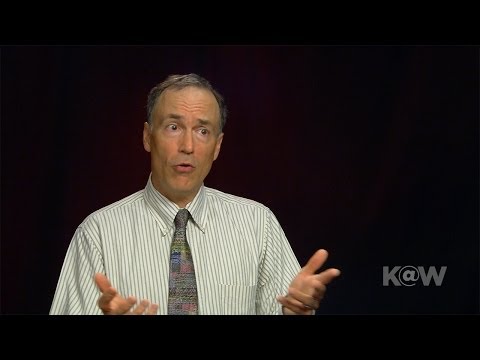
Should 'Shareholder Value' Rule Business Thinking?
Ask about Knowledge at Wharton
Episode Description
Often, shareholder value trumps all when it comes to measuring corporate success. But focusing too much on the short term can hurt a business over the long run, says Wharton's Eric W. Orts. 📂 Finance & Accounting;Management
Read the full transcriptHide the full transcript
- we're speaking today with Eric ortz a professor of legal studies and business ethics at Wharton about his new book
- released in September here uh titled business persons a legal theory of the firm thanks for joining us today Eric oh
- you're welcome I'm happy to be here all right uh we move on to executive compensation uh you take issue with the
- idea that shareholders and executives are too often viewed as if they're the only entities in the corporation that
- matter no one else is really important to the process and that that's uh may be reinforced by this concept of
- shareholder value and then the executives are the ones who create the shareholder value and it's just this you
- know the these two things that that are the only things that matter would you discuss why you think that's a limited
- view yeah I think if you uh start from the view of how businesses are constructed from a legal vantage point
- and that's the main argument of the book uh there's a bottom up process by which
- people come together into uh teams uh that represent Capital that's coming into a company Labor uh there's
- organization governing expertise that are that are management uh and it's a very complex process if you look at this
- historically and legally over time and it is and business firms themselves and this is why we have uh business schools
- that study this and and and try to teach managers the complexities that are involved in this are actually very
- intricate uh or organizations you can you can have very small startups that are only one person but very quickly in
- most businesses you get economies of scale and economies of scope that mean you have very large Enterprises that are
- putting together lots of moving parts and those moving parts are reduced in economic theories that say shareholders
- are the only group that matter there's advantages to looking at share price and I'm not look I'm not saying that
- shareholders don't matter shareholders and corporations vote and they ultimately have authority over who uh is
- voted onto the corporate board and that means uh authority to determine who the CEO is but in most circumstances
- shareholders aren't exercising that role and I think that the shareholder uh value arguments that managers only
- should be looking to shareholder value have gotten us into trouble I'll give you one example uh that I think is in
- the news right now and that's all the the the the series of corporate frauds that we continue to have of accounting
- frauds and other kinds of frauds insider trading scandals Etc but the corporate fraud issue especially
- with respect to some accounting issues I think partly has to do with incentives that are created by asking managers to
- only manage to short-term shareholder value uh the theory is and it works well if you're just doing equations in a uh
- article and saying this should work the theory is that managers should manage to
- shareholder value if shareholder value increases then everybody will be better off and if shareholder value increases
- then manager should be be uh compensated more in practice though what happens sometimes is that when you are using
- short-term options or other mechanisms to pay managers only in terms of their share price performance you create
- perverse incentives for them to commit fraud and I think this is something that people did not think about when they
- adopted economic theories and this uh basically in the economic jargon is called principal agent Theory principal
- agent theory was uh was invented and advocated beginning about 2013 30 years ago that's now seized the day with
- respect to executive compensation debates where you basically see managers as the agents uh of of shareholders and
- that that's the only relationship that matters and what I argue in the book is that there are a number of other uh uh
- there are number of other considerations that matter employees matter and how they're motivated and that really is not
- taken into account in a simple principle agent Theory the other group that matters is uh other uh creditors uh Bond
- holders and and other Capital providers of the Enterprise the role of retained earnings in a firm is is really
- underappreciated in the uh principle agent models and so my main argument is that these economic models that have
- driven this idea that sh that managers should only manage to share price particularly in the short term are wrong
- they're the they're the product of economic theories that I think at this point have been have have sh been shown
- to be wrong and one of the arguments in my book is to is to say look here is another theory namely traditional legal
- understandings of how uh firms how firms are created and how they're formed and run over time that are different than
- the these standard economic theories so you have um with this uh the the idea of
- shareholder value being Central and prominent and and almost overriding uh you then have Executives whose
- compensation is based on shareholder value I.E the stock price and so naturally incentive to make sure that stock price
- is as high as possible which generally is a good thing but in practice as you say um there's this critique that
- they're managing for the short term because most of their compensation is based on stock options directly related
- to the share price so they want that next quarter or certainly the next year Financial results to maximize the stock
- price which could undermine the long-term soundness of the firm if they dump all the assets and resources into
- trying to make that go up short term they miss opportunities such and and and there's companies that that do it the
- other way like Amazon that invest for the long term they'll take losses in certain areas in the short term in order
- to invest and guarantee that they succeed in the long term so this is another part of it this economic
- argument isn't it in addition to the fact that you're saying it can it can lead to fraud or yeah I think that's
- that's exactly right and in some ways that's even more important so so one problem you have is that you might
- increase fraud you increase the dysfunctionality of the system and I think that most ideas of business is
- that you want to have long-term sustainable growth that is going to raise everyone's boats create more
- wealth uh help to uh make everybody better off and so if you have systems in place and part of these part of this uh
- is about economic theories that we're adopting and part of it is about law listening to the economic theories and
- following those economic theories we're going to be in some uh trouble and I think you identif ify a very big issue
- and that is how do you what is the purpose of an Enterprise and how do you provide the right incentives both
- legally and economically for long-term economic growth one example you mentioned Amazon one example I use in my
- book is Google and so Google specifically when it went public opted out of this traditional pattern of being
- governed only by shareholders and you've had some law in Delaware and I think it's starting to change where Delaware
- had a famous case that was decided uh in the 1980s called re on where they said in some circumstances we're going to
- demand that you get the highest price for the company if you're selling the company if you're a if you're in a sales
- situation there's some complexities about that but the argument here is well why would we expect that to be the only
- goal for shareholders why would we only want to take one uh share price right now and say that is the intrinsic value
- of the company there could be all kinds of reasons that share prices either up or down and to put so many uh to to put
- so much weight on the the artifact of share price I think has been a mistake over time I think you see Google U
- Google has been a successful company in bucking that Trend where they basically said no we're going to basically uh hold
- control in a relatively smaller group another example historically that seems to be pretty successful this way as Ford
- motor company has done the same thing uh so that that indicates that maybe this idea that only shareholder value and a
- broadly held Market is not the only model for a company and that for long-term sustainable growth we have to
- have a more complex understanding of uh incentives in Enterprises and providing for lots of different experiments uh for
- how businesses should work rather than rather than I think what uh some economists have tried to argue is to put
- a template of of an economic theory on the world and say everybody has to has to manage to this shareholder maximizing
- model or something of that kind and you have a lot of these other examples out there where companies are not behaving
- that way and they're actually doing better than companies that are uh that are being trained to just look at
- shortterm returns so when people talk about maximizing shareholder value you'll often hear justifying that idea
- uh which tends to mean in the short term as you point out you'll you'll sometimes
- hear that they have a you know legal term fiduciary responsibility to do so but you seem to be arguing that there's
- other responsibilities and in fact you could be irresponsible uh in a way by not investing longterm by giving out too
- many dividends in the short term you then don't have money and retained earnings to invest for that next new
- product that's going to give you know investing for the long term kind of a thing yeah I think in fact there's been
- a lot of misinformation sent out sometimes I think I'm afraid in Business Schools but it also sometimes happens in
- law schools of what the fiduciary duty of directors actually is in the United States in fact the business judgment
- rule has uh allowed a lot of discretion that directors have in the United States
- and for many businesses there is a lot of disc discretion that they have now we have had some changes that have moved us
- toward a shareholder maximization uh model and the Revlon case I mentioned is one of those cases and there have been
- some Delaware law cases that go in that direction there also have been Delaware cases and other uh other uh legal
- developments that have said wait uh companies don't have to manage in that way uh one of the interesting
- experiments that I also talk about in the book is something called hybrid what I call hybrid social Enterprises uh
- aware uh the Justice summer enacted a benefit Corporation statute which explicitly says you can have two
- different objectives one is making money but another is uh an environmental objective let's say or some specified
- social objective of trying to alleviate uh sanitation in a particular uh country
- or sanitation problems in a particular country and what what those experiments show is that and and one of the main
- arguments that I give in the book is that purposes of businesses are actually quite diverse uh you can have a business
- and it can be just maximizing shareholder value and I'm not saying we shouldn't have businesses that are in
- that uh organized in that way but it might be that there are lots of other kinds of models and I think there are
- lots of other kind of models not only in the United States but in the world of different kind of companies that are
- looking at different kinds of objectives that they're trying to uh follow and I think we're in a better uh circumstance
- if we allow a diversity of different companies like that and one of the arguments in the book is this is that
- the one of the virtues of of modern Western societies is that we have this framework of law that allows individuals
- from the bottom up to be entrepreneurs to come together to come up with new ideas to come up with new ways of
- structuring Enterprises that are either going to work or they don't work and we allow General markets of Supply demand
- to determine that but we don't mandate some particular way in which every business has to be managed and I think
- that that's a a good thing and one that I hope to uh uh hope to uh encourage in writing this book just the final thing
- just to get back to shareholder value for a moment uh it was interesting to me the point you make which is that uh it
- may be surprising to some which is that shareholders although they have an equity stake are not the main providers
- of financing for companies and that that might be one reason that people would think they should have such prominence
- there might be a conception that they are the the primary financiers of the corporation but in fact you're saying
- that that's not the case uh on average in general yeah I think that in many I think the finance literature has now
- become pretty clear that the main area in which companies get money and which they uh property uh to the firm from
- which they decide to allocate New Capital to new projects is retained earnings uh colum mayor at Oxford was
- one of the main uh uh proponents and and authors of Empirical research that shows
- that this is true not only in United States but in many uh other countries and so what that b basically shows is
- that the shareholder value idea of that Capital comes from the shareholders therefore you owe uh an exclusive Duty
- only to the shareholders is wrong uh it's also true that you get a lot of capital provided to companies through
- credit and debt uh financing and so usually those are uh interpreted as contractual relationships and they are
- contractual relationships but it's also true that at the edges uh there are duties that can sometimes be owed to
- those Capital providers as well so that's an example how the property relationships within firms and I go into
- this in a lot more detail in the book are actually a lot more complicated and ownership is much more fragmented than
- this simplistic idea of managers and shareholders uh gives you and there's a there's this idea whenever you have a
- simple way of describing something sometimes people grab on to that and they think that's a hammer that you
- should then uh hammer into any problem that comes up you use that principal agent model of shareholder managers and
- you that's the answer and and I think that's fundamentally wrong uh it's not that I'm saying shareholders are not
- important they're primary as I said they elect D directors there's a important corporate role that shareholders play
- but the idea that that's all there is and that we should that managers should only think about that to the exclusion
- of strategic uh considerations of research and development how you're motivating your employees uh how you're
- relating to different governments that you're dealing with all those other kinds of issues uh I think really uh
- really underplays the the the important role that managers have uh and it and it
- subverts it makes the idea of the task a little bit too easy so um uh so I think
- that's my answer there that that we do care uh shareholder value matters it's one measure of how firms are doing uh
- how they're doing well or not doing well but it's not the only measure and we really have to think about these broader
- uh concerns well thanks very much for being with us today than it [Music]
Brief Summary
Eric Ortz critiques the shareholder value model in corporate governance, advocating for broader stakeholder considerations in business practices.
Key points
- The Limitations of Shareholder Value. Eric Ort discusses how focusing solely on shareholder value can lead to corporate fraud and dysfunction.
- Rethinking Business Objectives. Ort argues for a broader understanding of business purposes beyond just maximizing shareholder value.
Episode highlights
- The Limitations of Shareholder ValueEric Ort discusses how focusing solely on shareholder value can lead to corporate fraud and dysfunction.“The shareholder value arguments have gotten us into trouble.”2:15Oct 30, 2013
- Rethinking Business ObjectivesOrt argues for a broader understanding of business purposes beyond just maximizing shareholder value.“We have to have a more complex understanding of incentives.”8:01Oct 30, 2013
Tension
40/ 100Low tension