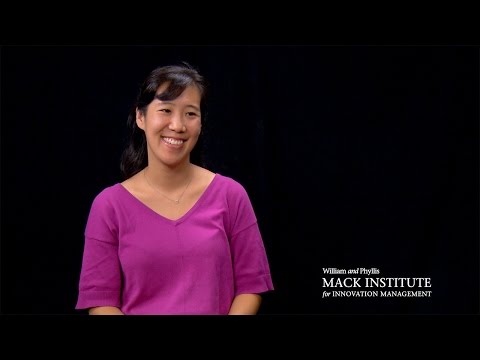
Who’s the Most Attractive Investment Opportunity of All? Good-Looking Men
Ask about Knowledge at Wharton
Episode Description
Investors are much more likely to be receptive to business pitches from attractive male entrepreneurs than from “average Joes,” Wharton’s Laura Huang finds. But for women, beauty makes no difference. More: http://knlg.net/1Bcnr9C 📂 Finance & Accounting 🏷️ Research
Read the full transcriptHide the full transcript
- So the paper uh we set out really to uh we noticed that there was a uh this general trend where women were getting
- less uh venture financing than men and we were trying to figure out why that was uh and if there were certain uh
- variables that would offset this negative effect. Um and so what we found was that actually women are
- disproportionately funded less than men. Um and in addition, men who are attractive get
- this extra boost uh where they're getting funded even more than unattractive men.
- I think the key takeaway is that we tend to think that entrepreneurship is a very
- merit-based type of endeavor where we're evaluating the quality of the idea or how disruptive it is in a market or the
- executability of the idea. And what we're finding is that when entrepreneurs pitch, uh, there are a lot of other
- subtle cues, there are a lot of other factors that are going into whether or not somebody actually gets funded or
- not. Um, we've had we've long had anecdotal knowledge about women getting funded less than men. And what we really
- find is that that holds. And in fact, there's a premium that men get even for things like being attractive, whereas
- women um are still not getting funded based on those factors. I think they all surprised us to some
- degree. Um, we really set out to kind of find a way to find which variables or or
- which factors would equalize the process. Were there ways that women could pitch themselves or present
- themselves such that they would be able to uh get some get the venture financing
- or or be more representative of the types of financing that's out there. Um, and it was surprising to us to actually
- find that these results were so robust and that they held under a number of different conditions.
- I think there's a lot of practical implications in terms of presentation and impression management. Um, I'm doing
- a lot of research in terms of how people uh maybe present themselves in these settings in order to get the valuable
- resources that they need. There's a lot of uncertainty, a lot of unknowability intrinsic in this in this setting and uh
- there's a lot of factors that we don't realize are making an impact. A lot of subtle implicit cues that are driving
- this process. Uh so from the attractiveness perspective for example um you know this is something that
- people can be aware of uh both from the investor side as well as the entrepreneur side um and realizing that
- it's not something that is necessarily representative what's happening in the firm. Um it may be that there are
- specific reasons for that uh and we're trying to disentangle exactly what's happening and the mechanism behind what
- behind the the results that we're finding. You know I think here we actually were
- very careful to do a series of studies so that we were investigating this question for a number of different ways.
- Uh we were really careful to take um an experimental design where we were uh having the same presentation and
- manipulating um one condition where it was a female voice and one condition where it was a male voice for example to
- really make sure that we were isolating that it was just purely the gender. Uh we did the same thing with
- attractiveness. Um and in a third study, we also looked in the field at real uh pitch competitions to see that the
- effect hold held in in that the effect held in a real setting. I think there's a lot of directions that
- we can go from here in terms of looking at what's actually happening and disentangling the underlying mechanism.
- Um it may be that uh there's a certain subset of investors. Uh investors tend to be over represented. they tend to be
- much more male than female. Um, and so that might be driving the effect. It might be that the type of businesses,
- the type of firms uh or startups that these women or men are starting uh might be influencing what's happening. Um, it
- might be about persuasion and the ability to influence. So, some of my other work uncovers this interpersonal
- influence uh aspect that is really important in entrepreneurial financing and entrepreneurial resource
- acquisition. Uh so there's a lot of underlying things that could be happening and I think it's important to
- kind of understand uh why it is that we're seeing these these effects [Music]
Brief Summary
Women receive less venture funding than men, with attractiveness influencing investment decisions.
Key points
- Gender Bias in Venture Financing. Women receive significantly less venture funding than men, highlighting systemic biases.
- Attractiveness Influences Funding. Attractive men receive additional funding advantages, revealing biases in investor decisions.
- Surprising Findings on Funding Dynamics. Research shows that subtle cues significantly impact funding decisions beyond the idea's merit.
Episode highlights
- Gender Bias in Venture FinancingWomen receive significantly less venture funding than men, highlighting systemic biases.“Women are disproportionately funded less than men.”0:26May 26, 2015
- Attractiveness Influences FundingAttractive men receive additional funding advantages, revealing biases in investor decisions.“Men who are attractive get an extra boost in funding.”0:32May 26, 2015
- Surprising Findings on Funding DynamicsResearch shows that subtle cues significantly impact funding decisions beyond the idea's merit.“There are a lot of subtle cues influencing funding decisions.”1:01May 26, 2015