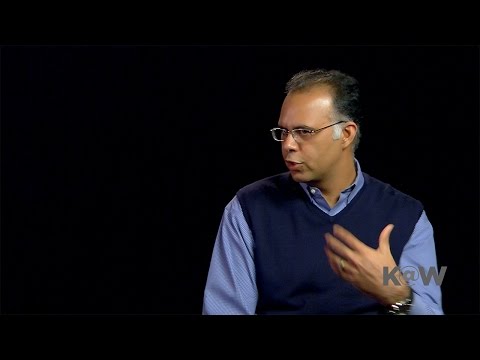
Why Software Stocks Are Falling as AI Reshapes SaaS
Ask about Knowledge at Wharton
Episode Description
ABOUT THE EPISODE Stefano Puntoni talks about the sharp decline in software stocks and how AI is pressuring traditional SaaS business models. He explains that high-margin, user-based pricing is vulnerable as AI agents lower barriers to entry and make it easier to build competing enterprise tools. Puntoni discusses how companies are rethinking workflows, shifting value toward deep industry expertise rather than standardized platforms, and experimenting with output-based pricing. As AI moves from promise to measurable productivity impact, SaaS margins may compress even if the companies themselves remain essential infrastructure.
ABOUT THE PODCAST This Week in Business features interviews with Wharton faculty about the latest news, fascinating trends, and issues impacting both consumers and the business world. Episodes are recorded at the Wharton School and published twice per week.
#ArtificialIntelligence #SaaS #EnterpriseSoftware #AIInnovation #TechInvesting #DigitalTransformation ----- The Wharton School of the University of Pennsylvania is committed to sharing its intellectual capital through Knowledge at Wharton, the school’s online business analysis journal.
Launched in 1999, Knowledge at Wharton offers free access to:
- Articles, podcasts, and videos highlighting Wharton faculty research and analysis of current business trends - Interviews with book authors from Wharton School Press - In-depth series of curated content like Wharton Executive Education’s Nano Tools for Leaders - A searchable database of more than 10,000 articles covering all aspects of business - A weekly newsletter that delivers Knowledge at Wharton insights directly to your inbox
Visit the Knowledge at Wharton homepage: https://whr.tn/3qUpSBE Subscribe to the Knowledge at Wharton YouTube channel: https://whr.tn/3DEAgAU
Read the full transcriptHide the full transcript
- In the last month or so, companies involved in the development of artificial intelligence have taken a bit of
- a hit on Wall Street. There seems to be some concern amongst investors about the future and the impact of AI as a main
- component of our culture. It hasn't stopped the development of the technology, but it is kind of an interesting
- inflection point as we move forward. To explain what's going on and how it may impact in the future, pleasure to be joined
- once again by Wharton Marketing Professor Stefano Puntoni, who's also co-director of the Wharton Human AI Research Program.
- Stefano, great to catch up with you again. How are you, sir? Hi. Dan. Great to be here. Thank you.
- Thank you. You know, I'm obviously somebody who follows the business side of a lot of these technologies fairly closely. It has been very
- interesting to me to watch from a shareholder perspective and see how there has been this impact on stocks in the last
- couple of months because of these concerns. Yeah. So in the month of February, we've seen especially software
- stocks being hit quite hard. The Standard & Poor's software index is down over 20% since the beginning of February, and
- people have been talking about the SaaS-pocalypse. So this idea that many software companies are going to find it hard to sustain
- the margins and businesses they've have had over the last few decades moving forward because of AI.
- So this is being referred to as a SaaS-pocalypse, meaning, what, exactly? Yeah, this idea that software as a service, or SaaS,
- is a kind of business that has been very attractive, very high margin, recurring revenues, and many companies have grown very
- large off the back of software delivered that way. And there are questions now about the sustainability of that industry
- in the face of increasingly capable AI agents and AI systems. So when you dig deeper, what are some of the actual concerns that—
- that people have right now? So last week, we were in San Francisco, and we did a
- roundtable with an amazing group of senior business leaders to discuss the impact of AI on value creation. And this is one
- of the topics that came up. So I can share, maybe, a few of the observations then that our business leaders made about the
- impact of AI on software companies. There were at least three strands of that conversation as to where is the
- threat coming from. And one threat comes from the fact that this industry presents market opportunities. Like I said
- before, margins have been historically very high for decades. Many customers are kind of locked into the services
- provided by the SaaS platforms, whether those are ERPs or CRM or lots of different types of business solutions that
- enterprises need to run their operations. And they're quite costly. And many customers might not be delighted. So there's
- basically an opportunity there to disrupt that market. That's one. The second one is the fact that building an enterprise
- platform is much easier today. I mean, to create those enterprise- grade software solutions used to be extremely difficult and
- expensive. It is much easier today with coding agents, which basically is lowering barriers to entry, and so competition
- should be expected to be more aggressive. And then third, companies everywhere are rethinking their workflows,
- rethinking the way that they get stuff done across functions and across verticals. So the idea of a standardized workflow, which is
- really central to this notion of the SaaS companies, because basically they sell the same product to lots of different
- companies, might be under pressure. In particular, what our roundtable participants were highlighting was that moving
- forward, it may be more valuable to have very deep expertise in a vertical rather than having very deep expertise in how to deploy
- a standardized workflow across verticals. Just to explain a little better, if I am providing an enterprise customer with a
- software solution specialized on healthcare, and now healthcare companies are rethinking lots of workflows, then maybe that
- expertise is more valuable than having a software that does one specific workflow in a very efficient or standardized or
- reliable way. And so there might be opportunities there, almost for flipping the matrix and having competitors for enterprise
- software products or solutions being competing more around expertise revolving particular issues in an industry, rather
- than a specific workflow like a CRM or whatever. And so that was what our roundtable participants were saying. And when you think
- about it now, we have the three forces. You have maybe not totally satisfied customers, so opportunities to switch. You've
- got a lower barrier to entry. And then you've got a shifting in the value propositions sought after by— in this industry. And
- all that together could lead to undermining the position of many of these SaaS companies. Now, our round table participants did
- not think that this company would cease to exist. They thought that you would still need the foundation layer, so to
- speak, and that they would not want to have all the data dependent on one particular AI solution vendor, whether that is
- Anthropic, Open AI, or Google, or whatever. And so maybe they would— they would want to retain, but the margins could be
- expected to decrease quite considerably. Yeah. And part of this, from what I understand, is also a discussion
- about pricing as well, correct? Yeah. So there was a discussion about that, too. At
- the center of that has been— in the media and across companies— this idea that maybe there's pressure to shift away from an
- input-based pricing model— for example, the number of users— to a more output-based pricing model, which is more like, you
- know, the benefit that the software is supposed to provide to the company. And some AI companies are trying to push
- this output-based pricing, which might undermine the profitability of some of the SaaS companies, because that
- input-based pricing is quite profitable. And our participants at the roundtable were a little skeptical that this would be
- happening very fast and across lots of different software solutions. The reason being that to be able to price on outputs,
- you need to be able to measure outputs reliably and in detail. And for many of those complex organizational workflows and
- organizational outcomes, it's quite difficult to do. And so in the case of some of them, like— I don't know, maybe call centers
- or whatever, where you have clear output metrics, objectively measured, reliably measured, trackable over time—
- then maybe that is going to happen, or there'll be pressure towards that. Maybe it won't happen, but it will still
- decrease the margins, even if you stick to an input-based metric. But for some other— imagine some legal services or
- whatever, it might be difficult to actually move there, because it might be difficult, for example, to track the quality of the
- output. So we'll have to see. I think that's a little bit of an open question, I'd say.
- I would think that presents an interesting, you know, scenario, when you're talking about the software
- developers versus the companies that want to use the software, because the companies that use it, they obviously want a
- dynamic of the number of users. That's kind of what we've seen built around technology on the internet anyway. So does this
- present, you know, kind of this unique dynamic as we look at the development of this technology moving forward, as to how both
- sides of the technology are really looking to to move this forward? Yeah, there's going to be very interesting competitive
- dynamics. And I'm not a professor of strategy, I'm a professor of marketing, so it's a little bit beyond my expertise.
- But you can imagine, you know, if you go back to your standard frameworks and competitive analysis, like Michael Porter's
- Five Forces, or something like that, the arrival of these very powerful AI agents and the competition, the convergence of
- competition from AI and other tech sectors into software, you're going to basically see changes in dynamic competition.
- It's not only the SaaS companies are feeling the pressure. In many situations, also, their clients are feeling the pressure. So
- you're going to have competitive pressures across the value chain, not just in one particular area.
- So then, with this discussion going on, is this kind of an important shift moment when we think about the importance of
- artificial intelligence moving forward? Or is this, I guess, just a little bit of a bump in the road?
- It is— I mean, it's impossible for me to say whether the depressed value of software stocks is going to be more of a
- permanent feature or something that will change, but I have to say that I think that the month of February was— might, in the
- future, might be looked at as a bit of an inflection point. Up to few weeks ago, I would say that AI was a very important
- topic, mostly sold on its potential. What Nate Silver calls "the white paper phase." It's like, you know, this is
- going to happen, and you ought to pay attention. And I think what we've seen over the last few weeks is going to
- be maybe a change where now we're talking about impact and not potential. So there have been some discussions about, you
- know, Eric Brynjolfsson from Stanford arguing that we're starting to see the impact on productivity statistics. Controversial, but
- maybe we are. We've seen coding agents and other types of agentic workflows becoming much more powerful and more widely
- adopted. We've even seen the massive role that AI is playing on geopolitics. Just look at the latest drama around Anthropic
- and the Department of War. And so there's been few signs that we might be moving in from the stage where, oh, this is a
- powerful technology people ought to pay attention to, because in the future it will have an impact to use the power of technology, and it is
- having an impact now. Stefano, great to have you back with us again. Thanks very much
- for your time today. Thanks, Dan. Great to be here. Thank you. Stefano Puntoni,
- marketing professor here at the Wharton school.
Brief Summary
Stefano Puntoni discusses AI's impact on software companies and the emerging "SaaS-pocalypse" in this insightful episode.
Key points
- SaaS-pocalypse: The Future of Software. The software industry faces challenges as AI disrupts traditional business models and margins.
- AI's Impact on Business Dynamics. AI is reshaping competitive dynamics across industries, affecting both software companies and their clients.
Episode highlights
- SaaS-pocalypse: The Future of SoftwareThe software industry faces challenges as AI disrupts traditional business models and margins.“Many software companies may find it hard to sustain their margins.”1:26Mar 4, 2026
- AI's Impact on Business DynamicsAI is reshaping competitive dynamics across industries, affecting both software companies and their clients.“Competitive pressures will be felt across the value chain.”9:08Mar 4, 2026