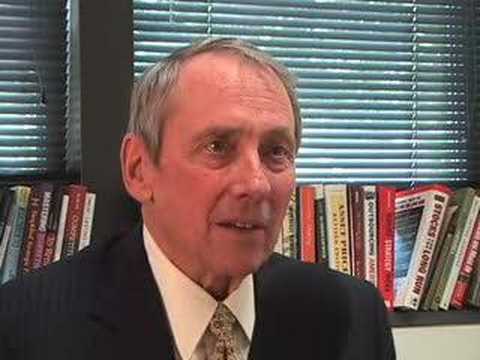
Richard Marston on Risk Credit Crisis
Ask about Knowledge at Wharton
Episode Description
Credit Crisis Interview: Richard Marston on Risk Credit Crisis 📂 Public Policy
Read the full transcriptHide the full transcript
- [Music] This Knowledge at Wharton podcast and videocast is brought to you by Wharton
- Executive Education. For more information on Wharton's executive programs, such as the executive
- development program, leading and managing people or the new high potential leaders course, please visit
- executive education.warton.upen.edu. [Music] Although the subprime crisis seems to be
- showing some signs of easing, debate over what caused it, whether it could have been prevented, and how long it
- might last will continue for some time to come. Knowledge at Wharton asked Wharton finance professor Richard
- Marston for his perspective on the latest economic developments. Welcome, Professor Marston. Well, glad to be
- here. Looking back over the past few years, risk premiums have fluctuated dramatically and uh most people don't
- understand what this means. Can you explain it? Well, it's natural for over time for markets to uh change um in
- terms of interest rates, in terms of the spreads of riskier assets over uh US government bonds um to see the stock
- market fluctuate. Um, in the case of bonds though, it's um it's much easy to understand what's going on in terms of
- being able to measure what what is happening and in that we have the the spread of interest rates between uh
- riskier bonds and uh treasury bonds. And if you watch the spread over time, you can get a good indication of what the
- market is actually thinks is happening in terms of of of risk. And uh recently prior to the crisis uh the spreads on
- high yield bonds and emerging market bonds um came down to much lower levels than normal.
- So people thought the market is not that risky. That's right. If you look at the
- spreads uh winter uh a year ago what you find is that the spreads on high yield bonds had come all the way down to 2 and
- a.5%. Now the average spread in the long run is something like 5 to 6%. So the market was saying that uh high yield
- bonds, the bonds of corporations with lower credit standing were were simply looking much less risky than they
- normally are. Um the spreads on emerging market bonds had come down to 1.6%. And once again, what we're seeing
- is the market saying that emerging market bonds are just much less risky than they have been over the last 10 or
- 15 years. Now the market was saying that they were less risky. Were they really less risky or was this just uh looking
- at the market with rosecolored glasses? That's uh you know that's how judgments differ in the market. Um I felt a winter
- ago that uh the spreads looked uh very unattractive to me as an investor. Um in fact I was recommending to investors
- that they actually invest um 0% in emerging market bonds that the spreads have come down so far that there simply
- wasn't enough reward for the risk. On the other hand, if the market as a whole is pricing securities that way, that
- means there's an awful lot of the people in the market that disagree with me. That's what makes a market. And what
- were we shown when the subprime uh mark crisis began? Well, what we found is um is that uh it was like a um a fire. We
- need a spark to set the fire and uh the spark h happened to be in subprime loans. If it hadn't been there, it would
- have been some other security. But uh once the um once you see the the fire start uh everyone starts to realize it's
- going to spread. It's going to spread to other types of securities that have nothing to do with mortgages. And uh
- what happens is um risk is reassessed by the market and securities that would have had a spread of 4% just a few
- months ago suddenly have a spread of 7%. And uh this happens normally it it happened back in 1998 when there was a
- financial crisis that actually began in Russian government bonds of all things Russian government bonds. What the
- Russians decided to do is default on many of the government bonds. And as soon as that default occurred of course
- the Russian bonds were not worth very much but immediately the bonds of other emerging markets were suddenly
- reassessed and people wouldn't buy the bonds at the original prices. they insisted on much higher interest rates
- and then soon thereafter other securities were reassessed. High yield bonds in the United States um Danish
- mortgage back bonds of all things. Um and what we're learning is that this financial market of ours is very
- interconnected. And uh when you see a an reassessment of risk of one security, the market then very quickly reassesses
- risk on other securities. This time it was subprime loans. And what does that have to do with high yield bonds? And
- why why were high yield bonds then repriced? So there was just a general aversion to risk at the time that caused
- all of these bonds that were perceived as riskier to fall in price and make their interest rates. That's right. And
- what we had was a reassessment of risk and it affected a lot of securities that had nothing to do with mortgages. Now,
- one of the things we've seen uh in in the in the past few months or the past year is that the prices of of many uh
- debt securities have fallen tremendously even though there haven't been that many
- defaults in many of these categories. And and uh I if if the the issuers of the bonds are still making the payments
- they originally promised, it seems like uh these ought to be a good deal at these very low prices. And yet there
- seems to be this tremendous reluctance of investors to buy them even at these deep discounts. What has caused this
- when there haven't been so many defaults? What we worry about is um is the future. What we worry about is um
- how well the securities are going to do in the future and that's what the price is supposed to be indicating. That's
- what this the spread of the interest rate over treasuries supposed to be indicating. And if if we see the economy
- slowing down, and we're certainly seeing that at this point, um, and we see the risk of further turmoil in the financial
- markets, which we certainly were seeing in last fall, we were seeing in uh during the winter, we were seeing it
- into March. We were seeing the possibility that the that the deteriorating fixed income market could
- get even worse. And as a result, people were were not taking chances. They were bidding up the spreads of high yield
- bonds. Uh they were bidding up the spreads of of emerging market bonds. Um it wasn't just mortgage back securities
- and that's a natural development. Um and then of course there was the rescue of Bear Sterns and that turned the tables.
- Yes, the Federal Reserve has gotten involved and and the rescue of Beer Sterns was the most obvious example or
- the most prominent in the news. It's also done a lot of other things like uh lending to securities firms, US
- treasuries, and taking riskier mortgage back securities in trade as collateral, things it doesn't normally do. Uh are
- these a good idea, a bad idea? Are they working or not? Well, let's let's start off with what a bank normally does and
- has been doing for um in the case of the Bank of England for over 20 or 30 years.
- And that is to uh butress the banking system whenever there's a danger within the banking system. And what the bank of
- England learned they had to do in the 19th century and what the Fed has has been doing since it was founded is
- stepping in whenever there's a liquidity crisis, when banks are running short of
- of funding and they need some additional funding from the central bank. That's traditional banking function and you
- could see that very dramatically in August. This is before the Federal Reserve started lowering interest rates.
- The Federal Reserve and the European Central Bank in concert uh moved into the market and started to
- flood the banks with sec with with liquidity and that's very important because what was happening at the time
- is the interbank rate in the Liebore market the London interbank market um those interest rates were going very
- high. Traditionally, liebore rates have an average uh spread over treasuries of about 50 basis points, half a percent.
- But in August of last year, the spread went up to 2 and a half%. And that that's basically sending off alarm bells
- saying that the banks are in distress. They don't trust each other. Um the the system needs more liquidity. So the Fed
- stepped in and provided liquidity. That was a very traditional banking function.
- Of course, that wasn't enough because later in the fall, what we found was um that um the banks and the investment
- banks were were having some difficulty with um funding their positions and the Fed expanded its role, not as
- dramatically as it did it this spring, but basically expanded its role to taking in securities that they normally
- wouldn't have taken in in trade. Uh once again, rather traditional banking function, uh trying to buttress the
- banking system. and um that kind of thing would have worked and solved the problem 20 years ago.
- What's changed? What's changed is that in the meantime we've uh we've um had a revolution in securization and what has
- happened is the uh banking institutions including investment banks have learned about ways to fund investments, fund uh
- securities uh ways that were really not tried in the in the early 1980s. And this has allowed the um for example in
- the mortgage market, it's allowed the mortgage market to expand much more dramatically than it could have
- otherwise. So what uh mortgage brokers do is they originate the securities, package them together, the banks package
- them together and then sell them to uh to pension plants and so on. Um this has opened up tremendous possibilities for
- the financial markets. Uh but it's also changed the role of the central bank in terms of what they have to do in a
- crisis. Now the first time we saw this was in uh 1998 again. In 1998 we had the Russians default on their government
- bonds and soon uh bond markets for a lot of securities having nothing to do with
- Russian government bonds froze up. Soon thereafter we saw that major hedge fund in New York um long-term capital
- management ran into trouble. So why would we care whether or not a hedge fund runs into trouble? Well, it turns
- out that the hedge fund highly leveraged positions has many of the same securities that the banks are holding
- and many of the same securities that the investment banks are holding. So, um, in
- some sense, securization has made the system much more interconnected than it was before. So, the Fed could have stuck
- to its normal role and said, "Oh, we're only responsible for commercial banks." And um, that would have been interesting
- to see what would have happened. It wouldn't have been pretty. But the Fed had an ingenious solution. Then what
- they did is they organized a meeting down at the Federal Reserve Bank in New York and lower Manhattan and invited the
- CEOs of virtually every major bank in the United States and many of the banks in Europe. Called them to meeting and
- said, uh, basically as as we understand it, um, wouldn't it be a good idea for all of us if you were to fund a rescue
- of this hedge fund that is about to go under? Wouldn't it be a great idea if you Maril Lynch and you City Bank and uh
- you Smith Barney would have put up $300 million each and of course everyone around the room with a few exceptions
- including the head of Bear Star said uh gee that would be a wonderful idea because this would be in our interest be
- in the interest of our shareholders. And so the Fed in a sense finessed the problem of um of a crisis being so large
- that it was no longer enough to be a traditional central bank. They finessed that problem by organizing a rescue
- which didn't involve any Federal Reserve money. One of the concerns back in the long-term capital management crisis was
- that uh the the hedge fund owned so many bonds of different types that if it went
- under and ended dumping them on the market at fire sale prices, it would cause prices of other banks holdings to
- collapse. and there would be kind of a domino effect. That's the concern. And that's the reason why the CEOs of these
- major firms, what they said to themselves is, is it in the interest of our shareholders and our management to
- provide $300 million each? And almost to the last person around the table, they came up with the money. And um in a
- sense, the Fed finessed the problem that time and very brilliantly. By the way, I
- was always a fan of that rescue. This time, it's different. Now this time as it it's uh it's sort of built on that it
- seems to me it's a little more extensive. How how so? Well um once again what we had was a institution
- getting into trouble much bigger institution. We're talking about Bear Sterns one of the major investment
- banks. Um but a lot of the um a lot of the situation was very similar in the in the sense that Bear Sterns was holding
- securities in a highly leveraged portfolio which were also being held by Croup, by Meil Lynch, by Goldman
- Sachs, by UBS, by many of banks of the world and investment banks. And so, uh, what the Fed could do, the Treasury
- could have done was to say, "Well, Bear Sterns, it's not the biggest investment bank in the world. Um, let's let the
- market work here." And, um, the great thing is that the head of the Federal Reserve, Ben Bernani, has actually done
- a study of what happened the last time the federal government let the banking system go down in a domino effect. And
- his study of the of the depression was, of course, one of the major studies of that period. And um I think that
- informed him a great deal about what to do in this crisis because the worry is that if you allow Bear Sterns to go
- under, you allow them to dump all their securities in the market, remember this is a very highly levered firm, uh what
- happens is an awful lot of other firms in the United States as well as in Europe and elsewhere in the world are at
- risk. And subsequent to the Bear Stern's uh uh rescue, there have been other things that they've done and some of
- them preceded that which was making basically making money available to keep liquidity in the market. Uh are are
- these things that we're going to need on a continuing basis or do you see this crisis abating and going back to the
- sort of the practices that preceded it? Well, let me uh put my neck out on the line and say this episode we've probably
- seen the worst and we probably do not have I may regret these words, but we probably do not have another bear sterns
- lurking during this crisis. But that doesn't tell us that we don't have a problem in the future because when you
- think of it, um we're going to continue to have securization. In fact, we might have increased leverage in the future.
- And we haven't solved the problem of um how does a system that has been set up of system of regulation to to watch over
- commercial banks and leave hedge funds and leave investment banks relatively unregulated. How is that system going to
- withstand the next crisis? Now, the next crisis might be 10 years from now. It might be a totally different um
- administration. Of course, it will be a new administration. um it'll be a different set of actors. A lot of the
- regulators would have retired. We'll have a new new breed. Um but the same issues will occur again. And the
- question is in a um highly integrated financial sector with uh a tremendous amount of securization, high leverage,
- more leverage outside the commercial banking system than inside it. Um is it possible to have another bear sterns?
- And the obvious answer is of course. And the question is then how would we handle
- it the next time? Would it be a bigger problem next time? So we're faced with an issue of whether or not the old
- system of regulation is going to continue to work in the future and that's that's the number of the problem.
- Uh the the sort of extreme view on on one end of the scale is that well uh many of these big institutions suffered
- enormous losses and uh chief executives lost their jobs and there's there's been
- a lot of bloodletting and that alone should be less than enough to not not get out on this limb in the future. But
- you think that's probably not enough just leaving the market to sort it out. You have you have to remember that u the
- people who have learned this lesson will no longer be in leadership positions 5 10 years from now. We'll have a new uh a
- new group of people. There's a lot of turnover in the financial services industry. The careers are relatively
- short. And so what we'll have are are people who are traders today will be running the firms 10 years from now or
- so on. Uh the question is what what do we learn from history from the LTCM uh episode? Did did hedge funds learn that
- they had to be much more careful? Well, the next couple years, yes, they probably learned. But do current hedge
- funds uh behave um differently than they did in the late '9s because of LTCM? The
- answer is probably not. Probably not. There's um there's a short memory in the financial markets, particularly if the
- rewards are tremendously large, and they are for the individual players as well as for the shareholders, but
- particularly for the individual players. if you take some chances and let's we let's look at the uh previous five
- years. Suppose you were one of those people that were very riskaverse and you were in charge of fixed income at one of
- the major houses. You saw the spreads come down and down and down and you pulled back and you said well this
- institution I'd like to maintain a more conservative position. What would have happened to you within the industry? The
- answer is you probably would have had a fairly short career. And I could name some names of people who whose careers
- were shortened during this five-year period um because they were a little more conservative than than their peers.
- Whereas on the other hand, if you take your chances and if you make your money and over the 5-year period there's some
- very large bonuses to be had um and then the system blows up, you're still much better off, aren't
- you? Well, it certainly seems an individual actor. Certainly many of the CEOs who who left in shame left with a
- lot of money in shame and uh uh they're they're not out selling pencils. Um now as you mentioned the regulatory system
- is well it seems to be kind of a patchwork that's been built over the decades. parts of it originating back in
- the 1930s. And now we have with the repeal of GlassSteagall some years ago uh and
- and and other changes, we have different kinds of firms getting into lines of business that at other times they were
- barred from and uh the result is apparently a lack of regulation in some of these areas. Do you see that there
- needs to be some change in the regulatory structure? I think the answer um should be obvious to everyone, but
- I'm not sure that it will be obvious to Congress and the new administration is the following. That um in this episode,
- what we found was that the Fed had to stre to stretch its uh mandate in order to rescue the system. Um the Fed had to
- go in and provide funding to an investment bank which traditionally has been outside of the purview of the Fed.
- Um this is not like uh trying to rescue a commercial bank in 1980 because they're having funding problems. This is
- very different. It's going in because you know that the portfolio of securities of this investment bank uh is
- being held by commercial banks as well as by other investment banks and the financial sector as a whole is in
- danger. That's expanding the Fed Fed's role and if you're going to expand their responsibility, I think you have to
- expand their ability to oversee these institutions and I think it has to be done wisely and you have to think very
- carefully about what kind of regulation would be necessary and clearly um many of us believe that the less regulation
- the better. But once you have the Federal Reserve committing potentially committing taxpayers money, um you then
- have to say, well, does the Federal Reserve have to play more of a role in regulation? And this would mean reg
- regulation of investment banks. That's right. Regulation in terms of thinking through what kind of capital
- requirements are needed um if you're an investment bank as opposed to a commercial bank. I noticed uh uh one
- assessment said that Beer Sterns had a leverage of something like 33 to1. So for every $33 it had at risk, it really
- only had $1 uh uh in in real capital. Uh is that too much? Is that something needs to be overseen? That's something
- that um that's for the details of the regulation, but clearly commercial banks would not be able to get away with that
- kind of leverage. Commercial banks definitely have a lot of leverage but they wouldn't be able to get away with
- that much leverage without having I mean we have a whole set of rules international rules uh for banks on how
- much capital they have to hold behind each type of asset. We also have to reconsider the um oversight of
- offbalance sheet entities on the part of the commercial banks as well as the investment banks. Um, can we sit sit
- back and say, "Oh, it's all right for a commercial bank to set up an off uh balance sheet entity as long as they
- don't formally commit to rescuing those entities." Well, this episode's taught us some things. Uh, when push came to
- shove, the banks, many of them, stepped in and took over the entire book of these offbalance sheet entities, pulling
- them into their own balance sheets. That means that um in a sense they're now under the purview of the Federal Reserve
- and I think we have to rethink that. The the banks really had to do that or nobody would do business with them in
- the future. Yes, I'm certainly not criticizing the banks for trying to protect their their good reputation by
- using the offbalance sheet entities. They were carrying in fact liabilities that they didn't show. So people looking
- at the banks didn't really have a clear picture of the risk there. So transparency is always one of the early
- things you want to do in a crisis to make sure people understand risks even if you're going to let them take them.
- Is that right? That's exactly right. And that's what we want to uh guard against
- in the future. Making sure that there's much more transparency. You would have thought we would have learned from uh
- Enron that uh offbalance sheet entities can be dangerous particularly if we're talking about the major commercial banks
- of this country. And yet we don't seem to have learned enough lessons from from Enron. Now there's also been some talk
- about the way the mortgage business has evolved and uh we have companies that are uh initiating lo mortgages and
- others that are bundling them up into securities and uh mortgage brokers and many of these are are sort of
- unregulated or at least there's no central regulation at the federal level. Should there be? I think uh the mortgage
- industry has changed so much and we definitely used to have government federal government regulation of the
- provision of mortgages through the SNLs. Uh now we have mortgage brokers who are
- subject um as far as I can tell to uh a minimal amount of regulation um and oversight and uh we've heard about some
- pretty bad practices in the mortgage brokerage industry by a minority of of participants but nonetheless um
- upsetting to us because we know that ultimately the spark that set off this blaze was in the subprime mortgage
- market and the mortgage market in general. So clearly we're going to have to look at mortgage originations. Uh how
- much oversight there should be. Um we also have to worry about whether or not if a bank is going to package together a
- mortgage um would it be a good idea for the bank to be required to hold on to some of the mortgages in a sense to as
- we say um keep some skin in the game to make sure if they implode the bank will lose some money and it's not just passed
- on to somebody in Abu Dhabi or some place. That's right. That's exactly right. to try to get the banks to think
- of themselves. I mean, it's a wonderful thing that we've uh developed the financial market so we don't have an SNL
- um in uh Philadelphia that goes under because it's uh funding 30-year mortgages with uh short-term deposits. I
- mean, that was an absolute crazy system. Um now we have the ability to uh bundle
- together some mortgages um diversify them and then sell them to institutional investors. What a wonderful thing.
- Securization is such a sensible idea. But somehow we have to make sure that um that there's oversight first of all of
- the origination of the mortgages and then that the packages of the mortgages, whether they're commercial banks or
- investment banks, um somehow pay a little more attention to the quality of the securities that they're developing.
- Um, and one way to do that would be to require that they have some capital invested in those same securities so
- they'll share the losses. But these are the kinds of things that I think we have
- to think about. We have a change in in the administration coming up. We have an election, changes in Congress. Um, after
- the election, I think people are going to have to sit down in Washington and really think through what would be the
- minimum minimal amount of regulation which would make this system of ours safer. uh which would make the mortgage
- um system fairer to Americans and more sensible from the point of view of the stability of the financial system. But
- more generally, what what is the minimum amount of regulation which will make uh
- the financial sector as a whole safer? Well, this story is going to be running for quite some time we can tell. Uh
- thank you very much, Professor Marston. Thank you for inviting me. [Music] For more information, please visit
- knowledge.warton.upen.edu. [Music]
Brief Summary
Richard Marston discusses the subprime crisis, risk premiums, and the Federal Reserve's role in managing financial instability.
Key points
- Understanding Risk Premiums. Professor Marston explains the fluctuations in risk premiums and their implications for investors.
- The Spark of the Crisis. Marston likens the onset of the subprime crisis to a fire needing a spark.
- Future Concerns. Marston discusses the uncertainty surrounding the future performance of securities amidst economic turmoil.
- Lessons from Bear Stearns. Marston reflects on the lessons learned from the Bear Stearns crisis and its implications for future regulation.
- The Role of the Federal Reserve. Discussing the expanded role of the Fed in regulating investment banks amidst financial danger.
- Leverage Concerns. Highlighting the alarming leverage ratios of investment banks and the need for oversight.
Episode highlights
- Understanding Risk PremiumsProfessor Marston explains the fluctuations in risk premiums and their implications for investors.“Most people don’t understand what this means.”0:49Jun 17, 2008
- The Spark of the CrisisMarston likens the onset of the subprime crisis to a fire needing a spark.“It was like a fire. We need a spark to set the fire.”3:18Jun 17, 2008
- Future ConcernsMarston discusses the uncertainty surrounding the future performance of securities amidst economic turmoil.“What we worry about is how well the securities are going to do in the future.”5:40Jun 17, 2008
- Lessons from Bear StearnsMarston reflects on the lessons learned from the Bear Stearns crisis and its implications for future regulation.“We probably do not have another Bear Stearns lurking during this crisis.”14:28Jun 17, 2008
- The Role of the Federal ReserveDiscussing the expanded role of the Fed in regulating investment banks amidst financial danger.“If you’re going to expand their responsibility, you have to expand their ability to oversee.”19:41Jun 17, 2008
- Leverage ConcernsHighlighting the alarming leverage ratios of investment banks and the need for oversight.“Beer Sterns had a leverage of something like 33 to 1.”20:30Jun 17, 2008
- The Need for TransparencyStressing the importance of transparency in banking to prevent crises.“Transparency is always one of the early things you want to do in a crisis.”22:10Jun 17, 2008
- Mortgage Market RegulationDebating the necessity of federal regulation in the evolving mortgage industry.“Should there be central regulation at the federal level?”22:56Jun 17, 2008
Tension
50/ 100Some tension